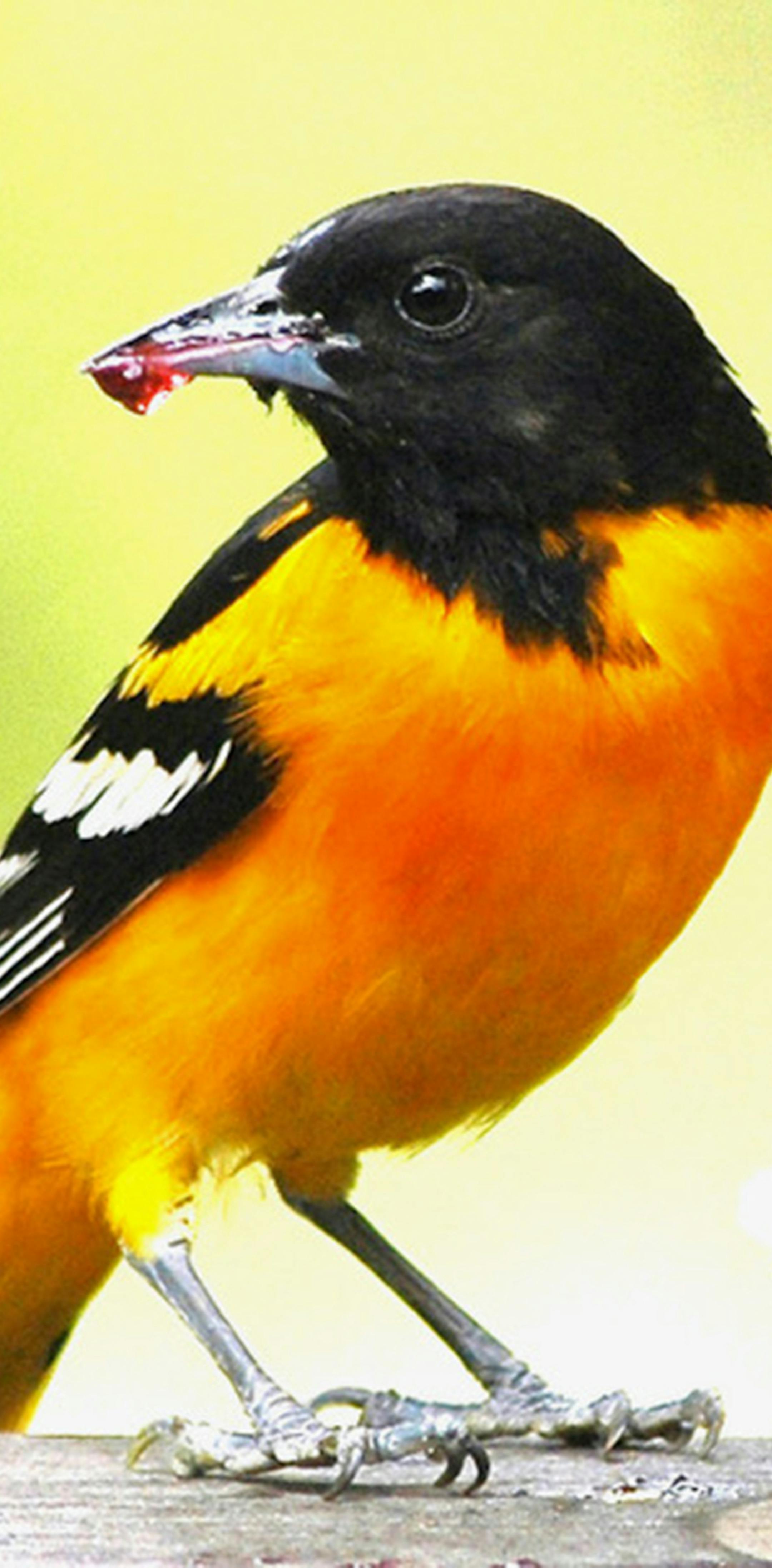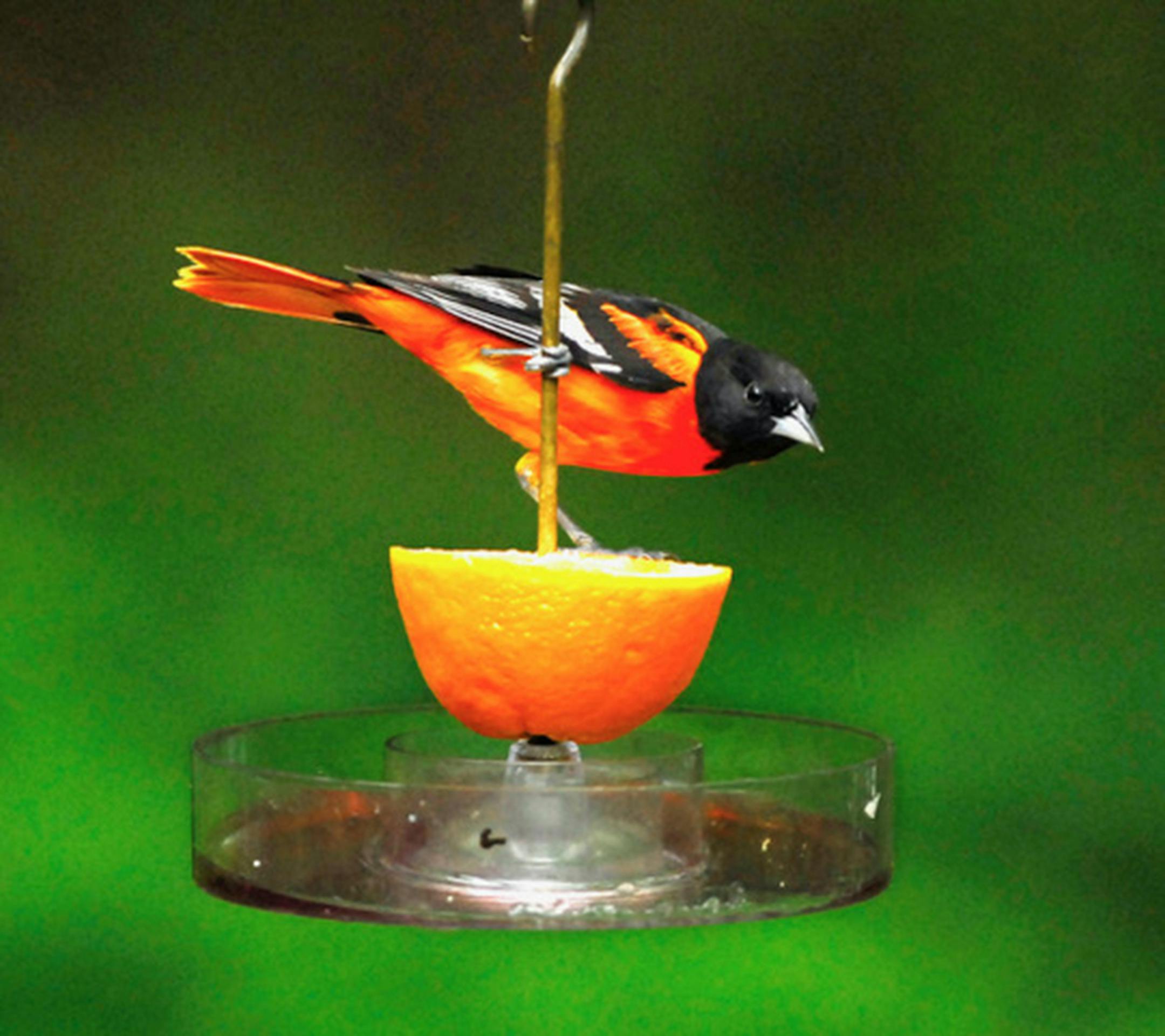
Q: I love to see the orioles at my grape jelly feeder each spring, but wonder why they disappear in late May? What can I do to keep them around?
A: It's not that you're doing anything wrong with your oriole feeding system, it's just that their needs change as breeding season arrives. Those early Baltimore orioles were happy to gulp down your grape jelly, but now that they're feeding youngsters in the nest, they need high-protein insects for their young. This diet speeds up nestling development and lets them grow to the size of their parents in less than two weeks.
The orioles may return in July, as parent birds teach their brood to feed themselves. Experts now warn that the high concentration of sugar in grape jelly isn't healthy for birds, so they advise setting out only small containers of jelly at a time, maybe in a jar lid, so the birds don't pig out.
Caterwauling at night
Q: I had an odd experience around 11 at night in early April. At first, I heard owls hooting, but then this changed to very loud noises that sounded like jungle birds or monkeys, and it seemed like there were more than two owls. This went on, off and on, for an hour. What was this all about, and were these great horned owls?
A: It's much more likely that these were barred owls engaging in courtship calls. An article on Audubon's website refers to this species' siren calls, wails and "wonderfully entertaining monkey call."
Karla Bloem at the International Owl Center in Houston, Minn., notes that barred owls are famous for making these loud calls and shrieks. Barred owls put on a similar performance in the night woods near a cabin where I was staying outside Duluth some years ago, and I agree, it's eerie.
Sights and sounds
Q: My neighbor has put up a very loud wind chime and I'm worried it's going to frighten birds away from my feeders.
A: I don't think you need to worry about wind chimes keeping birds away from your bird feeders. Birds are a bit wary about anything new, but they'll get used to these sounds in a very short while.