

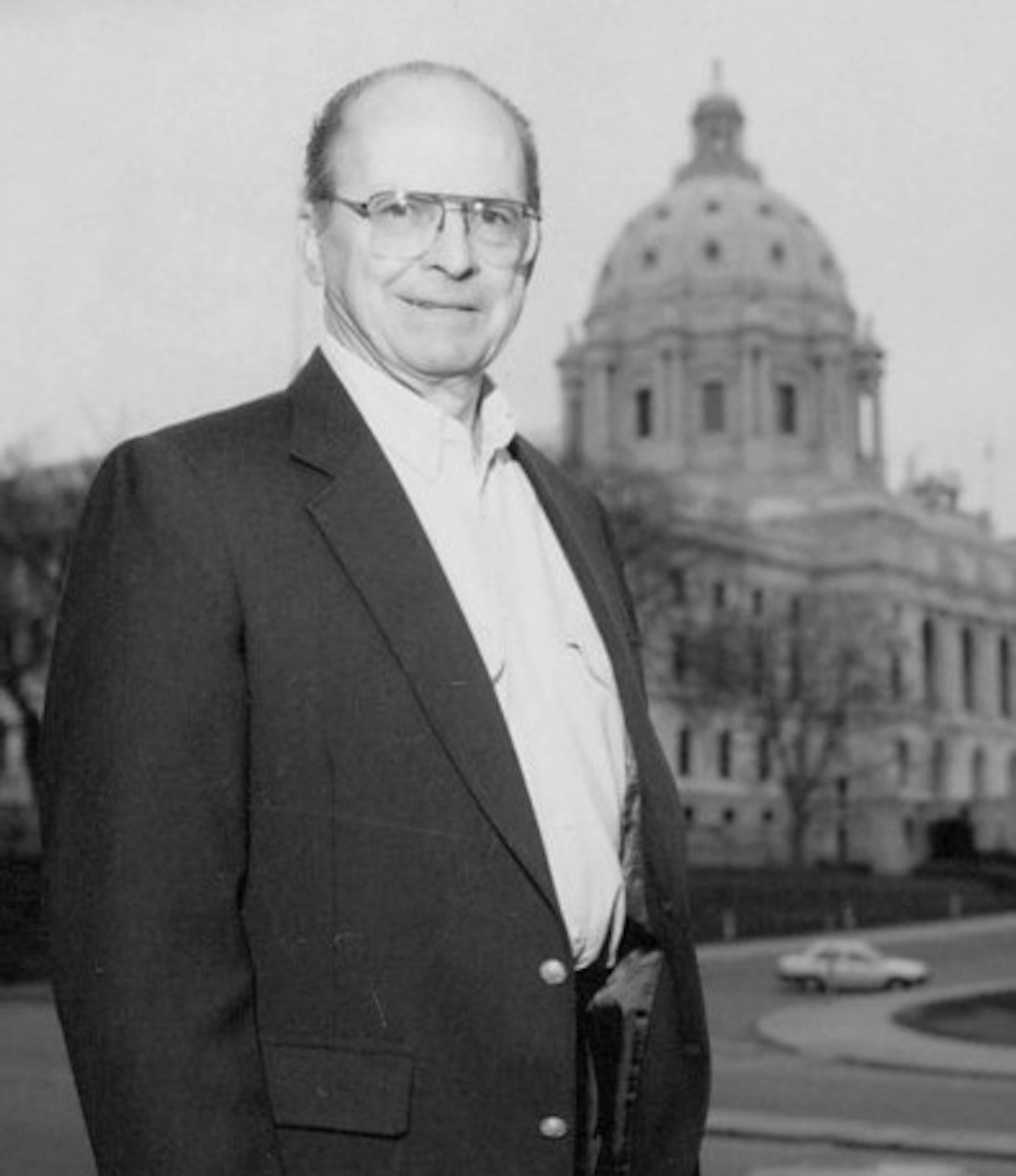
As a 9-year-old during the Great Depression, Bernie Lieder would sometimes spell his father tending bar at the family's brick saloon. They lived above the Corner Bar, which included a pool table and doors leading to a barber shop and butcher counter where his mother, Rose, once lost a fingertip grinding sausage.
Prohibition-era moonshine flowed from a couple of stills in the woods just outside Hanover — then a farm town of 200 people about 30 miles northwest of Minneapolis.
"Making and selling moonshine was how people made a living back in those days," Lieder, 95, recalled from his home in Crookston, Minn. "When my dad was eating his supper, I'd sell you a shot of moonshine and a beer chaser."
A few years later, Lieder "distinctly" remembers strangers from out of town stopping by. One got a shave while another stood by the door.
"The Feds came by a few days later, asking if we'd seen John Dillinger," he said.
The notorious gangster had been holed up in a cabin on Beebe Lake, west of Hanover, a few weeks before police gunned him down outside a Chicago movie theater in 1934.
From the Depression through his combat infantryman's view of World War II and then 25 years as a DFL legislator from Crookston — Lieder has witnessed more history than most Minnesotans. He was the last WWII vet to serve in the Minnesota House.
His memory remains scalpel sharp, his stories as riveting as they are impossible to condense in a newspaper story. Luckily, there's an online, 79-page transcribed version of an oral history interview Lieder gave in 2006 as part of the Minnesota Historical Society's Greatest Generation project — tinyurl.com/BernieLieder.


