

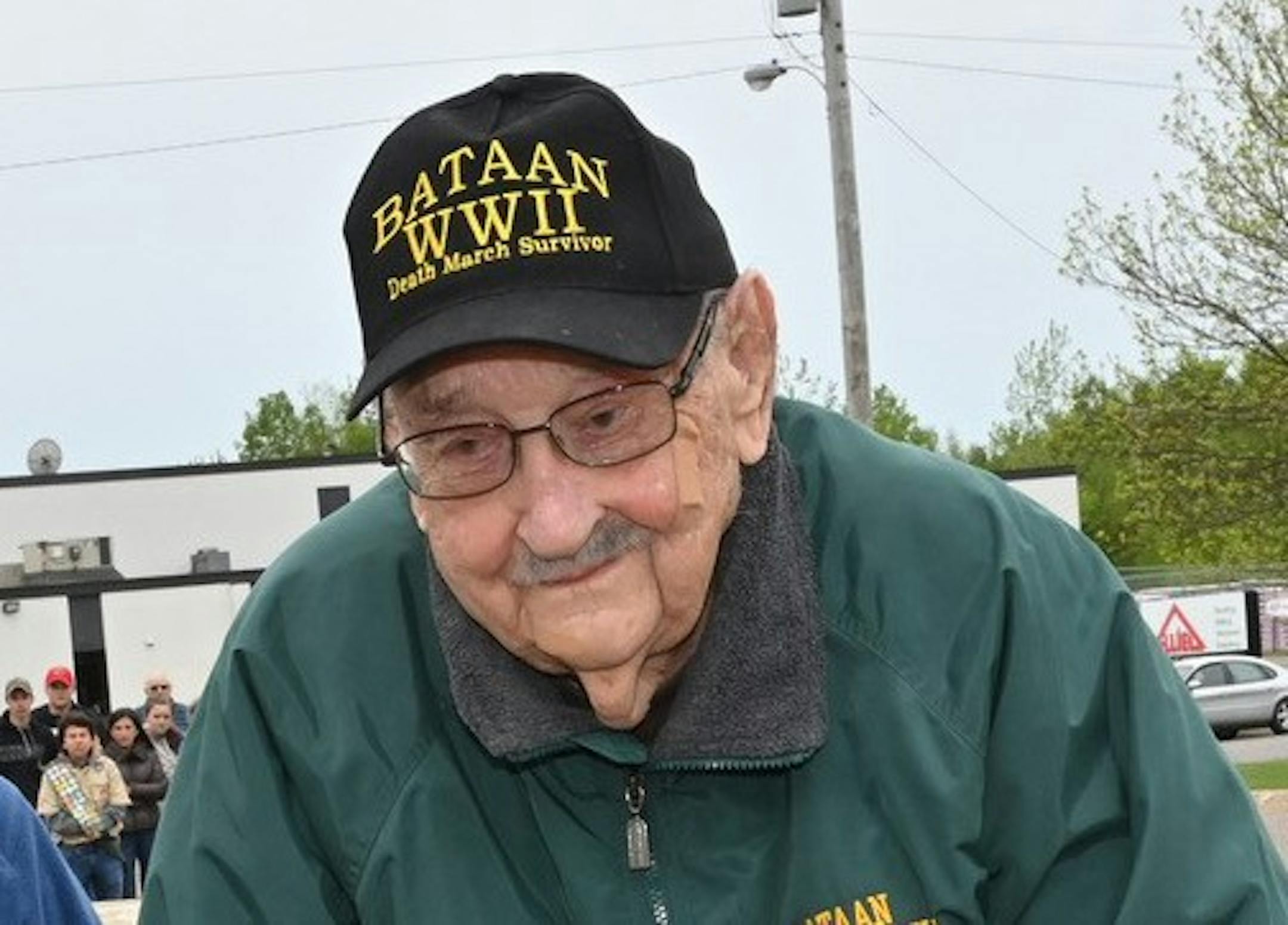
Walt Straka had eaten one soup can of rice in a week as his thirst for water grew unbearable. The tank corporal had been captured by the Japanese and was in the middle of what became known as the Bataan Death March — a hellish, 65-mile trek to prison camps through a peninsula in the Philippines during World War II in 1942.
Suddenly, Straka spotted a 4-inch pipe snaking from an artesian well.
"I reached my canteen down and felt the butt of a Japanese soldier's rifle hit my spine, knocking me down," said Straka, who turned 101 two weeks ago.
A group of fellow Brainerd soldiers picked him up by his armpits and dragged him along. He had to keep marching "or they would have bayoneted me for sure. Men were going insane, starving, dropping like flies. Hell couldn't be worse."
Straka, then 22 and a shoemaker's son, was one of 64 Minnesota National Guard troops from Brainerd belonging to Company A of the U.S. Army's 194th Tank Battalion. They were sent to the Philippines in September 1941, stopping for three days in Hawaii, where Straka toured the U.S.S. Arizona on Battleship Row in Pearl Harbor. Three months later, the Japanese attacked the base, sank the Arizona and war was on.
Half the Brainerd men in Company A joined the thousands of American soldiers who died in combat on the death march or in malaria-plagued slave labor camps. Straka is the lone member of the company still alive, and on Wednesday he'll mark his 80th Veterans Day since joining the military.
"I can't believe I'm still alive — when I wake up in the morning and see the ceiling tiles, I say a little prayer," he said from his room at the Edgewood Vista assisted-living facility in Brainerd, where he moved in June. Well into his 90s, Straka was shoveling snow outside his longtime Brainerd home amid the lakes, pines and Mississippi River country where he was born in 1919.
"I lived through the end of the last big epidemic," he said about the 1918 influenza outbreak. "Our town doctor died in that one. I've seen it all."


