

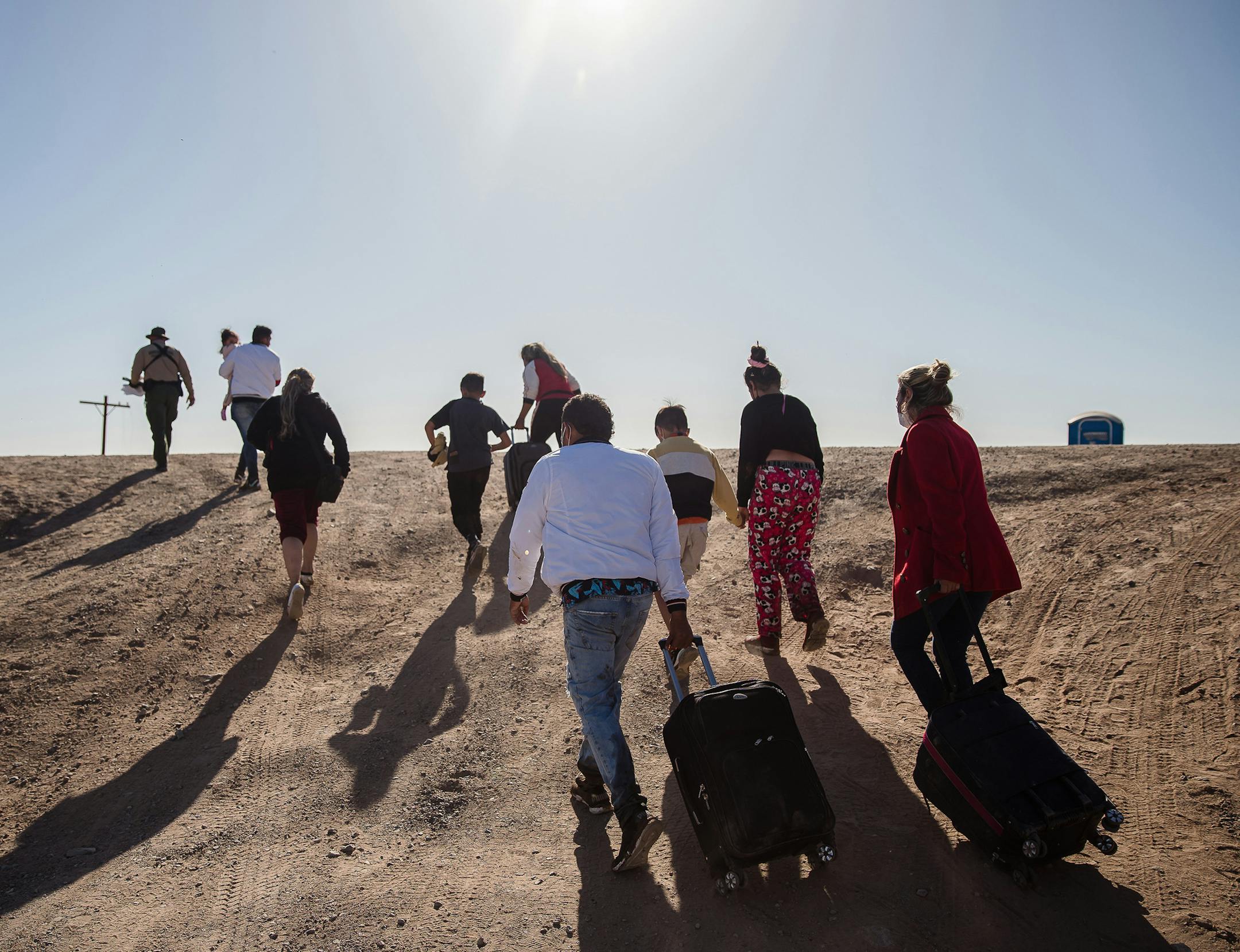
YUMA, Ariz. — Standing by the hulking border wall, a U.S. Border Patrol agent watched as a car dropped off passengers at the edge of a road on the Mexican side. "Oh, no," he muttered. "Here come some more."
In the next hours, dozens of people would descend a bare hillock, pass a puddle where the Colorado River trickles and, without fanfare, pass through a gap in the rust-beam barrier that soars between the United States and Mexico. They had completed the final leg of journeys that began weeks or months earlier in Brazil, Cuba, India and Venezuela.
Carrying dusty backpacks and dreams of new jobs in new cities, the unauthorized migrants did not sprint across the road to hide in the vast alfalfa fields as so many border crossers have in the past. Many of them walked toward the agent, arms raised in surrender, confident that they would not be turned away. Javier Gomez fell to his knees and prayed, his daughter, Maria, by his side.
"We sold our house, everything, to come," said Gomez, an itinerant salesman whose family left Venezuela three months ago to make the journey northward over land. "We are blessed to have made it."
The Biden administration continues to grapple with swelling numbers of migrants along the southwestern border. In April alone, 178,622 people were encountered by the Border Patrol, the highest number in 20 years.
Most of them are from Central America, fleeing gang violence and natural disasters.
But the past few months have also brought a much different wave of migration that the Biden administration was not prepared to address: pandemic refugees.
If eking out an existence was challenging in such countries before, in many of them it has now become almost impossible.


