If I can make it there, I'll make it anywhere.
That line from the title song in the movie "New York, New York" was written either by Broadway lyricist Fred Ebb or by a house sparrow.
Ebb gets credit, but the sparrow certainly could have provided the theme. The bird was introduced to NewYork City in 1853. It has since colonized all of North America except the high Arctic. We are key to its success, anywhere: It needs humans and seeds.
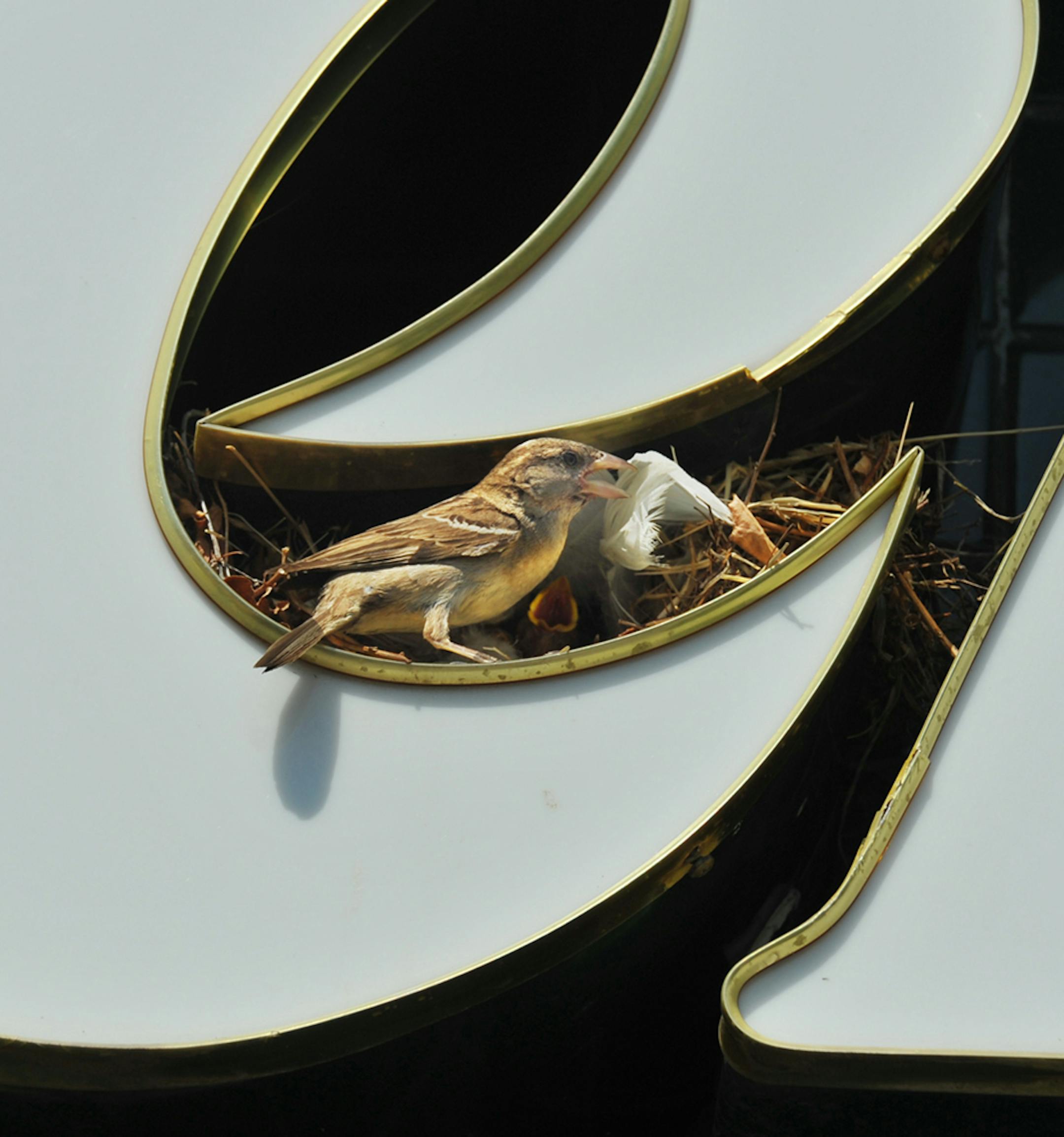
House sparrows came to us from England, 100 of them, perhaps in a wicker basket. The birds were supposed to help control insects harming crops. Surprise — house sparrows take insects only when feeding chicks, maybe two weeks each year. Otherwise, they eat grain.
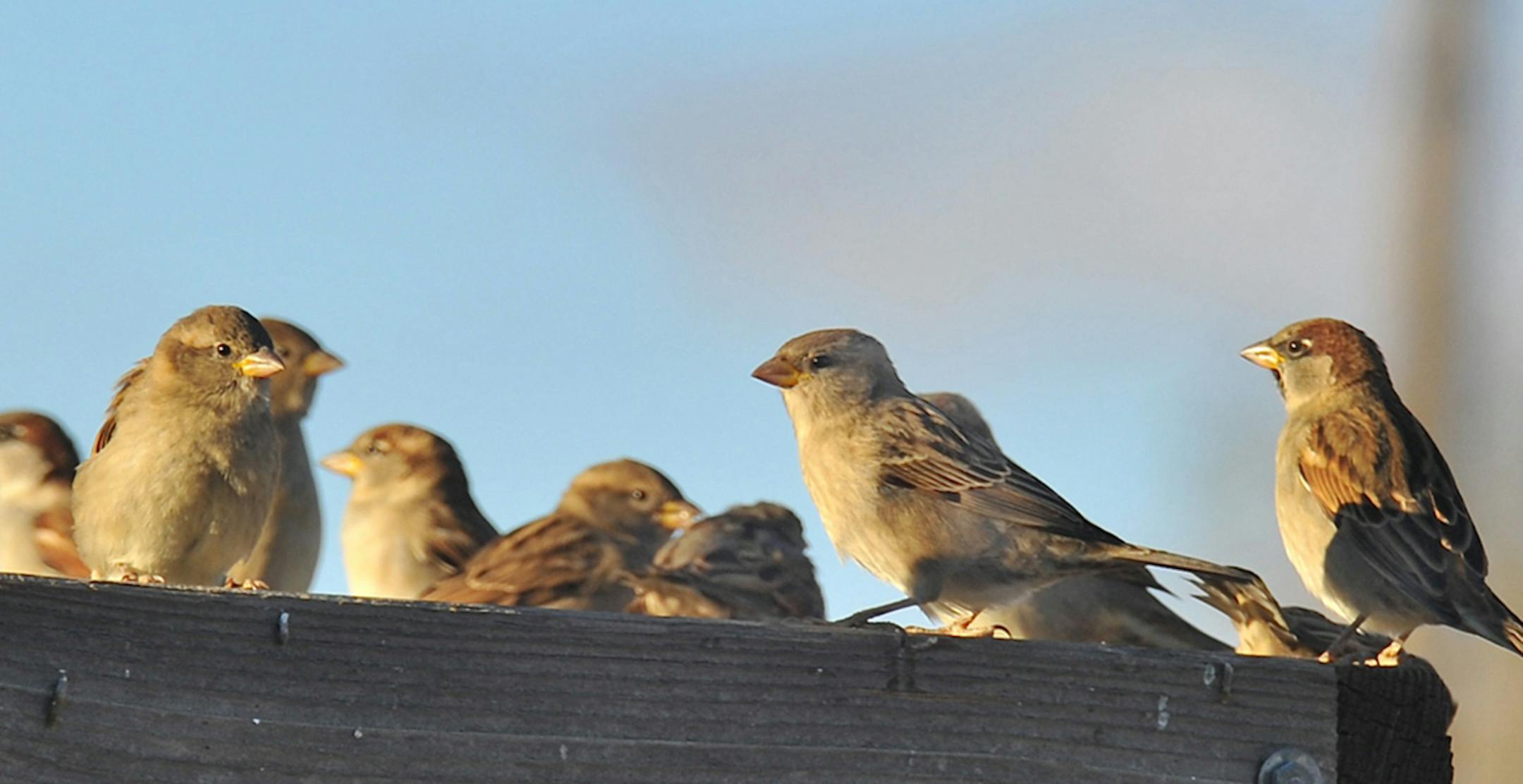
City or rural, with spilled grain, birdseed or bread crumbs, we provision the bird. The sparrows are roosting right now in the shrubs beside your front steps (particularly if you live in Minneapolis proper), digesting weed seeds or food from a feeder.
They also are picking at loose grain in a Nebraska farmyard 30 miles from the nearest town. If we are there, so are they.
An Old World order
The house sparrow is not a sparrow in the North American context. It is an Old World sparrow, in a different taxonomic category. It is related to only one other species here, the Eurasian tree sparrow, also an introduced species.
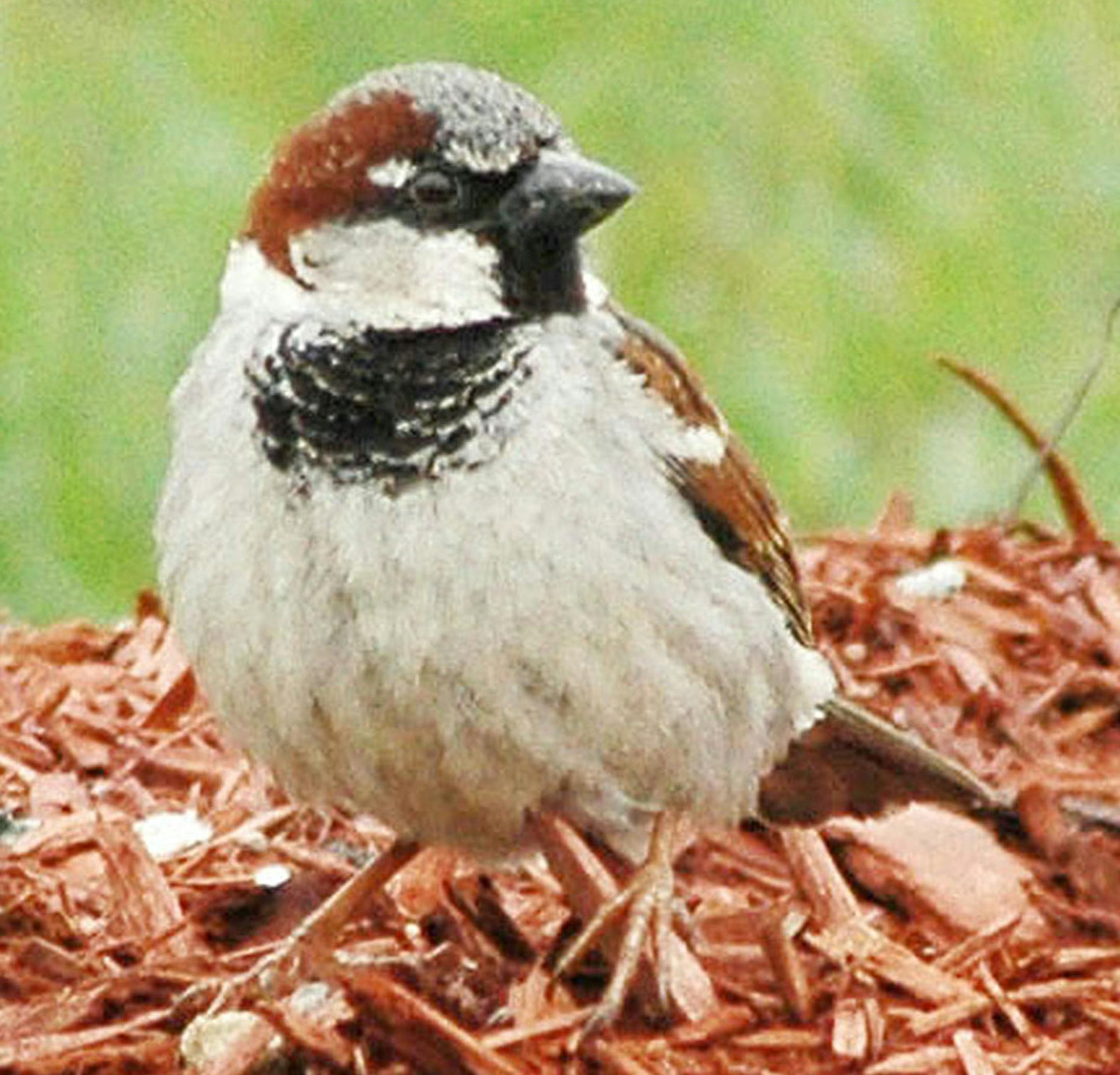
Our 35 native sparrow species are similar in appearance to the intruder, but not quite. House sparrows have shorter legs, not that you're likely to notice, and a thicker bill, easier to see.