

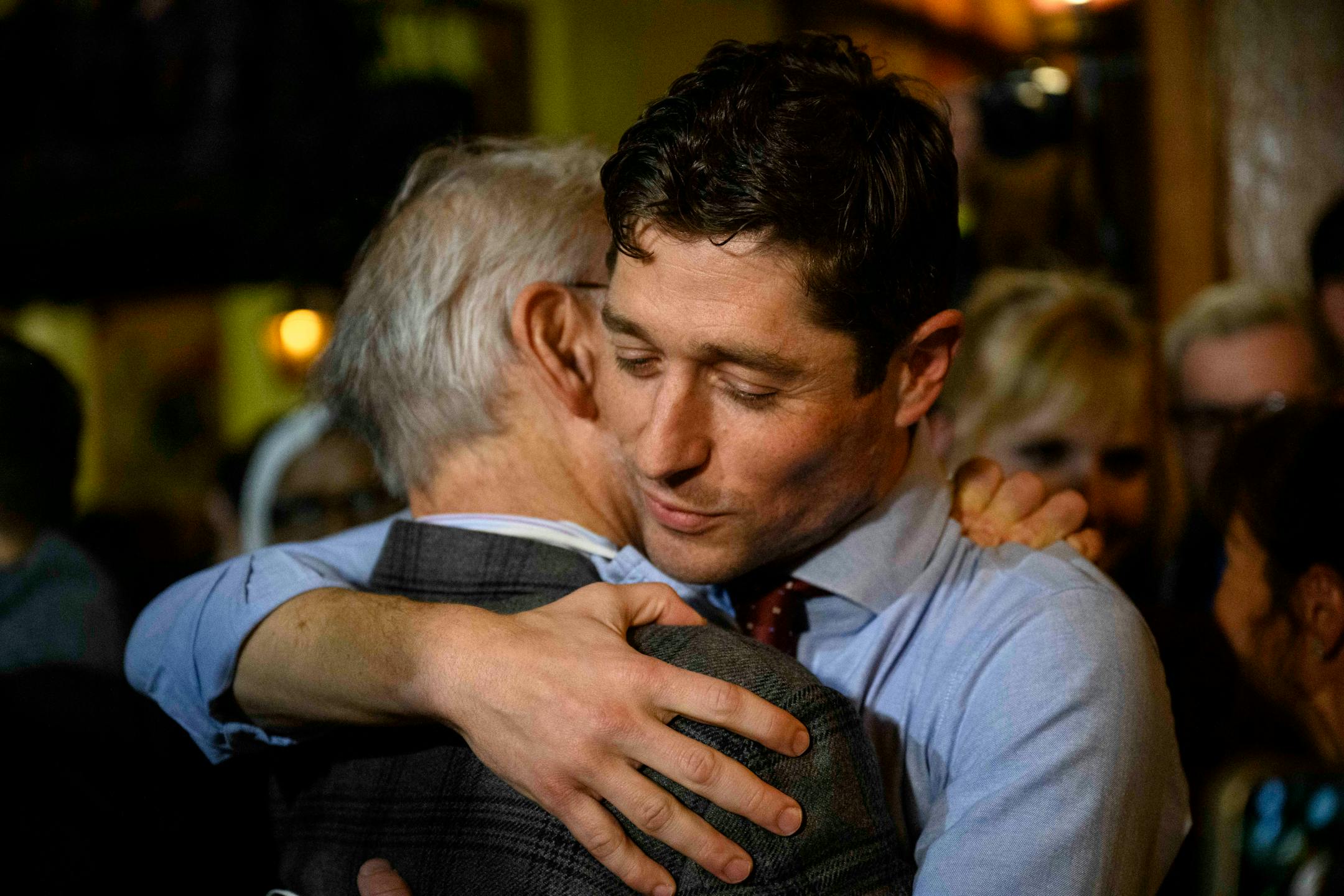
Minneapolis Mayor Jacob Frey overcame a full-scale attack from his left — including the late-campaign efforts of Fifth District U.S. Rep. Ilhan Omar and her social media legions — to win re-election on Wednesday.
That outcome was far from certain when voting began this fall. The economic fallout from the pandemic, the brutal murder of a Black man at the hands of a Minneapolis cop and a wave of violent crime made this ranked-choice election especially unpredictable.
When it endorsed Frey last month, the Star Tribune Editorial Board pointed to one of the most politically challenging days in his first term, when protesters gathered at the mayor's home not long after George Floyd's death to demand that he defund the Police Department. He refused to be cowed, showing common sense and a backbone as he stood up to the angry crowd.
The 2021 campaign became even more consequential when three critical charter questions were added to the ballot — one on mayoral authority, a second on policing and public safety, and a third on rent control.
Frey's top challengers, Kate Knuth and Sheila Nezhad, ran to the left of the incumbent, who can best be described as a moderate progressive. Knuth and Nezhad countered Frey by backing the effort to replace the Police Department, opposing more mayoral control over city government, and wholeheartedly embracing rent control.
They urged voters not to rank Frey as even a second or third choice for mayor. And in mid-October the popular and polarizing Omar joined in, endorsing both Knuth and Nezhad (she did not rank them) and also asking voters "not to rank our current mayor."
Omar also backed the public safety amendment, which voters resoundingly defeated on Tuesday. No doubt she hoped to claim postelection credit for dismantling the Police Department and ousting Frey, but she and far-left Democrats in the Minnesota Legislature went 0-2.
None of this is to suggest Frey did not deserve mostly middling reviews for his first-term performance. At times he was frustratingly passive, unable to rally City Council and state legislative support for critical initiatives, including public safety and police reform.


