

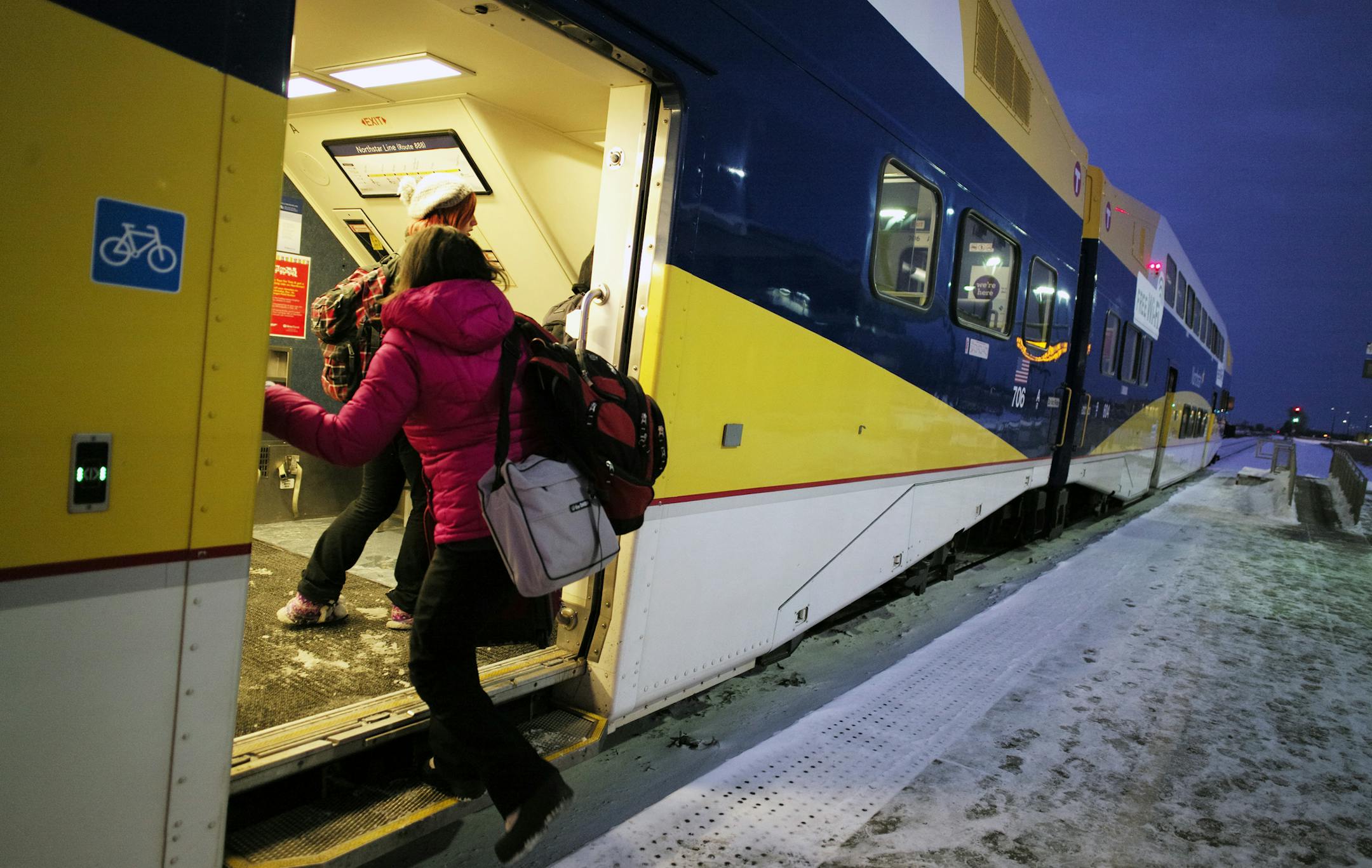
In what has become a chronic problem for the Northstar line from Big Lake to Minneapolis, heavy freight traffic pushed the commuter train off schedule and is expected to do so several days this week.
Officials for BNSF, which owns the tracks, said Monday afternoon that riders should "expect it will take several days to work through the freight congestion," according to spokeswoman Amy McBeth. "In the meantime, we are rerouting traffic where possible … to help with the recovery."
A tweet from Metro Transit warned Monday morning's riders to "expect significant delays (60-90 minutes) due to freight traffic." Commuters could wait for their trains or board replacement buses.
Monday's disruptions rank among the most severe since Northstar began operating in 2009. One of the five inbound runs had to be scrapped altogether. The other four saw delays of 37, 75, 90 and 120 minutes, said Metro Transit spokesman Drew Kerr.
The lone northbound train also never got rolling, requiring buses to fill in, Kerr said. Early alerts indicated the delays were concentrated between Ramsey and Anoka.
Lots of competition for tracks
Kerr added that Metro Transit is engaged in "trip-by-trip communications with BNSF, [and] we are working on long-term strategies that will return Northstar rail service to its traditional reliability."
Until January, Northstar was one of Metro Transit's most reliable services with a 96 percent on-time record. That, along with fare reductions last year, helped ridership soar to a one-year record of more than 787,000.
Since then Northstar has suffered a rash of delays. The oil boom and other economic demands for freight service have fed congestion on the tracks, along with a harsh winter that has caused signals and switches to malfunction, McBeth said. Two weeks ago, disabled freight trains blocked the tracks between Big Lake and Elk River.


