

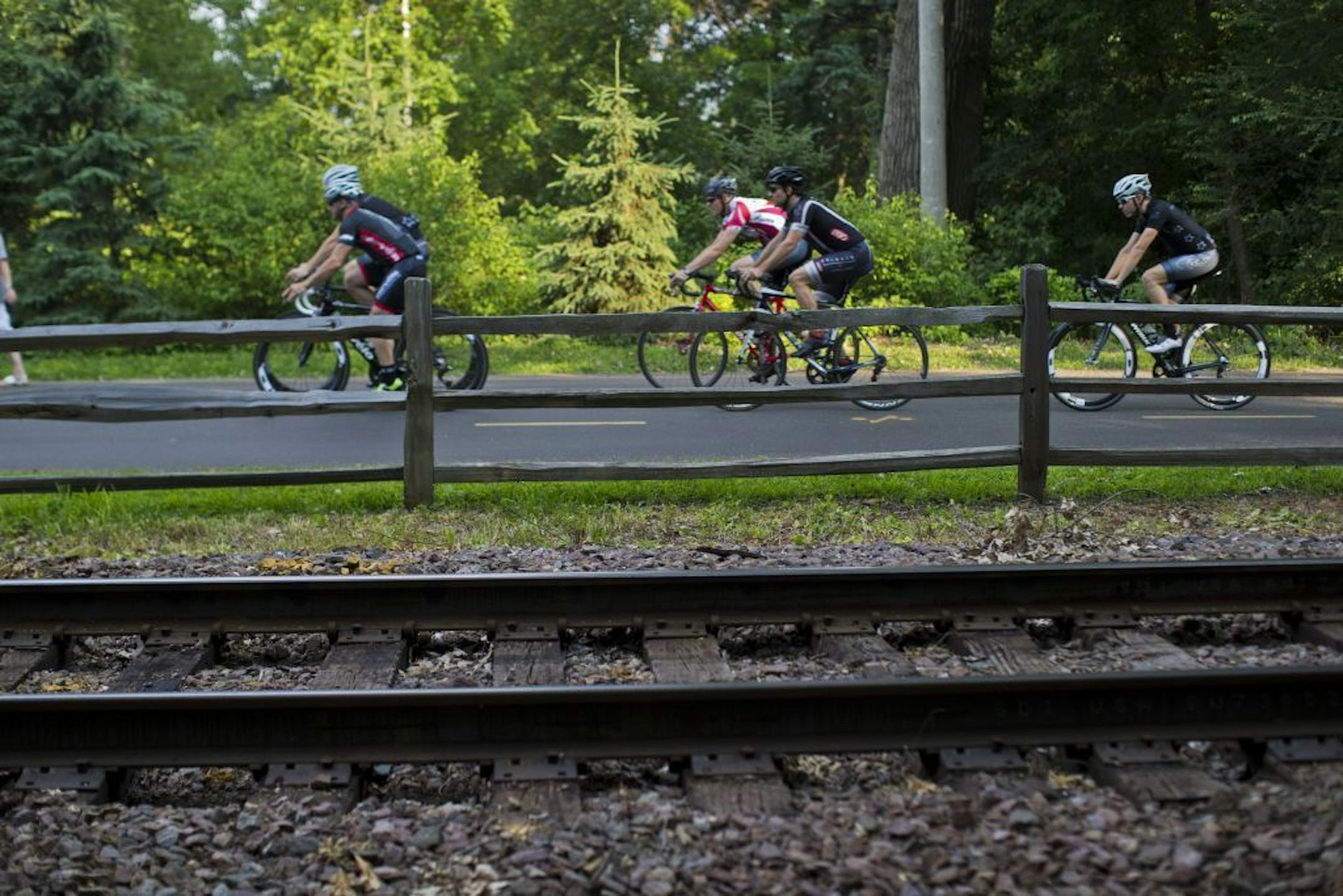
Opponents of a plan to keep freight rail traffic in a Minneapolis recreation area near a future light-rail line seized on an analysis by a railroad union Friday to bolster their argument that rerouting the freight is a better idea.
Freight traffic from the Twin Cities & Western Railroad could be rerouted from the Kenilworth corridor to St. Louis Park for less than the $200 million planners said it would cost, the union said. The union said its strategy "removes freight trains from the Kenilworth corridor, and will reduce overall ... costs significantly."
The report by the United Transportation Union, sent Friday to Metropolitan Council Chair Susan Haigh, Gov. Mark Dayton and city and county leaders, could revive arguments for taking another look at ways to reroute the freight traffic that has been a sticking point in the planning of the Southwest Corridor between downtown Minneapolis and Eden Prairie.
Rep. Frank Hornstein, DFL-Minneapolis, said the union strategy "should be examined."
Mark Wegner, president of Twin Cities & Western Railroad, said he hasn't had a chance to fully study the union report.
The Metropolitan Council is leaning toward putting the light rail in $160 million tunnels in Kenilworth under the freight lines. It resists exploring reroute alternatives to the $200 million option, which involves putting freight tracks on two-story berms and is opposed by St. Louis Park.
A panel of metro leaders is expected to act Wednesday on a recommendation by Met Council staff that two light-rail tunnels be dug north and south of the channel between Lake of the Isles and Cedar Lake in the Kenilworth corridor. Minneapolis mayoral candidate Mark Andrew, among those opposed to the tunnels, urged the full Met Council "to delay action on this recommendation pending input from the city to consider other options."
The union report did not put a price tag on its proposal but called the $200 million plan "overreaching" and unnecessary to handle likely traffic on the Twin Cities & Western Railroad. The union "fails to understand the need for the construction of a berm," it said, taking issue with the TC&W's assertion that curves and up-and-down grades made the existing track unsuitable for additional traffic.


