

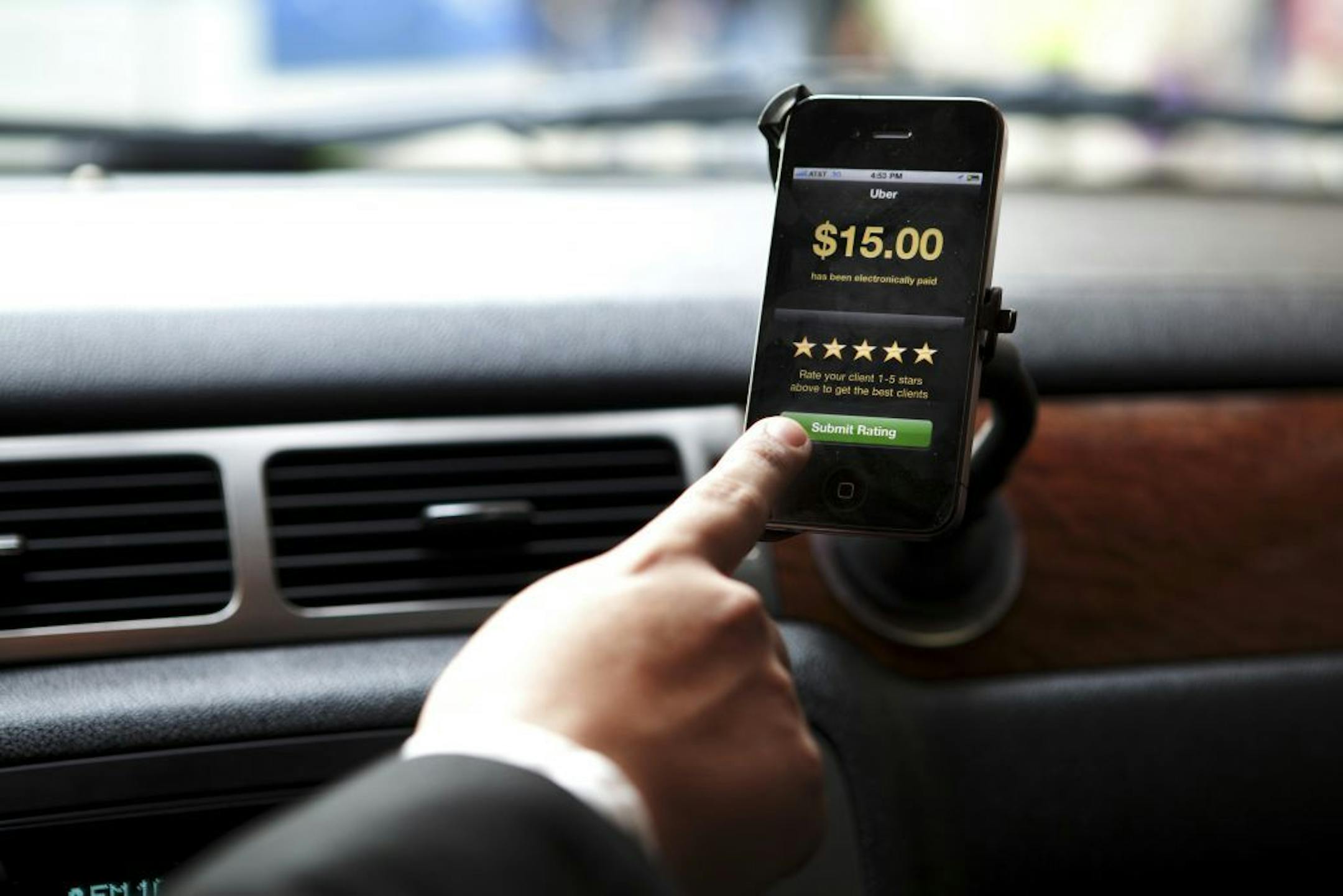
If you've ever stood on a cold street late at night wishing desperately and hopelessly for a cab, Uber is the answer to your prayers. Its pricing model, which includes higher fares at times when demand peaks, is designed to make sure you get a ride whenever you need it.
But instead of seeing this option as heaven-sent, some riders damn the company as Satan's spawn. On New Year's Eve, Uber boosted its New York City fares nearly eightfold to ensure the supply of drivers needed to meet high demand. Some partygoers accepted the offer rather than take the subway, wave forlornly at occupied cabs or stagger home.
The New York Daily News reported that several angry customers posted receipts showing charges of well over $100, with some vowing to boycott Uber. "The most expensive 8 minutes of my life!" fumed one. She was not the first person ever to do something on New Year's Eve that she regretted afterward.
To critics, this episode illustrates the perils of under-regulation. "Surge pricing" is just one. Passengers have been raped by drivers and had their privacy compromised. Pedestrians have been hit by drivers whose insurance may or may not cover them.
"The public safety is at risk," said Illinois state Rep. Mike Zalewski, sponsor of a bill to impose statewide restrictions. "It makes sense to have a basic set of bottom-line regulations."
Does it really? The ride-sharing companies are creating a new market, which inevitably brings mistakes and failures on the way. But the only reason for their existence is the welfare of their customers. If they damage that, they endanger their own survival.
From the news coverage of customers allegedly attacked by Uber drivers, you might forget that rapists are also found driving taxis. In October, a Chicago cabby got a 35-year sentence for sexually assaulting two passengers.
Getting into a vehicle with a stranger can always lead to a bad outcome. But there are no compelling reasons to believe that ride-sharing is any riskier than taking a cab — and some grounds to think it's safer.


