

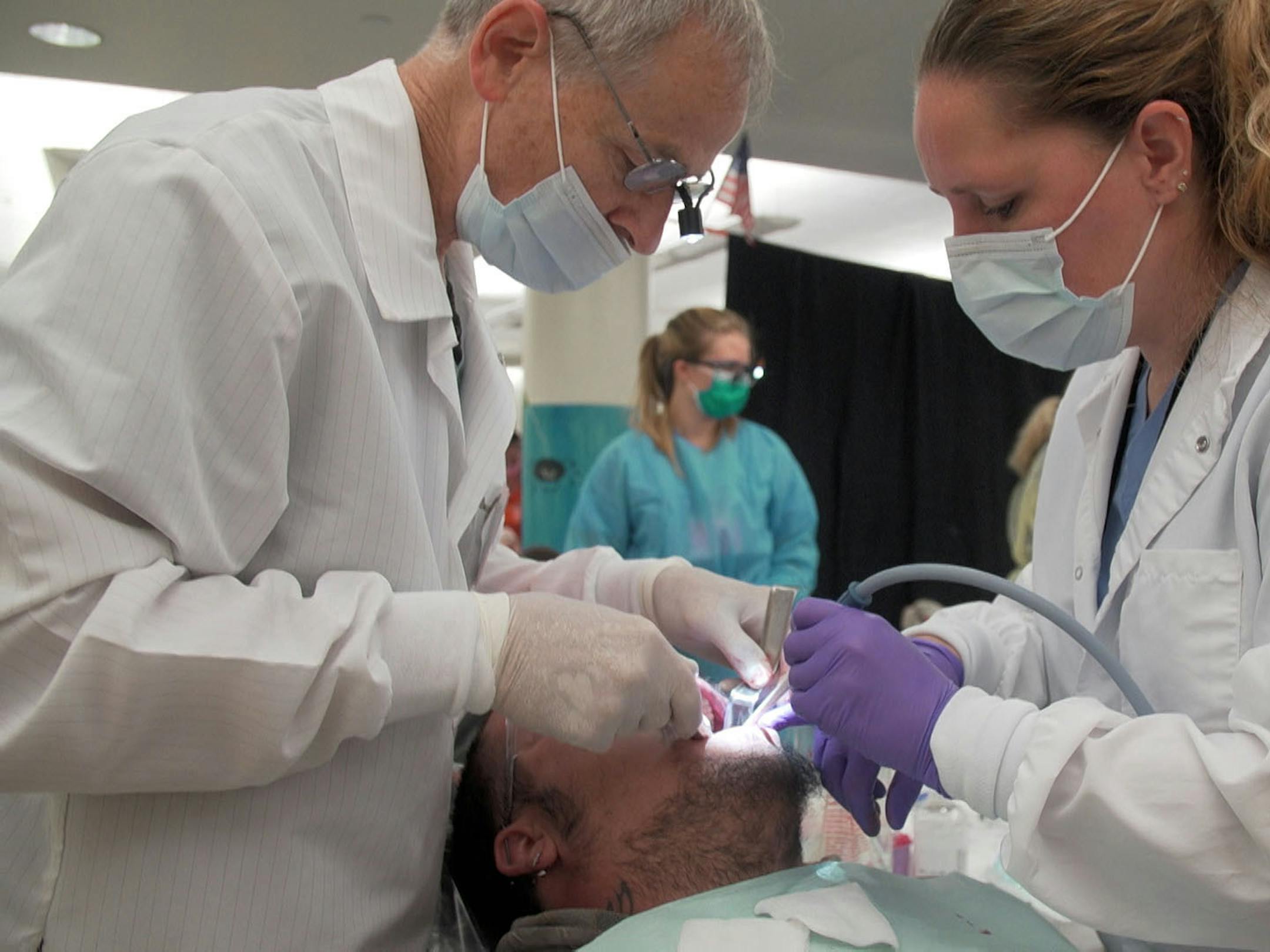
GRUNDY, Va. – Sandra Cook got in line midday on a recent Friday for dental care that she wouldn't receive until the next morning. Hundreds more like her showed up at Riverview Elementary and Middle School, many planning to spend the night, just as buses brought kids home and volunteers arrived by the hundreds to turn the school into a makeshift dental, eye and medical clinic run by Remote Area Medical, a nonprofit charity program.
Many people in this southwestern corner of Virginia struggle to pay for everyday needs, and that includes basic health care.
"My teeth and my eyes are really bad," said Trey Justice, who walked five hours to reach the school and set up a tent to spend the night. "I got ran over about four years ago. Nothing but pins all over. Don't have no doctors, no insurance."
Six years after the passage of the Affordable Care Act, and despite 20 million more Americans gaining health insurance, considerable gaps in health care remain.
The decision by states like Virginia not to expand Medicaid and the lack of dental and vision coverage even for those with insurance have meant that the demand for RAM's free mobile clinics has stayed strong.
On a Saturday morning, the sun had yet to rise when RAM founder Stan Brock called the first wave of patients into the pop-up clinic.
Brock founded the charity care program in 1985 to bring health care to people in developing countries. But he expanded the project to the U.S. when he realized the depth of the need here.
The torrent of patients is a measure of the poverty and isolation in this rural area: 15 percent of adults are uninsured; 1 in 5 lives in poverty; and the unemployment rate is more than double the state average.


