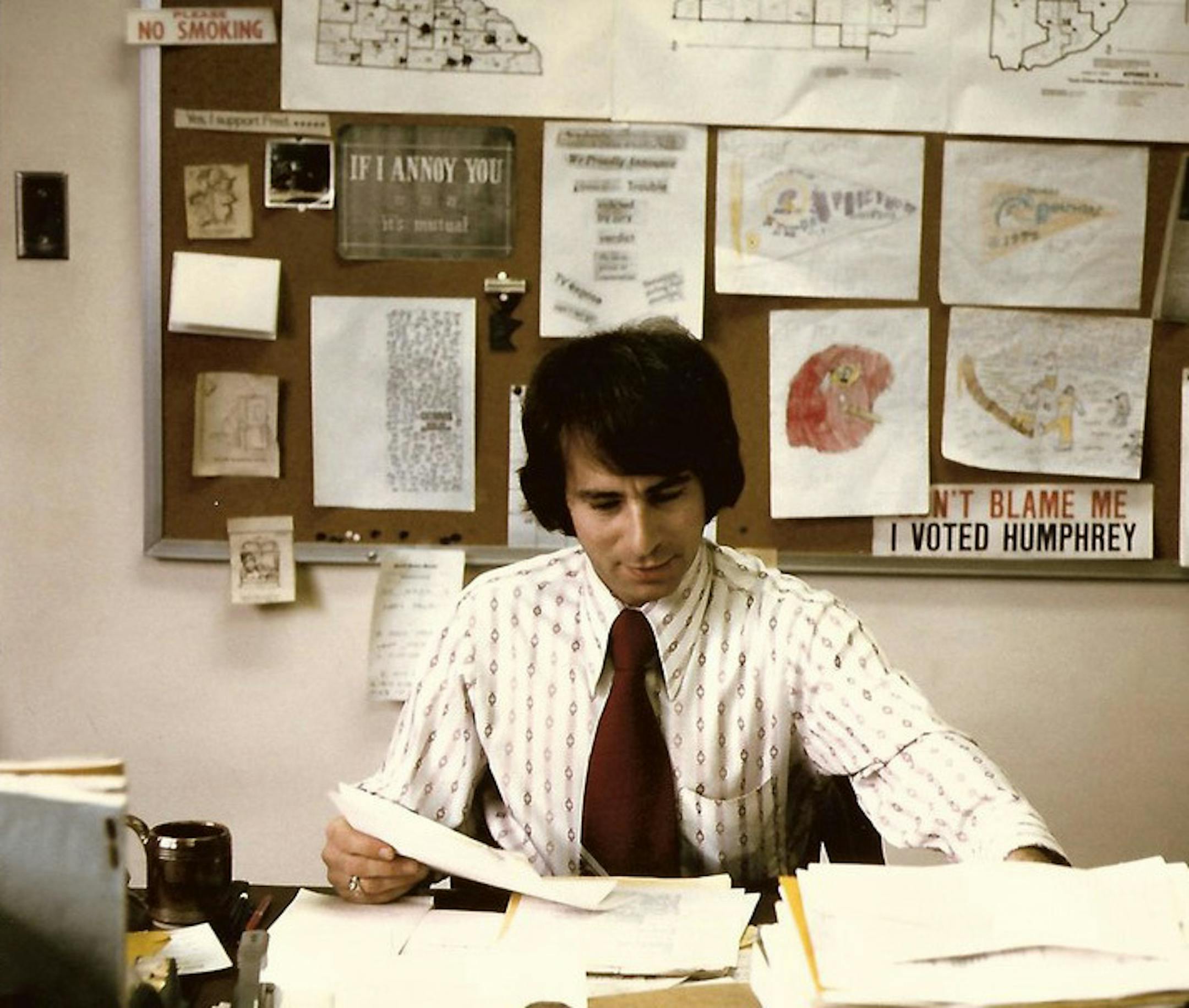
If you needed to get it done in Minnesota politics, Freddy Gates Jr. was the man to see.
That was true for Hubert H. Humphrey, who relied on Gates as his right-hand man and confidant.
It was also true for businessman Bob Short, who tapped Gates to run his U.S. Senate election, upsetting Don Fraser in the primary election.
And it was true for Minnesota congresswoman Betty McCollum, who needed Gates' savvy to bring a light-rail project to Minneapolis.
Gates, a public servant who advised some of Minnesota's greatest political minds, died Dec. 1 in hospice care at age 73. His family and friends remember him as a caring man who ran in important circles but avoided the limelight, whose legacy lives on through the young politicos he mentored along the way.
"He had a strong faith in doing what's right," said Bill Harper, chief of staff for McCollum. "There was a little bit of missionary in Fred."
Gates was born into politics. His father, Fred Gates Sr., a Lebanese arcade owner, helped Humphrey get elected mayor of Minneapolis in 1945 on a promise to eradicate the city's then-pervasive organized crime syndicates. As Humphrey's political trajectory continued to rise, Gates Sr. remained in the closest tier of Humphrey's inner circle — he even held the Bible for Humphrey as he was sworn into the vice presidency. As Freddy Gates Jr. came of age, the Gates home in south Minneapolis became famous in political circles as the unofficial hotel for Democrats in the Midwest, hosting Humphrey allies including Eugene McCarthy, Henry "Scoop" Jackson and George McGovern.
"This is the environment that Freddy grows up in, this extraordinary dedication to this other person's life," said Minnesota lobbyist Larry Redmond.