

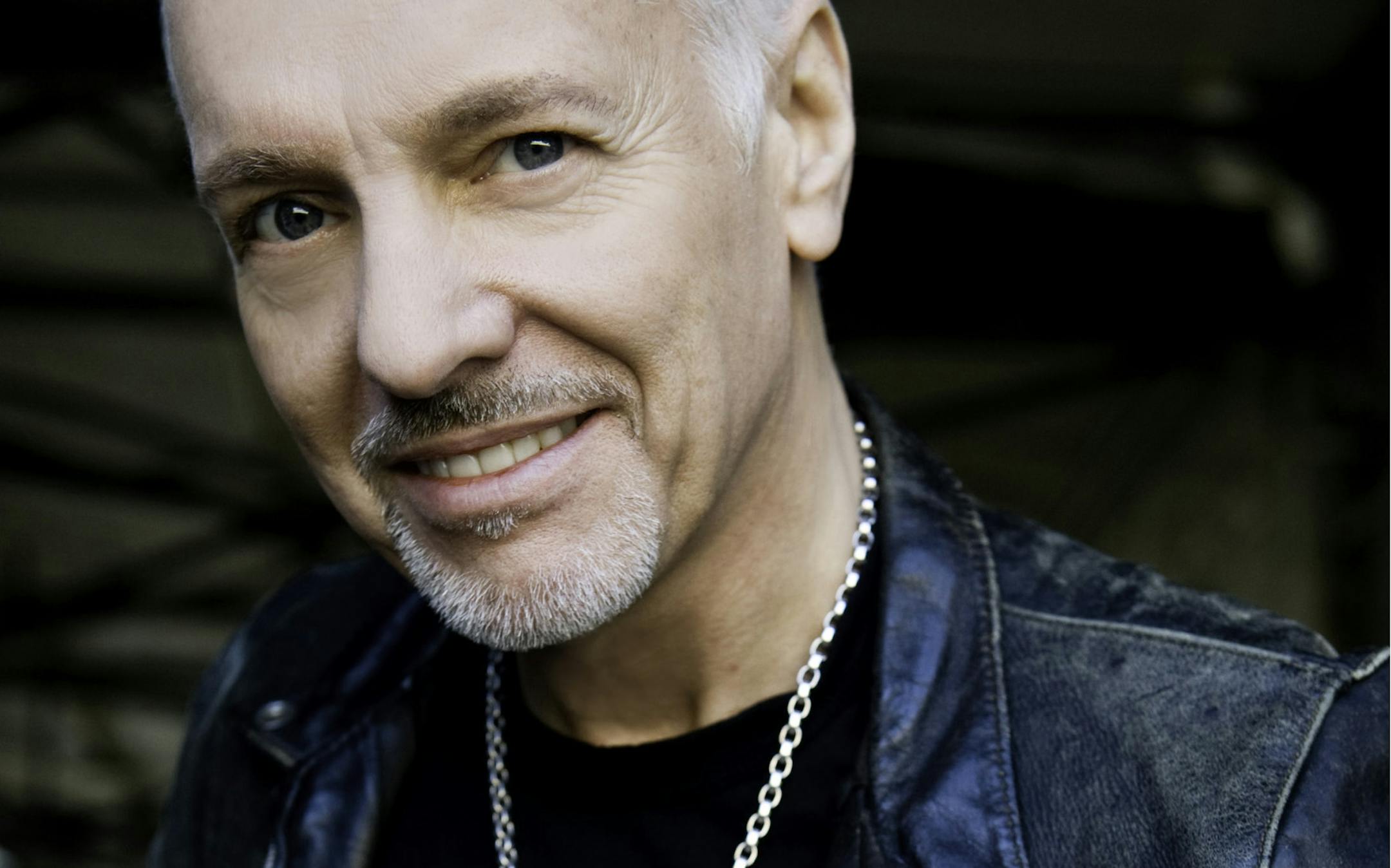
The golden locks are gone. So are two band members -- and that no-shirt look. But Peter Frampton has the talk box, bassist Stanley Sheldon and a 14-minute arrangement of "Do You Feel Like We Do" to re-create 1976's blockbuster "Frampton Comes Alive" in concert.
It's the first time the veteran British rocker has ever done a tour to present "Frampton Comes Alive," which became the biggest selling album of all time (until topped two years later by "Saturday Night Fever") and remains one of the top-selling live albums ever.
"We enjoy doing it because quite a few of [the songs] we haven't done in I don't know how many years," said Frampton, 61, who performs Friday at the State Theatre with a revamped band that includes Twin Cities keyboardist Rob Arthur. ("Comes Alive" players Bob Mayo and John Siomos died in 2004.) "It sounds just like it did, but with the technology we've got today, I think it sounds better. And, of course, we're playing better. I think it's a better band."
Buoyed by the hits "Show Me the Way" and "Baby, I Love Your Way," "Frampton Comes Alive" transformed Frampton, a respected session guitarist who'd played on records by George Harrison and Harry Nilsson, into a pop star. He was the Farrah Fawcett of rock, whose goldilocks good looks landed him shirtless on the cover of Rolling Stone and in a starring role of the 1978 film "Sgt. Pepper's Lonely Hearts Club Band," one of rock's legendary busts.
"The Rolling Stone cover I had no choice over," he said last week from Seattle. "The credibility [as a musician] was lost with 'Comes Alive' and the 'I'm in You' cover [the followup album, which bared even more skin]. And the capper to the Frampton demise, if you want to call it that, was 'Sgt. Pepper' -- all things that were very bad career moves."
By the by, Frampton discounts that his fluffy hair and image had much to do with his success.
"I don't think the hair had anything do with it," said the British native-turned-American citizen, who now sports a wisp of silver hair. "People bought 'Comes Alive' for the music. It wasn't until after that album that the image was perceived. The Rolling Stone cover started it. A musician's career is a lifetime but when that picture came out, it turned me into a pop idol. That kind of a career lasts 18 months."
Bowie's hand-picked guitarist


