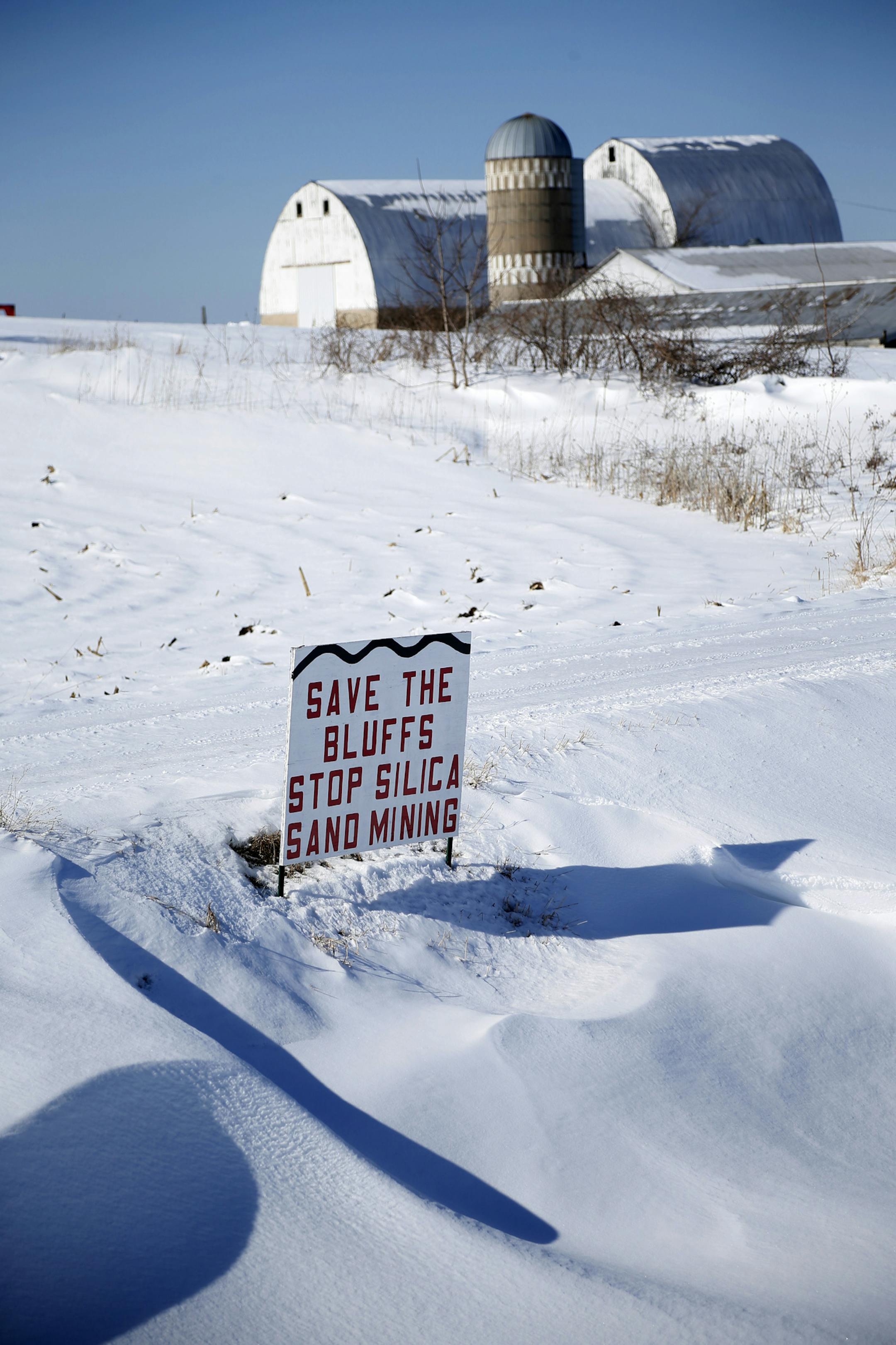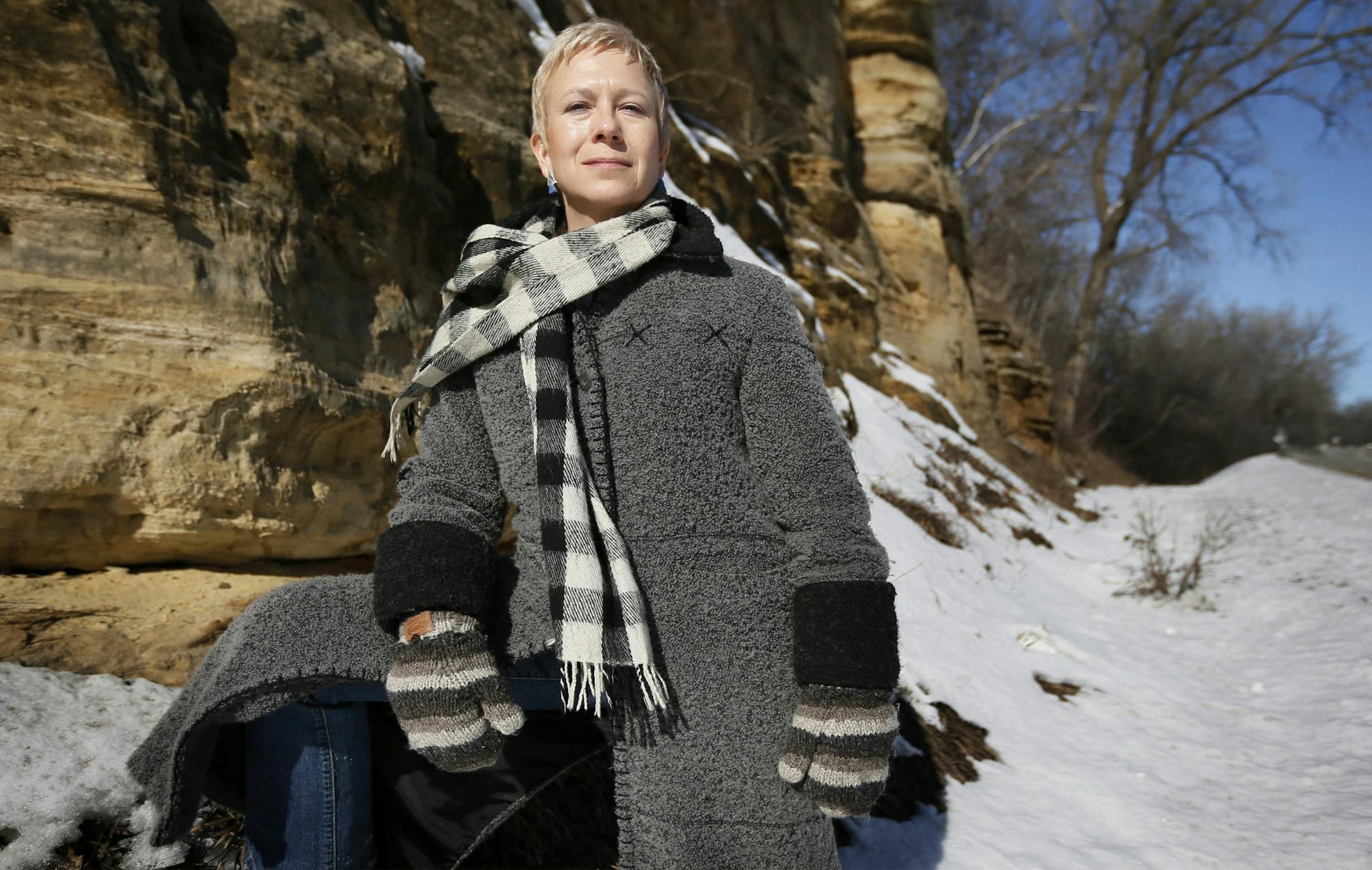
HAY CREEK, Minn. – Before a big energy corporation threatened to turn the bluff behind her house into a sand mine in early 2011, Amy Nelson's idea of civic activism was to volunteer at the United Way.
A Ronald Reagan fan and former provost at Southeast Technical College in Red Wing, Nelson now stands on the front lines of an anti-frac sand movement that is spreading rapidly across southeastern Minnesota. She and her fellow "fractivists" plan to rally at the State Capitol Tuesday as the Legislature takes up a set of regulatory proposals in the effort to balance the economic benefits of the burgeoning industry against concerns about air, water and health.
"It's wrong to let an industry start before limits and rules are set," Nelson said in an interview. "You can't allow them to come in, rape the land and then say, 'Oh, I'm sorry.' "
As the Legislature weighs a range of options — from a statewide moratorium to in-depth environmental reviews or even a tax on frac sand — the industry will also have a voice at the Capitol.
Mark Ellis, president of the National Industrial Sand Association, said a balanced look at the science around frac sand mining shows there is no basis for environmental restrictions.
Ellis didn't comment on proposed legislation in Minnesota, but said Wisconsin found no reason to crack down on the industry after it was reviewed by the Wisconsin Department of Natural Resources.
Unlike many opponents of frac sand mining, Nelson philosophically supports expanded oil and gas drilling in the United States — but only where hydraulic fracturing is proven safe.
Today the organization where she volunteers, Save the Bluffs, is one of more than a dozen groups that have formed along the Mississippi River corridor. The region holds vast deposits of uniquely formed silica sand vital to the oil and gas "fracking" boom in North Dakota, Texas, Pennsylvania and other states. The special drilling technique is expected to make the United States the number one oil producer in the world by 2020.