

CANAAN, Haiti – The sun-baked cinder blocks in Claude Saint-Elys' dirt yard are an eroding reminder of the dream: a two-bedroom house with room for him, his wife and five surviving children.
"We have rocks, and blocks. That's it," Saint-Elys, who lost his 5-year-old son in the Jan. 12, 2010, earthquake, said about building his dream home on this barren hillside north of Haiti's capital.
Across the way, down a dirt road, truck driver Mackenson Chery is building his dream brick by brick. Chery's spacious home is partly walled in with newly cemented blocks and covered with shining zinc sheeting.
"We help each other around here," Chery said. "It's us, the mosquitoes and the dust balls."
Canaan is a squatters' paradise of mushrooming construction of makeshift shacks and concrete homes where quake victims, land speculators and ordinary Haitians seek opportunities.
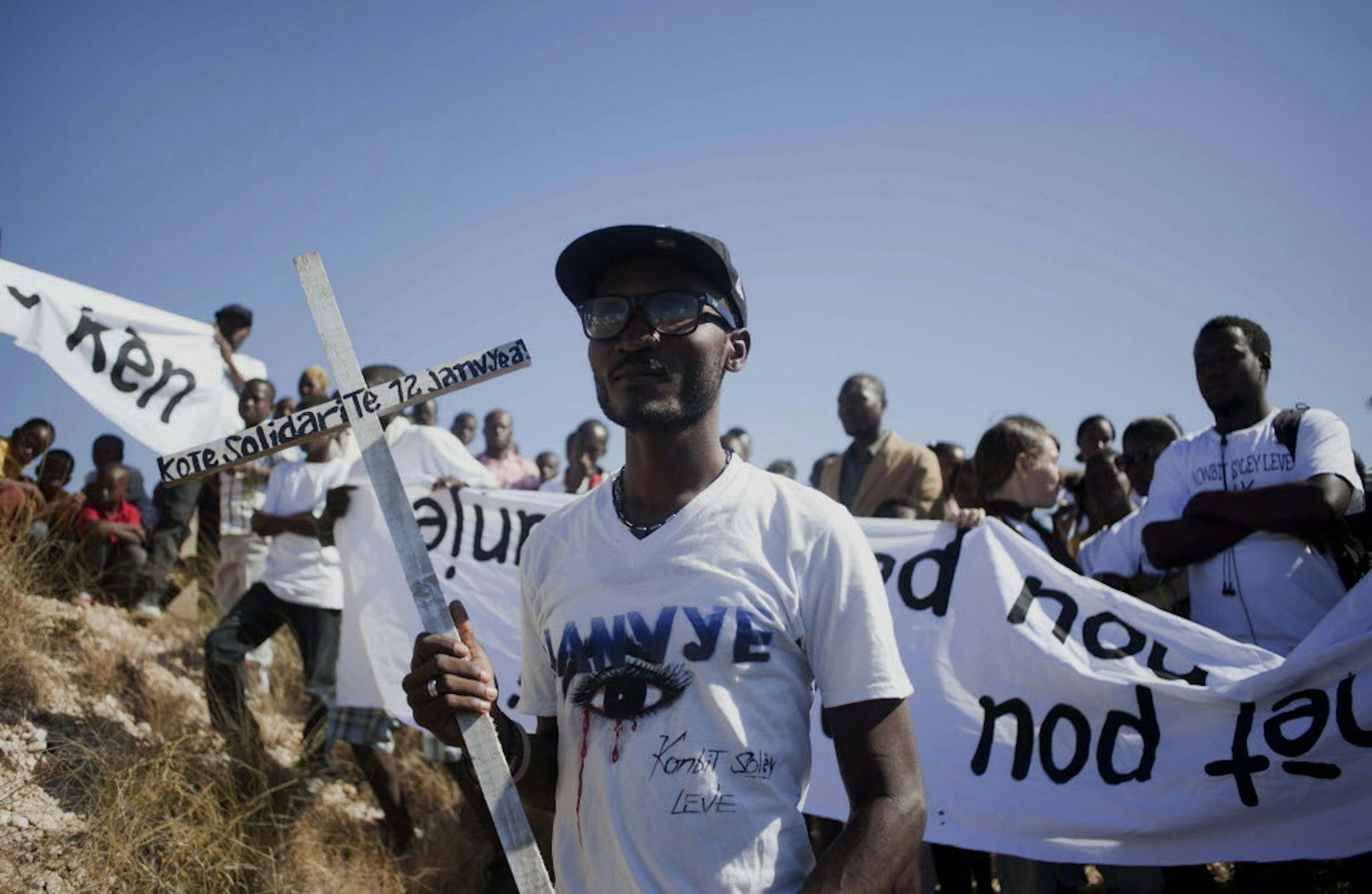
Now, as Haiti marked the fourth anniversary Sunday of the tragedy that left more than 300,000 dead and 1.5 million homeless, this haphazardly built community, born out of the disaster, is in the midst of a rebirth.
Many are concerned that rebirth is more a throwback to the country's history of disorderly construction instead of the planned, quake-resistant communities that were envisioned.
"When I see Canaan, I see the exact replica of Cite Soleil — a politics of neglect, a large growing cancer," said Leslie Voltaire, an urban planner who worked on housing issues shortly after the quake. "It's the image of the reconstruction, but by the people and without any resources." Cite Soleil is a slum in the Port-au-Prince area.


