

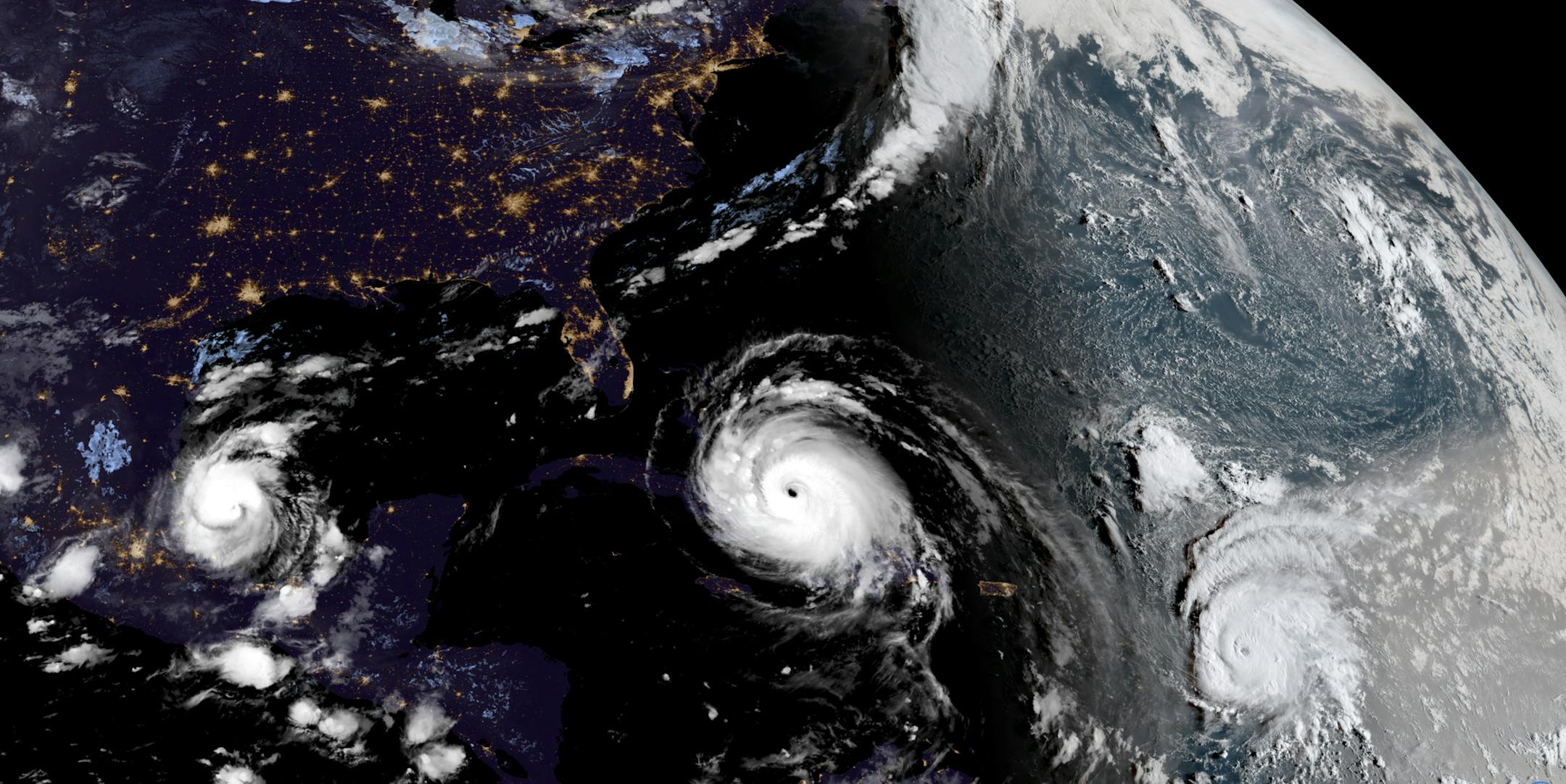
With Hurricane Harvey's rainfall records and Irma's stunning combination of extreme strength and longevity, the hurricane-global warming debate is back in full swing.
The public debate over hurricanes and global warming generally gets confined to a few issues: Will hurricanes be increasingly intense — like Irma was? Will they rain more, like Harvey did? Will they drive worse inland storm surges because of sea-level rise? Will they be more or less numerous?
Here are some less-discussed storm attributes that could plausibly change in a warming world:
Season length
Hurricanes follow seasonal patterns. They occur in the summer and fall, and this, too, reflects the temperature of the oceans (among other factors). But as the climate warms, could hurricanes be more likely to occur out of season?
There's at least some suggestive evidence of season lengthening. In a 2008 study on the Atlantic hurricane season, for instance, James Kossin of NOAA and the University of Wisconsin at Madison found "an apparent tendency toward more common early- and late-season storms that correlates with warming [sea surface temperature], but the uncertainty in these relationships is high."
Though the science remains unresolved, real-world storms appear to fit the pattern. This year, the first named storm in the Atlantic, Tropical Storm Arlene, formed in April, far outside the bounds of the traditional hurricane season.
Areas of formation, intensification
If the globe's oceans are warming in general, that could also mean that the regions in which hurricanes can form — currently, seven major "basins" across the globe — could shift. Or, it could mean that these storms will be able to maintain their strength in new places, farther from the equator.
Any general shift in hurricane formation or arrival regions could have large implications because it could subject coastlines that aren't accustomed to storms to their punishment.


