

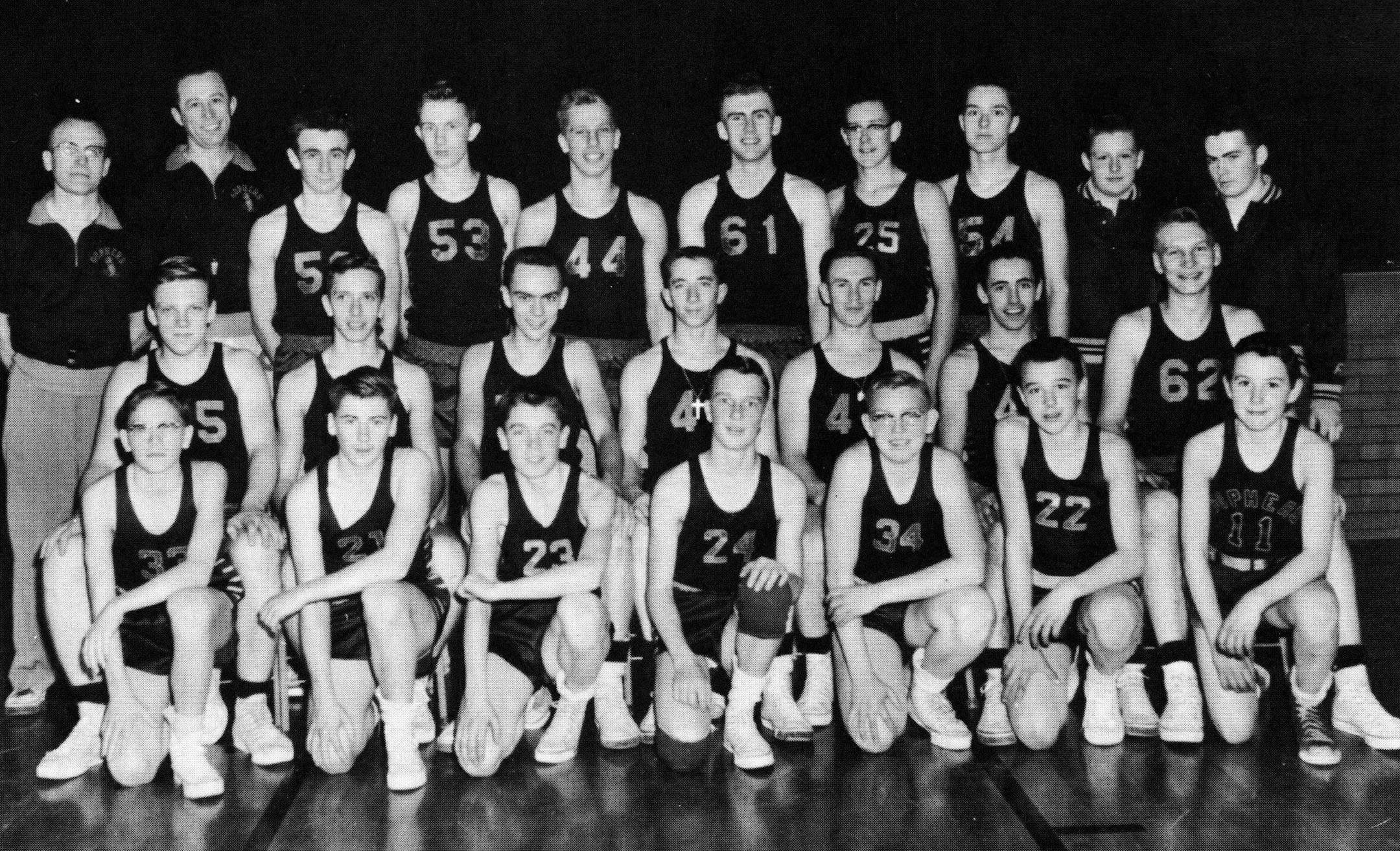
Born between 1939 and '44, four rural kids grew up in the undulating farm hills near Plainview — down near the toe of southeastern Minnesota overlooking the Mississippi River.
By 1963, there was nothing plain about their views. Ken Fliés found himself immersed in community projects along the São Francisco River in remote northeastern Brazil. Philip Mahle was building an African school in Sierra Leone. Charles Rheingans and Walter Mishcke were providing similar service in Thailand and Venezuela.
The four guys from Plainview became pioneers in the early days of the Peace Corps — defying the odds in the process. Nearly 60,000 people applied to join the organization when it formed in the early 1960s, but only 3,000 were selected and dispatched around the globe to work on rural community projects from 1962-64. Today, more than 200,000 men and women have served in the Peace Corps.
"The fact that four of these first Volunteers in 1962 came from this small, rural town and area in America speaks to the uniqueness of the community's citizens …" says a plaque erected in September at the intersection of Hwy. 42 and 3rd Street in Plainview.
Journalist Bill Moyers, a Peace Corps volunteer and its deputy director in 1963, is quoted on the Plainview plaque, recalling those early days "when the bright flame of conviction took hold in the imagination of the country and the Peace Corps became a promise fulfilled."
Called "one of America's greatest social experiments," the Peace Corps was largely the brainchild of then-Sen. Hubert Humphrey. He helped push the plan through Congress during President John Kennedy's term and was appointed chairman of the Peace Corps Advisory Council under President Lyndon Johnson.
As vice president in the mid-1960s, Humphrey once welcomed home a group of Peace Corps volunteers, saying: "You have demonstrated that there exists a moral dimension of service … you have demonstrated to the world this is the real America."
Cold War, be damned.


