

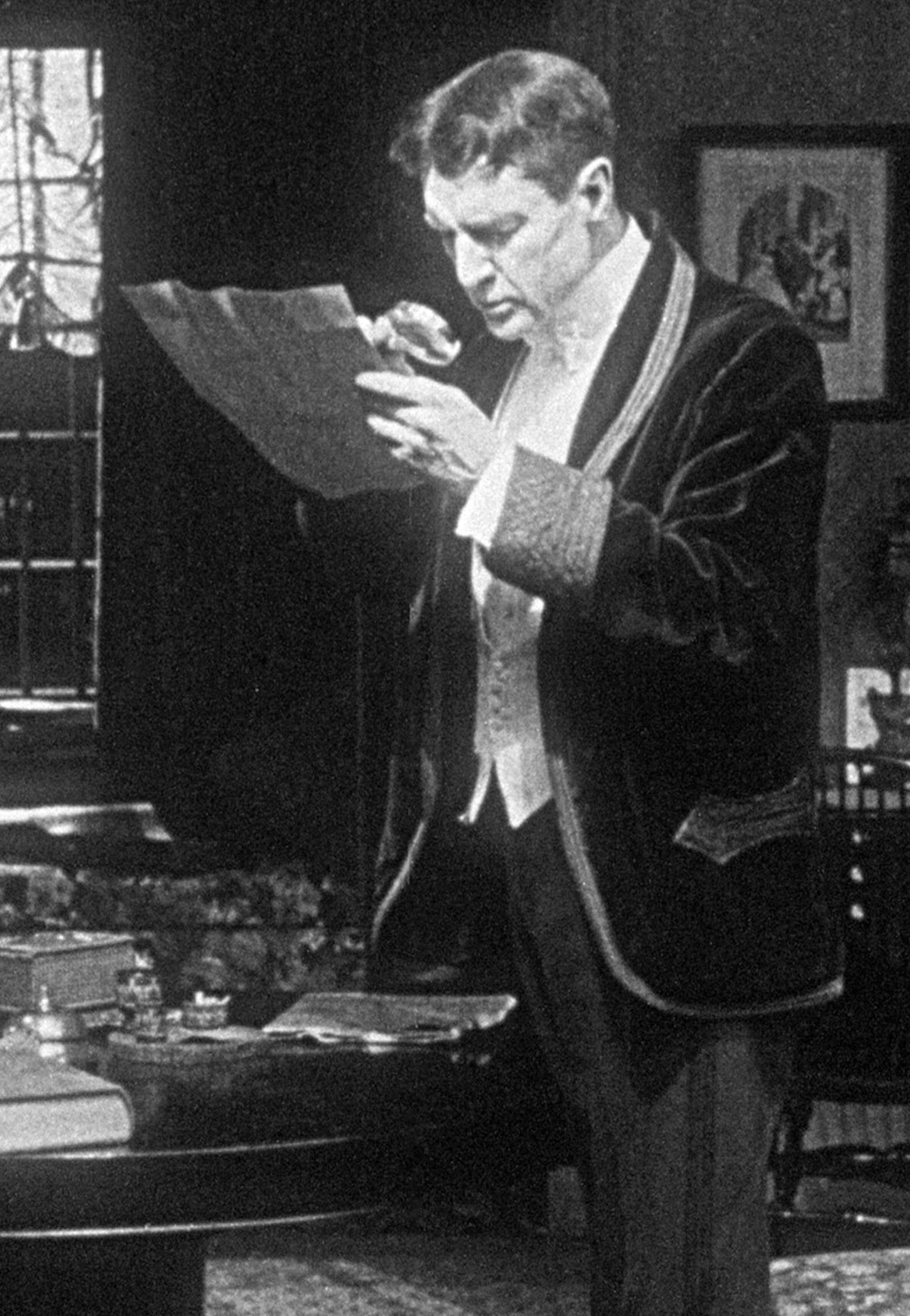
MONTIGNY-LE-BRETONNEUX, France – This is the story of how a 1916 silent film starring William Gillette, the most renowned Sherlock Holmes interpreter of his day, came to be lost for nearly a century. And then, miraculously, found.
But we'll get to that.
In the meantime, if anyone ever writes a mystery about a detective searching for a long-lost artifact, in the shadowy corridors of a film archive so atmospheric it could have been designed for the movies, then there is only possible archive for the job. Call off the location scouts. We have a winner.
The archives of the Cinémathèque Française are housed in a sprawling 19th-century military compound crouching against a hillside, situated among trees, chirping birds and a panorama of greenery. Fort de Saint-Cyr was built in response to the 1870 Prussian invasion of France, 16 years before Sir Arthur Conan Doyle introduced his sleuth revered around the world.
One day in February 2014, a staff member of the Cinémathèque archive, 15 miles southwest of Paris, sat down to catalog another day's worth of fragile nitrate films. Alphabetically this was an "S" day. Archivist Emmanuelle Berthault cracked open the first of several moldering film cans shipped over from the nearby Centre National du Cinema.
"Most of the films," she later wrote to a fellow film historian, "are pretty well identified and we know what we are going to discover in the cans. But one of the titles was mysterious, it was only under the title 'Sherlock Holmes.' "
The cans contained three different films: a German film produced by UFA in 1937, an episode of a 1954 TV series ("The Case of the Texas Cow Girl") and a "very puzzling" third, made up of five cans of reels of a duplicate negative, or "dupe neg" in archival parlance.
"It was very easy to identify the film," Berthault recalled. "There were flash-titles, with the title, the director's name, the production company and the name 'William Gillette.'


