

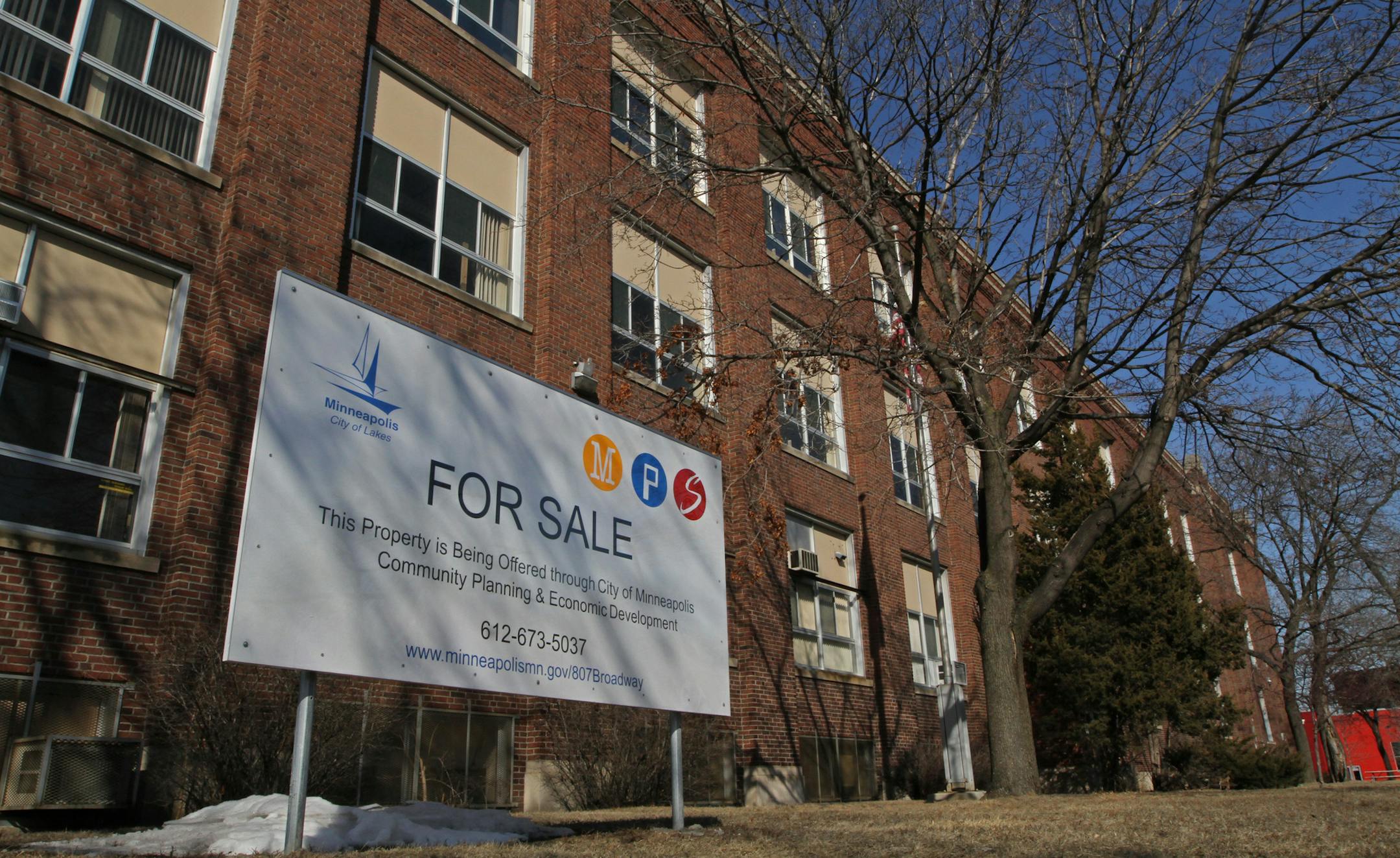
School employees couldn't wait to move out of their rattrap headquarters in northeast Minneapolis. Developers can't wait to get at the vintage building.
Seven teams have submitted proposals to rework the huge former light bulb factory, just off the corner of Broadway and Central. They range from creating entirely commercial space to all housing. But a neighborhood task force is backing three proposals that create room for small businesses to grow jobs. Those three come from developers that have rehabbed nearby buildings.
City development experts are analyzing the competing offers. In late April or May, the school board is expected to pick the development firm, then start negotiating a purchase agreement. The finances of the offers have been kept secret.
One big issue looming over potentially the second sale of a Minneapolis school building this year is whether the community's voice will be heeded. The board earlier this month overrode a neighborhood group's recommendation that a South Side school be sold to a developer for senior housing.
"That's the million-dollar question," said Pat Vogel, a co-chair of the 807 Broadway task force, named after the address of the headquarters vacated by the district last summer for a new building at 1250 Broadway. The group wants the district to forgo taking the best financial offer in favor of long-term jobs.
Jenny Arneson said she doesn't think the two pending sales of school property are comparable. The school board member elected from the city's East Side noted there's no school involved this time. That's unlike the former Northrop school property at 1611 E. 46th St. The board voted to sell that school for an expanding charter school network although a competing offer was higher and would have created tax base.
Environmental concerns
The 807 building, at more than 236,000 square feet of space on the equivalent of more than a city block, is a large canvas for a developer. But it also poses risks from the potential costs of dealing with contamination from asbestos, mercury and lead because of its history as a factory. The parking lot is laid over a bed of asbestos-laden vermiculite, according to the state.
The brick shell of the original 1914 building and its additions are likely to be gutted by would-be developers. Most would keep a roomy garage, but some would tear down flimsier outbuildings on the north end. Most pledge to keep the parking lot across NE. Quincy Street, as sought by neighbors to avoid parking problems, and to convert for community use a courtyard once used for parking.


