

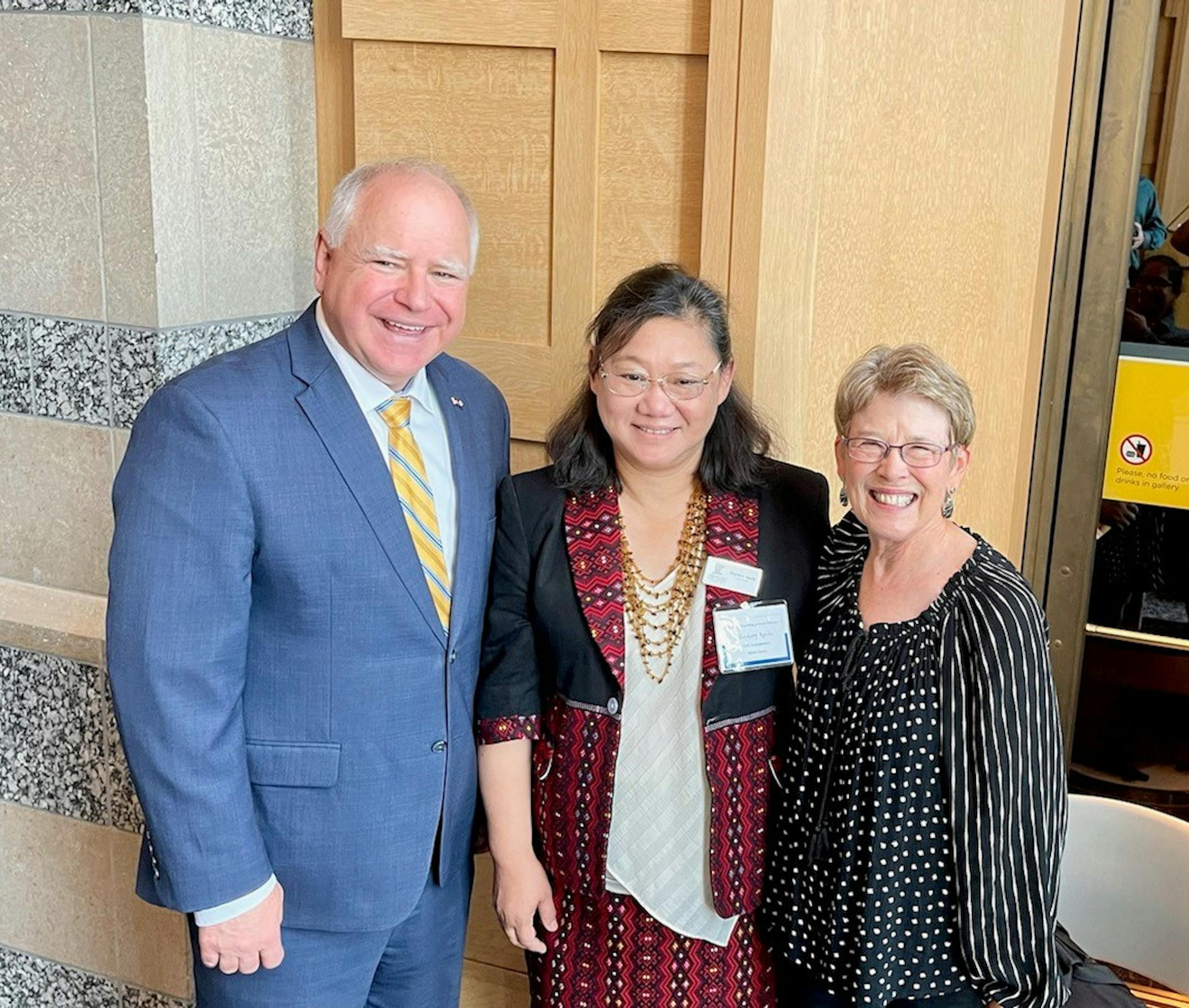
Maylary Htoo Apolo's empathy for refugees is natural: She's been there.
At 19, she survived a two-month journey through the jungles of Myanmar in Southeast Asia, in search of safety at a distant Karen village after her homeland descended into a dangerous political quagmire.
Along with 11 family members, including children and her 78-year-old father, Apolo hid from murderous soldiers by day and trekked during the dark nights, grabbing morsels of rice and eating fish they occasionally managed to catch.
She suffered malaria and jaundice along the way yet managed to press on.
"It was mountainous and there were river crossings," said Apolo. "It was a very hard walk."
Only 10 months after making it to their destination, the military attacked. Apolo, along with other women and children, fled once more. She lived at the Maw Ker refugee camp in Thailand until 1992, and then at the Mae La camp through 2008.
Her future husband, Mordecai, lost his left leg when stepping on a land mine, but she refused to break their engagement. Instead, when her gravely injured fiancé urged her to find a better man, she responded, "I have found someone new. I found a man with one leg."
Three weeks ago, on July 19, Apolo stood before a dignified assembly at the Minnesota History Center as one of 12 recipients of the 2021 Minnesota Department of Human Services Outstanding Refugee Award, hers in the category of civic engagement.


