

There probably wasn't a more patriotic graduate from the University of Minnesota. Or one dealt as harsh a hand as Tokutaro Nishimura Slocum.
Born in Japan in 1895, he emigrated to America at 10. When his father moved to Canada to escape discrimination, the Slocum family in Minot, N.D., adopted "Tokie."
He did well enough at the U to gain acceptance to Columbia Law School in New York — just as the U.S. entered the first world war in 1917. Slocum dropped out, enlisted in the U.S. Army and fought in the forests and trenches along the Western Front. German poison gas would scar his lungs for the rest of his days.
Initially denied U.S. citizenship despite his service, Slocum lobbied for legislation granting citizenship to Asian-Americans who fought for the U.S. during the Great War. When Japan attacked Pearl Harbor a generation later, Slocum helped the FBI arrest Japanese immigrants living in America.
That didn't stop the government from forcibly removing him from his home in Los Angeles in 1942 and locking him up at the Manzanar incarceration camp. He was one of 120,000 Japanese-Americans corralled during WWII.
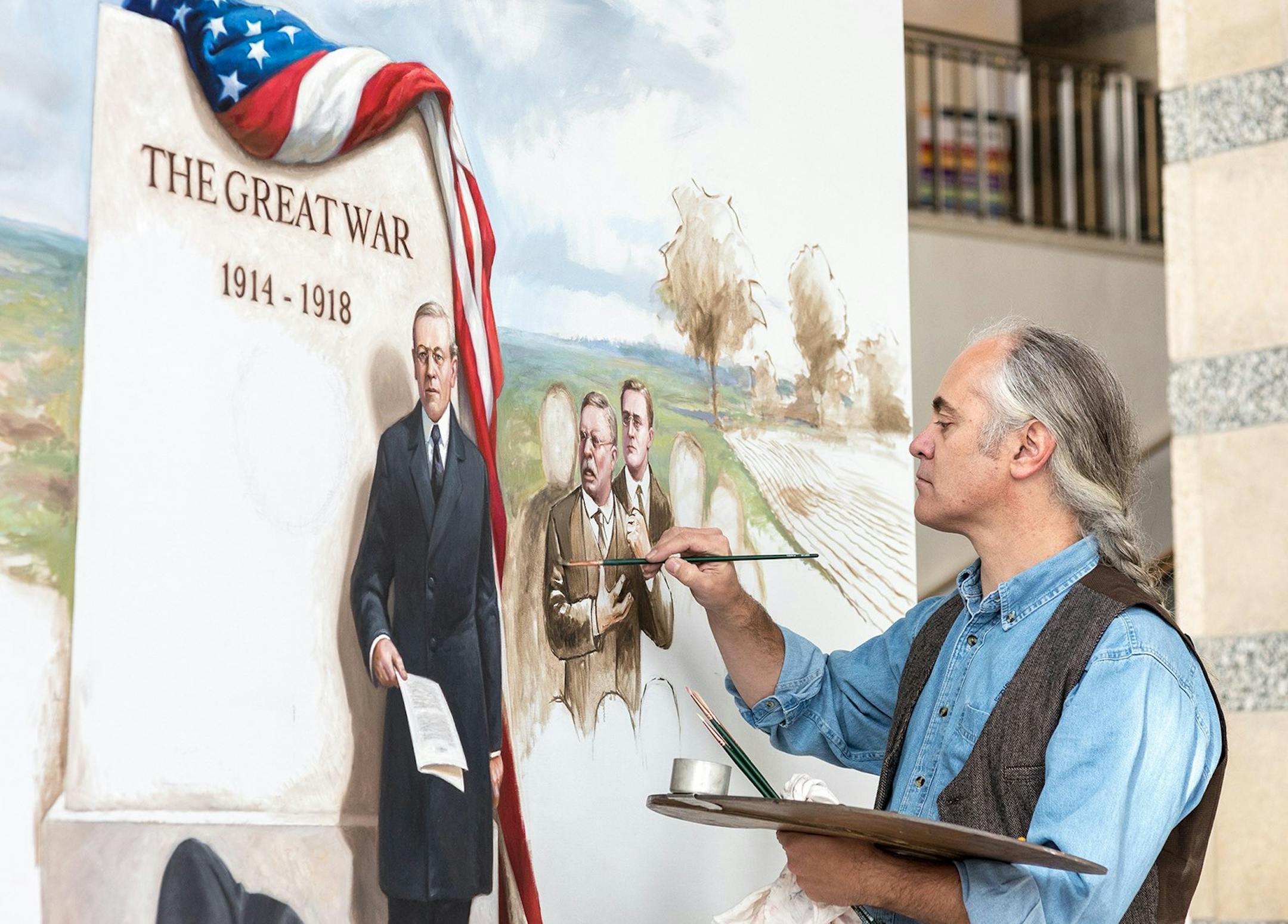
Slocum battled health problems for years before dying in 1974, two weeks shy of his 79th birthday. Tokie lives on, though, in a massive new mural-in-progress at the Minnesota History Center in St. Paul.
"When this mural is finished, we will showcase 100 individuals who had a hand in creating modern America," said David Geister, a self-described "storyteller with a paintbrush."
The mural — three 8-foot-by-10-foot panels slated for completion this month — is part of the History Center's current WWI exhibit running through Nov. 11. It features well-known 20th-century Americans from President Woodrow Wilson to Helen Keller; F. Scott Fitzgerald to Duke Ellington; Amelia Earhart to Frank Lloyd Wright.


