

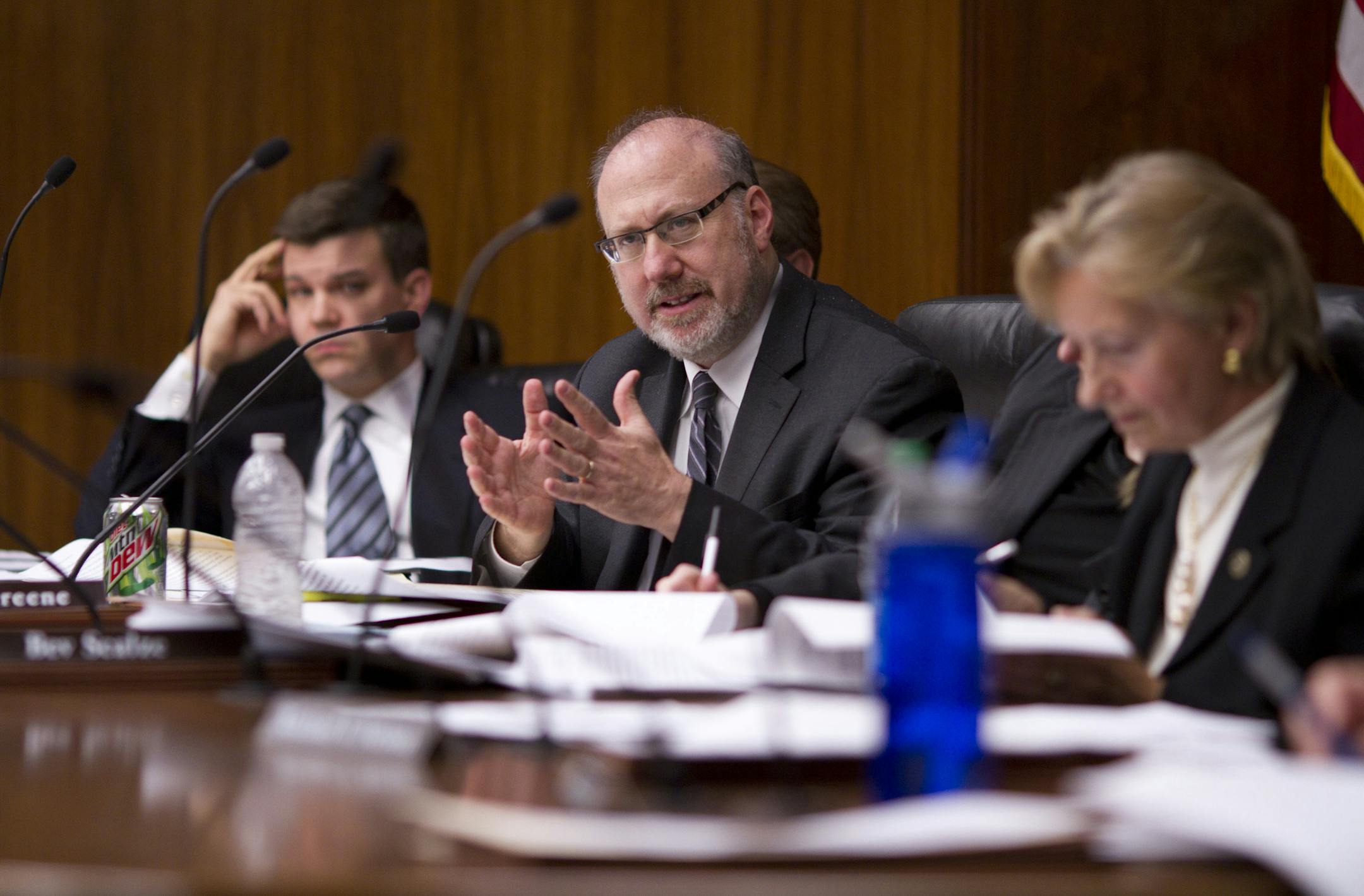
When Minneapolis DFL Rep. Frank Hornstein rose on the Minnesota House floor in 2007 to object when two critics of a smoking ban bill likened it to Nazism, I considered his point well-taken.
Suggesting that a ban on smoking in Minnesota restaurants is even remotely akin to the German political force responsible for the Holocaust is a repugnant overreach. It trivializes the 20th century's most shameful episode and the wounds of those touched by the genocide of 11 million people, 6 million of them Jews.
That would include Hornstein. All four of his grandparents died at Nazi hands. His mother and father were escapees from German forced-labor camps who eventually made their way to Cincinnati, where he was born in 1959.
I sympathized again a few years later when, on these pages, Hornstein told readers about the sting he feels when Nazi analogies arise during routine legislative debates. He cited quite a litany: The state's teachers' union had been called the "teacher's Gestapo." A light-rail construction zone was said to include "concentration-camp fencing." Oil-bearing freight trains were likened to "the train from Auschwitz."
Hornstein's grandmother died at Auschwitz. So did a million other Jews. Flippant references diminish the enormity of that crime, he wrote two years ago.
Thus when politicians, pundits and people I ran into at the grocery store lately took to comparing Donald Trump to Adolf Hitler and the nativist bent of the 2016 Republican Party to the 1930s-era National Socialist German Workers Party, I wondered: What would Hornstein say?
"I won't say 'Don't go there,' " he replied. "But know what you're talking about if you do. … Trump is in a different category than a smoking ban."
Indeed he is. The front-runner in national GOP presidential polls has called for the deportation of an estimated 11 million undocumented immigrants; denial of entry to the U.S. for all Muslims, regardless of their citizenship; and a database/watch list/surveillance system (his comments have meandered) for either Syrian refugees or Muslims generally. In response to November's ISIL attack in Paris, he suggested closing some mosques in the United States.


