

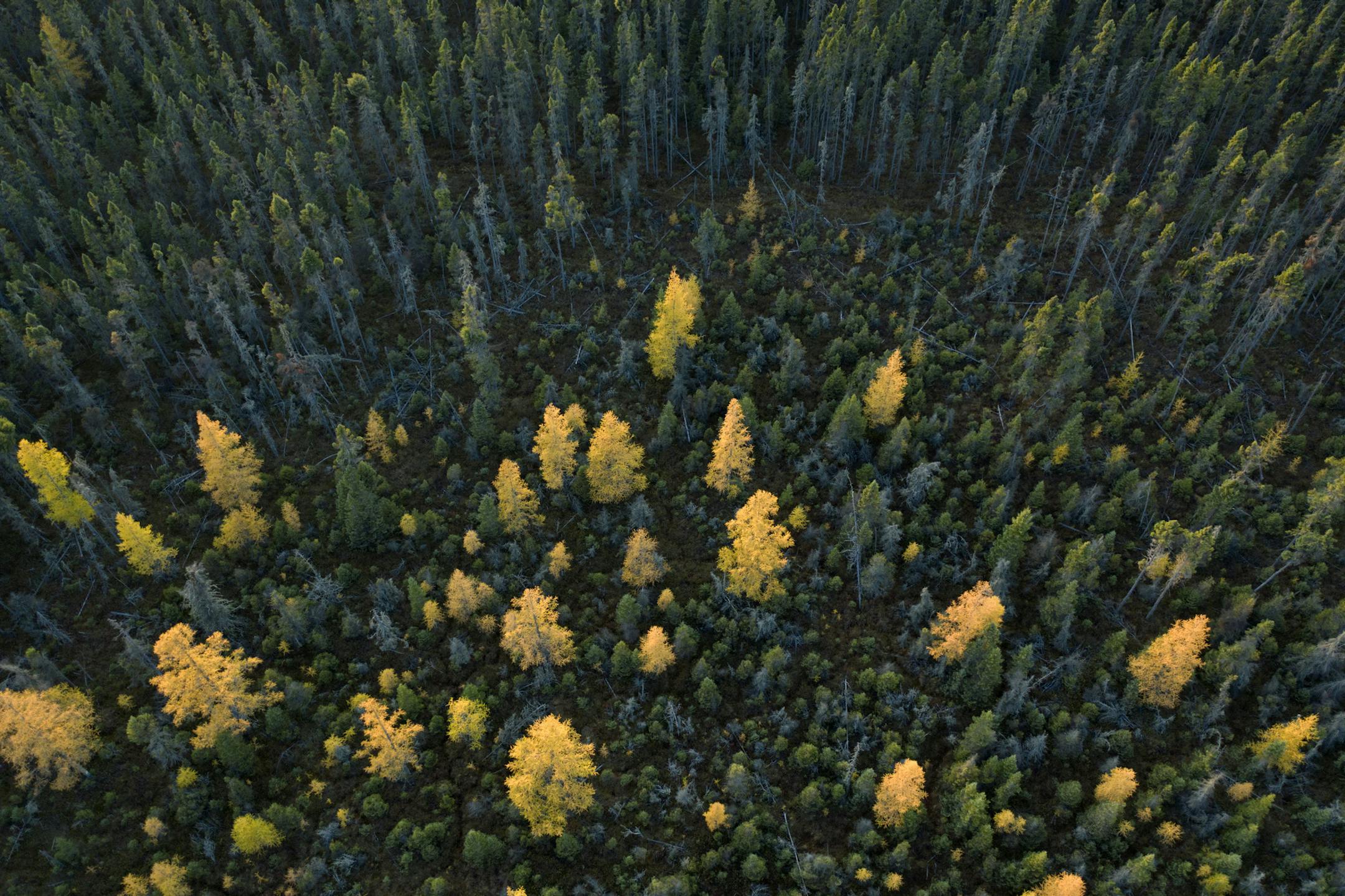
Kindling is piling up on the forest floor. Beetles, pests and diseases that have been attacking Minnesota's core tree species over the past several years have turned entire stands into the ready-made fuel of fallen branches and dead trunks. Now a hot and dry spring, with more abnormally dry weather expected well into summer, has foresters bracing for what could be a brutal wildfire season.
And they're worried about the impact a prolonged drought will have on Minnesota's trees.
More wildfires had already broken out across the state by mid-June than in all of last year. The state typically has fewer than 1,200 wildfires a year, burning roughly 25,000 acres. So far this spring, more than 1,425 fires have burned roughly 35,000 acres of forest and grassland, according to the Department of Natural Resources (DNR).
"I don't see it going anywhere or mitigating soon," said William Glesener, DNR wildfire operations supervisor. "This is a period when we should be having very few fires, but we're adding about 50 a week. We're really going to be in it in a couple weeks when things really dry out."
Wildfires are typically at their worst in the spring and fall, slowing down in the summer when trees and plants are fully green and rain picks up. But a summer reprieve may not happen this year.
More than half of Minnesota is in a drought, with an increasing swath of southeastern Minnesota in severe drought. Long-term forecasts from the National Oceanic and Atmospheric Administration (NOAA) expect the drought to continue through the summer.
![A small portion of the Camp 8 stand of 200 year old White and Red Pine at the U of M's Cloquet Forestry Center is dying off, and the understory is being replaced by mostly red maple. According to Forest Manager & Research Coordinator Kyle Gill, "The specific mortality agent of these trees is probably armillaria root rot or a beetle. Likely, mortality has been induced by weakened inherent defenses to beetles and fungi because of old age, climate change, our understory treatment in 2009 combined with a drought, and lack of surface fire for the past 110 years." ] The state's forests are hitting a perfect storm of bad fortune and long term change, creating a tinder box set to cause major fires this year. The burgeoning drought is coming with high temperatures after a rather weak winter with little snowfall. Spruce killing beetles are in the midst of a years-long bloom. Northern paper mills have shut down, leaving a plethora of dead and dying trees with no place to go. The emerald ash borer is spreading, killing off tens of thousands of ash. The eastern larch beetle is killing off the vast majority of the state's tamarack trees. With no water and higher spring temperatures, most trees are struggling to fight off pests of all sorts. There is a great deal of fuel out there..](https://arc.stimg.co/startribunemedia/MLT2LEOTKUCUK7A6GJXSZKMNAY.jpg?&w=1080)
The dry spell comes at a precarious time for the state's canopy. Hundreds of thousands of acres of balsam fir trees north of Duluth have either died or are struggling to fight off a bloom of a pest called spruce budworm. About 90% of the state's tamarack trees have been killed off in just the past five years. Oak wilt and the emerald ash borer continue to spread farther across the state, leaving dead oak and ash in their wake.
While a drought alone wouldn't kill mature trees for quite some time, it weakens them to the point where they can't fight off insects, pests and diseases, said Brian Schwingle, central region forest health specialist for the DNR.


