

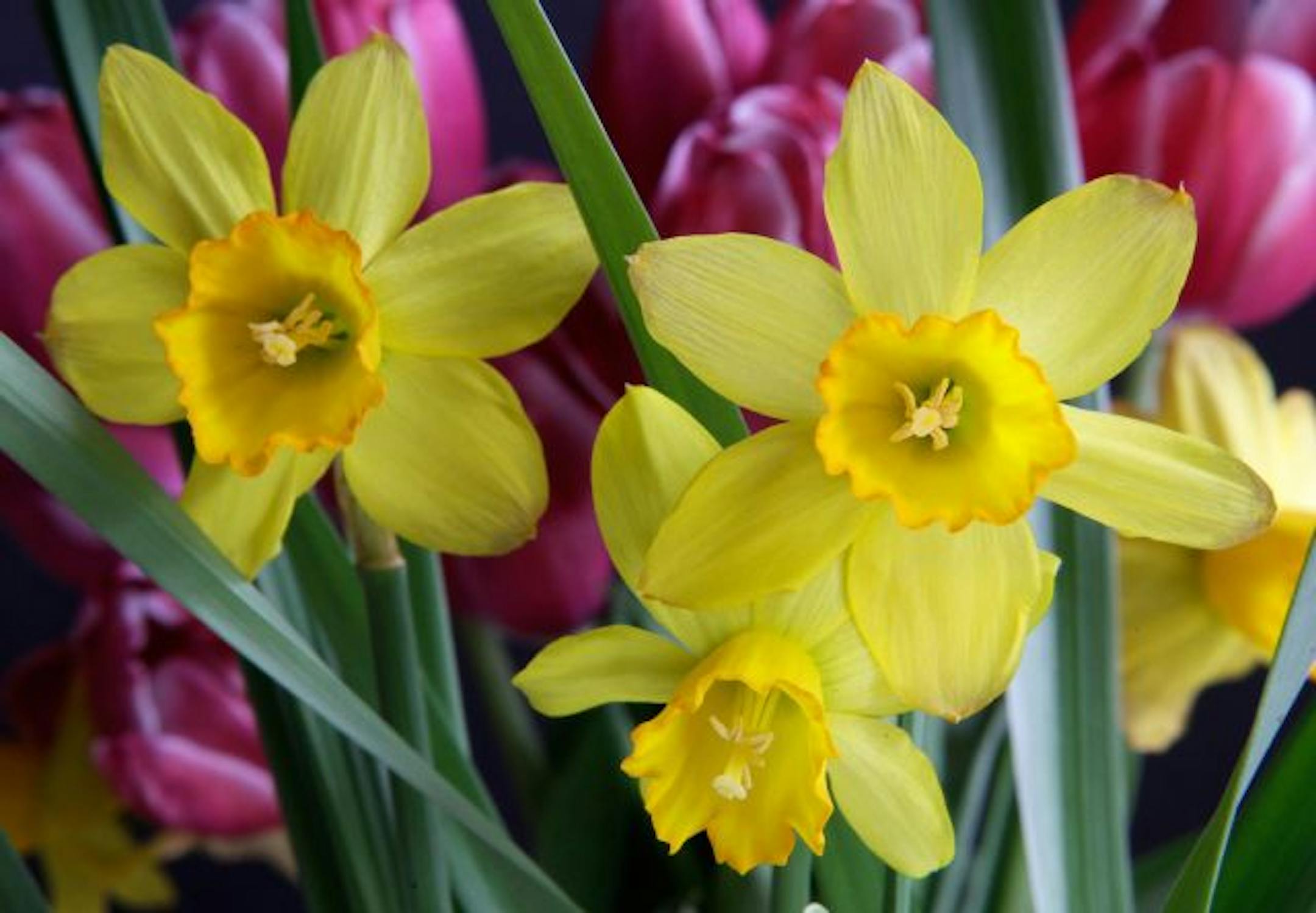
I don't mind Minnesota winters, but I always feel a little let down after the holidays, when the days are short and even daylight can be muted. That's when a pot of spring bulbs, radiating color and heavenly scent, like a little garden miracle, can brighten a winter day.
For many years, I've given pots of forced bulbs as Christmas gifts. Some people say it's the best gift they receive.
I keep several pots for myself, too, enough to have flowers in the house right into March.
Forcing bulbs is easy, but to have winter bloom, you need to begin now. You'll need clean pots, commercial potting soil (no garden dirt for this) and an appropriately cold place to mimic winter conditions that bring the bulbs into bloom.
If you have room in your refrigerator, that works. A heated garage where the temperature never gets below freezing is also good. According to the University of Minnesota Extension Service, most bulbs need temperatures between 35 and 48 degrees for about three months to pop their blooms.
In my old house, the unfinished basement includes a chilly corner room that was once a coal bin. A previous owner thoughtfully lined the little room with shelving, and that's where I put my pots of bulbs to grow.
While the experts at commercial greenhouses have the know-how to get pots of mixed bulbs to bloom at nearly the same time, my home experiments have not been successful at that. While hyacinths will bloom after just 11 or 12 weeks of chilling, some tulips need up to 20 weeks before they are ready to flower. My pots of mixed bulbs turned out to be messy and unappealing, with hyacinths dying back before crocuses and daffodils were even showing buds. So if you want to force different kinds of bulbs, give daffodils their own pots, put hyacinths in another, and so on.
Smaller varieties of daffodils like Tete-a-Tete and Peeping Tom are good for forcing because they are less likely to get rangy and need staking. The same is true for tulips — shorter is better.


