

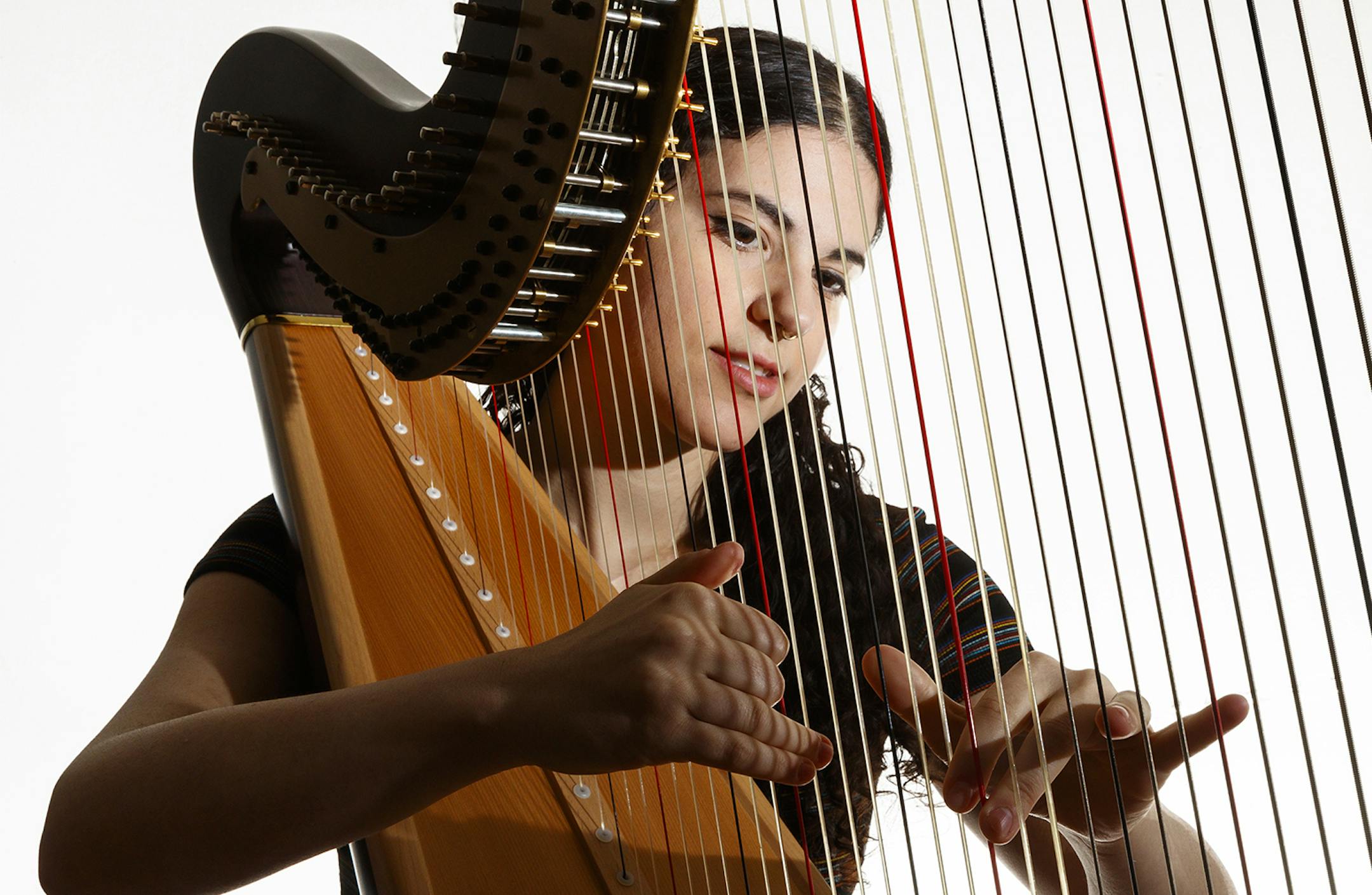
Sara Henya's art is her music and she makes playing the harp look effortless.
But when her fingers are still, that's a different story. Her brain barks orders her body cannot ignore. She may hit herself in the face. Maybe she will need to hit her elbows hard against the back of a chair. And then there are the sounds. They erupt out of her.
Profanities. Loud, unwilled. Yet they are as much a part of her as the golden tones she coaxes from her harp. Henya of Northeast Philadelphia is part of a small, largely understudied sisterhood. She is a woman with Tourette's syndrome.
"It's kind of precious to me," said Henya, 24. "If I had to pick whether I would keep it or get rid of it, I would keep it because I feel like my perspective on the world and who I am and how I treat other people is different than it would have been if I didn't have it."
Defined as a neurodevelopmental disorder characterized by involuntary, often repetitive movements and vocalizations, Tourette's is estimated to affect 1 in every 162 children in the U.S., according to research.
But the Centers for Disease Control and Prevention has reported that as few as half of Tourette's cases are diagnosed.
As with autism and ADHD, males are far more likely to have Tourette's than females — about four times more likely.
But Anthony Rostain, a Penn Medicine and Children's Hospital of Philadelphia psychiatrist and member of the Tourette Association of America's medical advisory board, said he believes that the social burden of Tourette's is particularly heavy for women.


