For virgin traveler, ease into Belize

Swarming sharks, howler monkeys and Mayan temples rewarded a timid traveler for his first international (though still nearby) trip.

November 16, 2013 at 8:09PM
The view from our little beach hotel the Conch Shell Inn, turns out is owned by a couple from Richfield, small world. ] Ray Grumney
The view from the Conch Shell Inn, in San Pedro Town, takes on a tranquil feel at dusk. The quaint beach hotel is owned by a couple from Richfield, Joan and Mark Johnson. Joan was quick to offer advice about what to see in Belize and knew just what to do, where to eat and which tours to join. (The Minnesota Star Tribune)

The

water taxi revved its outboard motors, spitting the scent of gasoline into the tropical air, and then took off, headed from Belize City to San Pedro Town on Ambergris Caye, 35 miles away. Onboard, airplane-weary tourists, commuting locals, boxes destined for island businesses — and my wife and I with our luggage — crowded on wooden benches for the hour-plus trip.

Once the boat took off, we quickly lost sight of the onboard chaos and instead became absorbed in the tranquil view.

To call the waters of the Caribbean turquoise is to sell them short. There is an underpinning of deep ultramarine, topped by intricate cerulean waves shimmering across the surface. When the sun casts a certain light, the water seems lit from below and downright otherworldly.

That's what I'd come for: to dive into a whole other world.

It took me decades to get a passport, and not because of some State Department mistake. When I landed last winter in Belize, I was a 56-year-old virgin traveler. I had never been outside the continental United States — or my own travel comfort zone. It's not that I fear planes or other modes of travel. I simply prefer to vacation in places I have been before, where I know what to expect ­— places I consider emotionally safe. And I bet I'm not alone.

My wife has no such hesitation. She arranged for us to get passports several years ago. When they arrived in the mail, mine quickly landed in the back of my sock drawer, where I would have been happy to keep it tucked away. My wife, though, had other ideas.

After she pushed and cajoled and showed me pictures of tropical beaches, I finally agreed to vacate the country for one week. All it took was a few clicks of her mouse and our vacation was set for Belize, a country in our time zone, where dollars are welcome and where English is the official language — but, still, a world away. And so we had taken the first step in what, to me anyway, was a huge adventure.
Culture shock

On Ambergris Caye, the water taxi docked in front of the Conch Shell Inn, right where we were staying, so we quickly checked in, unpacked and then headed out for a walk.

That's when the culture shock set in.

Some of the dining options on the island were housed in colorful but dilapidated shacks no larger than a garden shed. Everywhere we walked, locals wanted to sell us handicrafts. A humble general store was called "Caye Mart," in a cheeky nod to the American chain. Bicycles and golf carts zoomed along the pothole-pocked roads. We were two among many wandering tourists; Ambergris Caye is a popular vacation spot because of its proximity to Mayan ruins, a vibrant coral reef that parallels the island, and its sunshine and charm.

I felt fortunate that we decided on the Conch Shell Inn, which is an oasis of calm in a busy little beach town. More important than location to me, though, is that it is owned and operated by a couple from Richfield, Joan and Mark Johnson. Joan felt like a friend from home, albeit one who knew just what to do, where to eat and what tours to take.

Mayan adventure

We rose early for our daylong trip to Lamanai, an archaeological site that was once a major Mayan city. Thanks to the recommendation of Joan, our tour avoided a return to Belize City. Instead, we wound our way through the back country.

First, we navigated a river lined with mangroves and stopped in the tiny town of Bomba, which lacks both running water and electricity. After an open-air lunch and a look at handcrafted sculptures by artists there, we hopped onto a rickety blue school bus and bounced along the Old Northern Highway. Finally, we took a boat ride up the New River.

Along the way, our drivers and guides told us about their country, stopping often to point out crocodiles, spider monkeys, bats hanging from a tree and a giant termite nest that rose from the branch of a tree like some giant, overgrown mushroom.

As we hiked on our final approach to the Mayan ruins, an eerie, loud, prehistoric sound pierced the jungle air, stopping us in our tracks. Just a little howler monkey, our Mayan guide told us, adding that its piercing cry was used as the basis for the T-Rex roar in the movie "Jurassic Park."

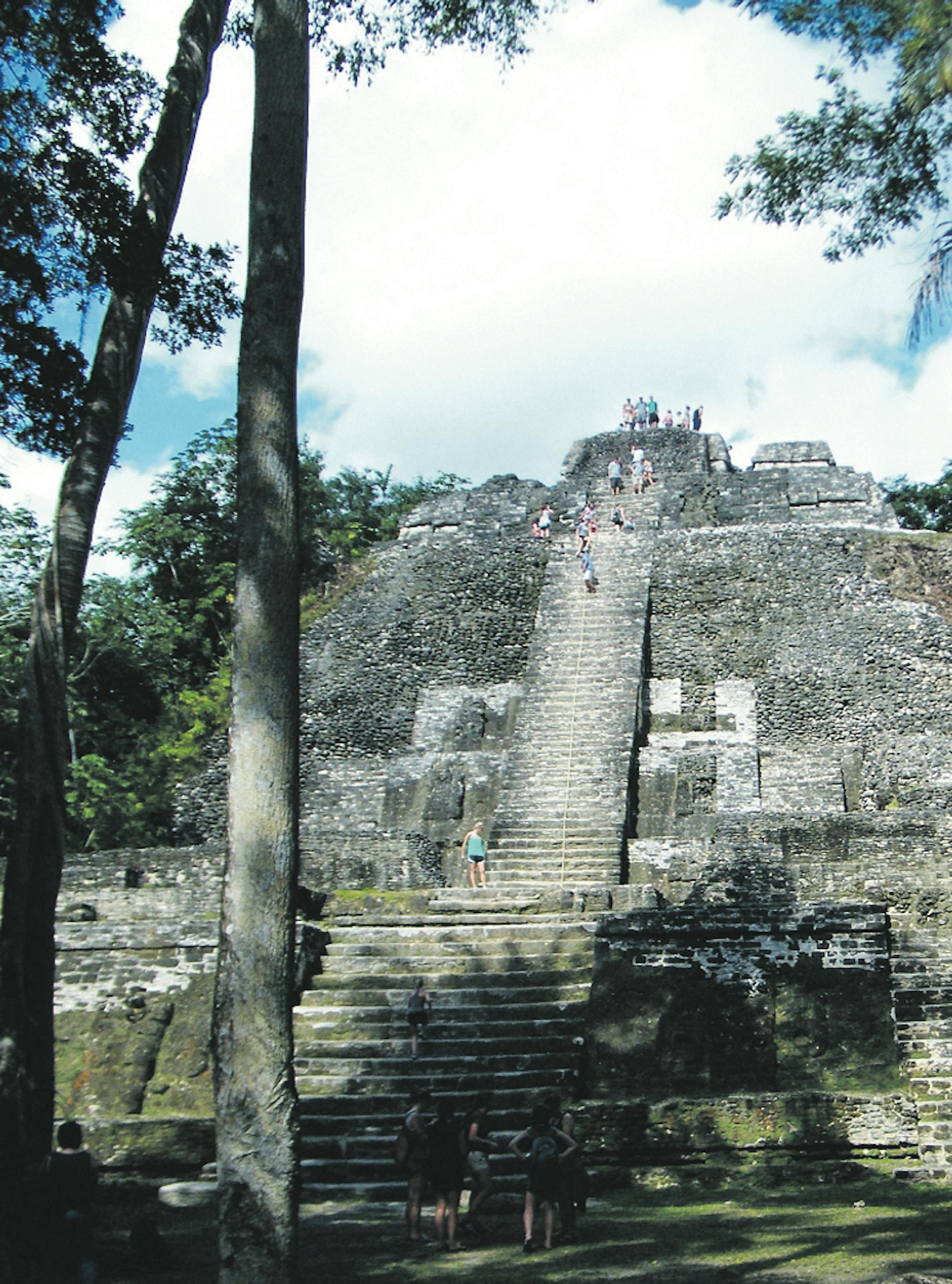
Thrills continued when we crested a set of stone steps still somewhat engulfed in greenery and saw Jaguar Temple, its stones depicting a jaguar's head. Next up, Mask Temple, which is adorned by a 13-foot stone mask of a Mayan king. Then, I climbed the summit of High Temple, which was built centuries ago and excavated from jungle growth in the 1970s. From the top, I looked down on the surrounding landscape, miles of thick trees and the waters of the New River. In the heart of the jungle, stepping back in time at least 1,300 years and standing atop the highest of four temples at the site, I felt like my own king.

Snorkeling with sharks

My wife and I had never snorkeled before, yet one morning we hiked down from the Conch Shell Inn to the pier, where we boarded the 40-foot catamaran Lady Leslie, run by a father-and-son team, for a trip to the coral reef. During our half-day excursion, we would hit two snorkeling locations, plus stop at a quieter nearby island, Caye Caulker, for lunch and shopping.

Our snorkeling guide, Jody, the son, didn't help matters when we asked about encountering great white sharks. "Nothing to worry about," for him anyway. "Great whites only like white meat," he said, his practiced lineup of jokes helping to ease our fears of the unknown.

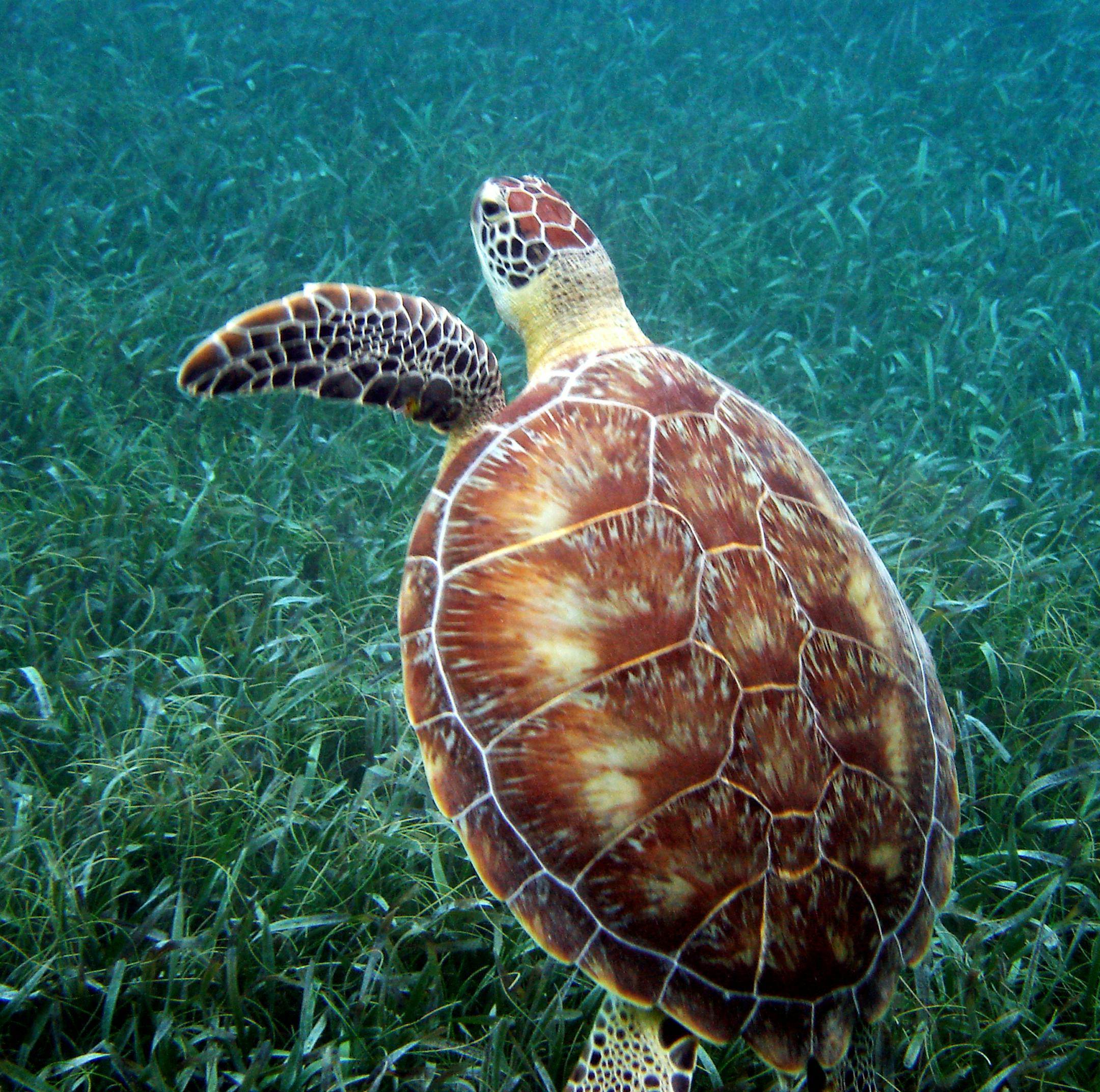
Jody gave us a quick demonstration on using snorkeling gear. Nonetheless, my wife was nervous about jumping off the boat and nearly gave up when Jody calmed her down and gave her a life preserver to help her stay afloat. The payoff was huge: a green moray eel peeked out from the coral. Tarpon, sea turtles, stingrays, angelfish and countless other colorful species swam ­among us.

Soon, it was time to push off to our next stop, a location known as Shark Ray Alley, known for its abundance of sharp-toothed swimmers.

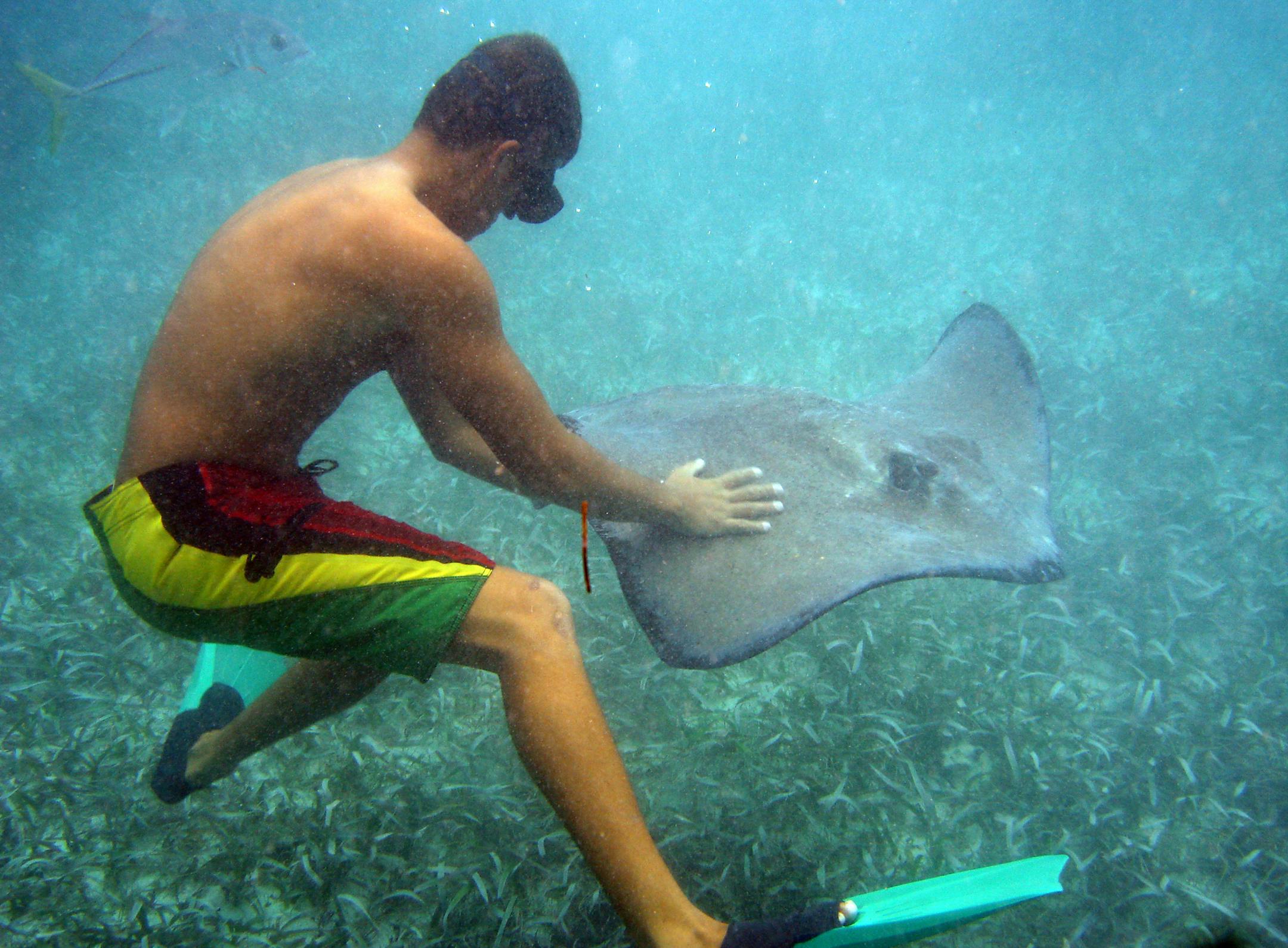
Jody threw chum into the water, and soon sharks and rays swarmed beside the boat.

I asked about the safety of jumping into shark-infested waters and then turned to check on my wife. She was nowhere to be seen, until I looked overboard and saw her swimming among the fish, without her life preserver.

I guess she overcame one of her fears, just as I had overcome one of mine.

I'm glad I broke in my passport in Belize. Its sights above and below water made my first international trip worthwhile. Now, though, I can see a whole world of possibilities. Or, maybe, I'll return to my new comfort zone, howler monkeys, sharks and all: Belize.

Raymond Grumney • 612-673-7075


The first snorkeling location was called Hol Chan, (little channel). We saw a green moray eel, tarpon, sting rays, black grouper, angelfish and sea turtles just to name a few. -Belize
The first snorkeling location was called Hol Chan, (little channel). We saw a green moray eel, tarpon, sting rays, black grouper, angelfish and sea turtles just to name a few. -Belize (The Minnesota Star Tribune)
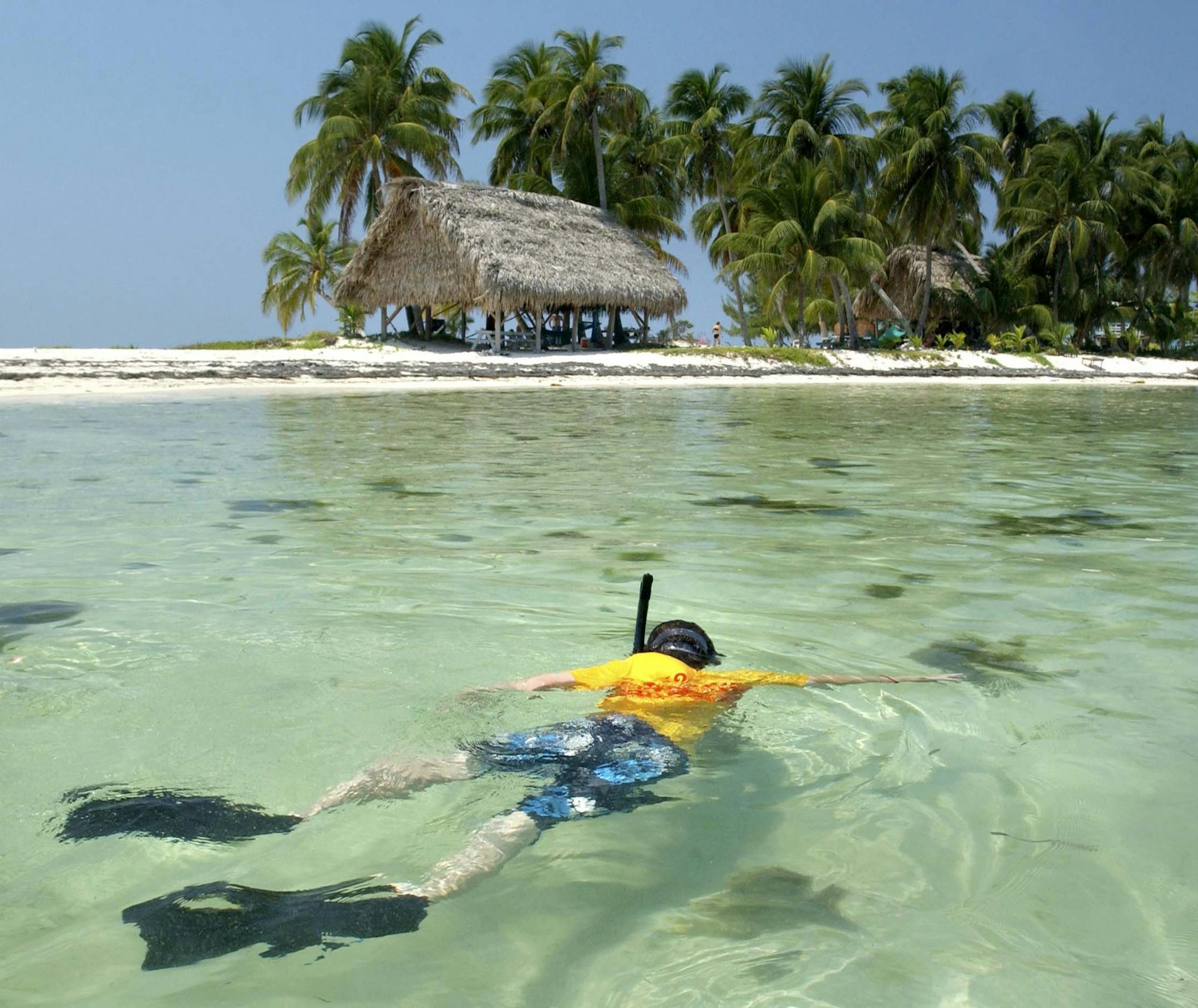
A young boy snorkles off of Ranguana Caye, in March 2005, a small island off the coast of Placencia, Belize, a beach town in the southern part of the country. The tiny country of Belize, a little smaller than Massachusetts, has caught the collective eye of vacationing hordes for years.
Among the advantages Belize offers first-time international travelers: locals speak English, U.S. dollars are welcome — and the snorkeling is fantastic. (The Minnesota Star Tribune)
A spot on the New river where our guide knew there would be spider monkeys ] Belize - Ray Grumney
A spider monkey regards travelers along the New River at a spot that a guide knew to be a hotspot for the primates. (The Minnesota Star Tribune)
Ray Grumney, a Mayan ruin near Belize City.
A climb to the top of High Temple at Lamanai, once an ancient Mayan city, provides expansive views of the surrounding jungle. (The Minnesota Star Tribune)
Snorkeling at Shark Ray Alley, I think the name tells you all to need about what you will see there. The first thing our snorkle guide, Jody does is throw chum (AKA fish heads) into the water to attract sharks and rays to the boat. Here Jody as handeling one of the many stingrays we saw.
The author’s snorkle guide, Jody, tangles with a stingray. (The Minnesota Star Tribune)
about the writer

about the writer

Raymond Grumney

News Graphics Director

Ray Grumney is the news graphics director at the Star Tribune, with a proven 30-year award-winning track record. He is a driven visual journalist focused on developing and implementing high-impact design solutions to sometimes complicated data-driven stories.

See Moreicon

More from No Section

See More
FILE -- A rent deposit slot at an apartment complex in Tucker, Ga., on July 21, 2020. As an eviction crisis has seemed increasingly likely this summer, everyone in the housing market has made the same plea to Washington: Send money — lots of it — that would keep renters in their homes and landlords afloat. (Melissa Golden/The New York Times) ORG XMIT: XNYT58
Melissa Golden/The New York Times

It’s too soon to tell how much the immigration crackdown is to blame.