

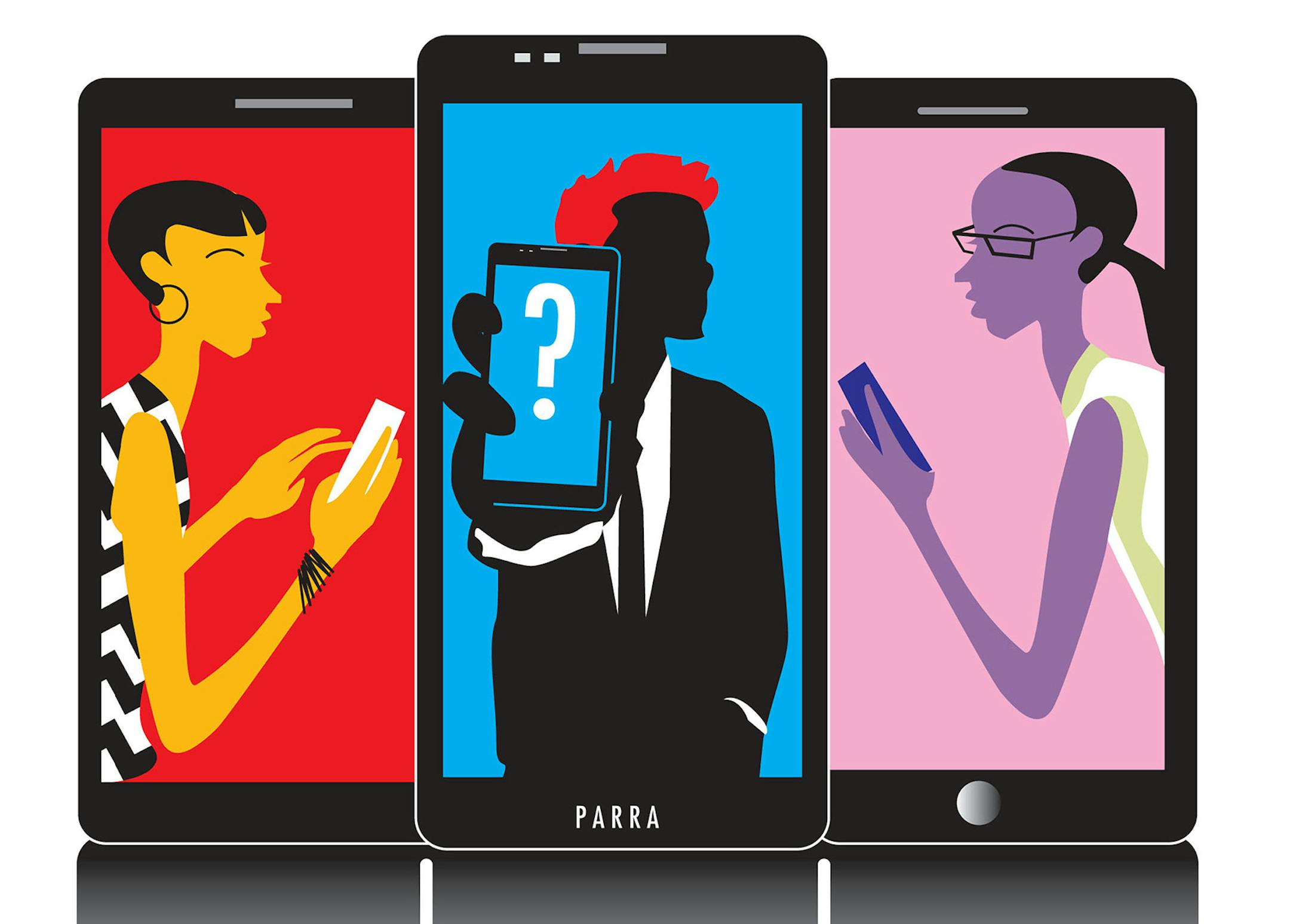
If you wonder what's happened to newspapers, magazines and books — or for that matter, conversation — leave your cellphone home, as I did unintentionally on a recent weekend, and travel. And look around you.
That little device hasn't just upstaged every other way of getting and sharing information, it's also become the No. 1 way of interacting — often to the exclusion of those around you.
Only on entering the airport on my way to Chicago on a Friday did I realize my cell was still charging on the kitchen counter. This was a disaster, bringing panic and helplessness. What about the mobile boarding pass I'd uploaded? How would I find my sister, who was flying in from Massachusetts? How would I even know which train stop to get off at?
And how could I make it through three days and two nights out of range of family, work and breaking news?
Denial soon followed: I would simply run home and get it — though there wasn't enough time, and I didn't have my car. Or I'd get a temporary phone, though there were none for sale or rent at the Des Moines airport — and no way to research the options.
Then came despair. All around me, people were talking, reading, typing or playing games on their phones. They all seemed so purposeful. But there I was, alone with my newspaper.
I imagined all the people feeling insulted by my lack of response to their messages. My editor might have a question on my column. Potential tweets were everywhere, but no way onto Twitter.
Everyone reached for their phones the minute we landed. Everyone, that is, except me. On the train into town, people traveling together went about their separate business over their separate phones.


