

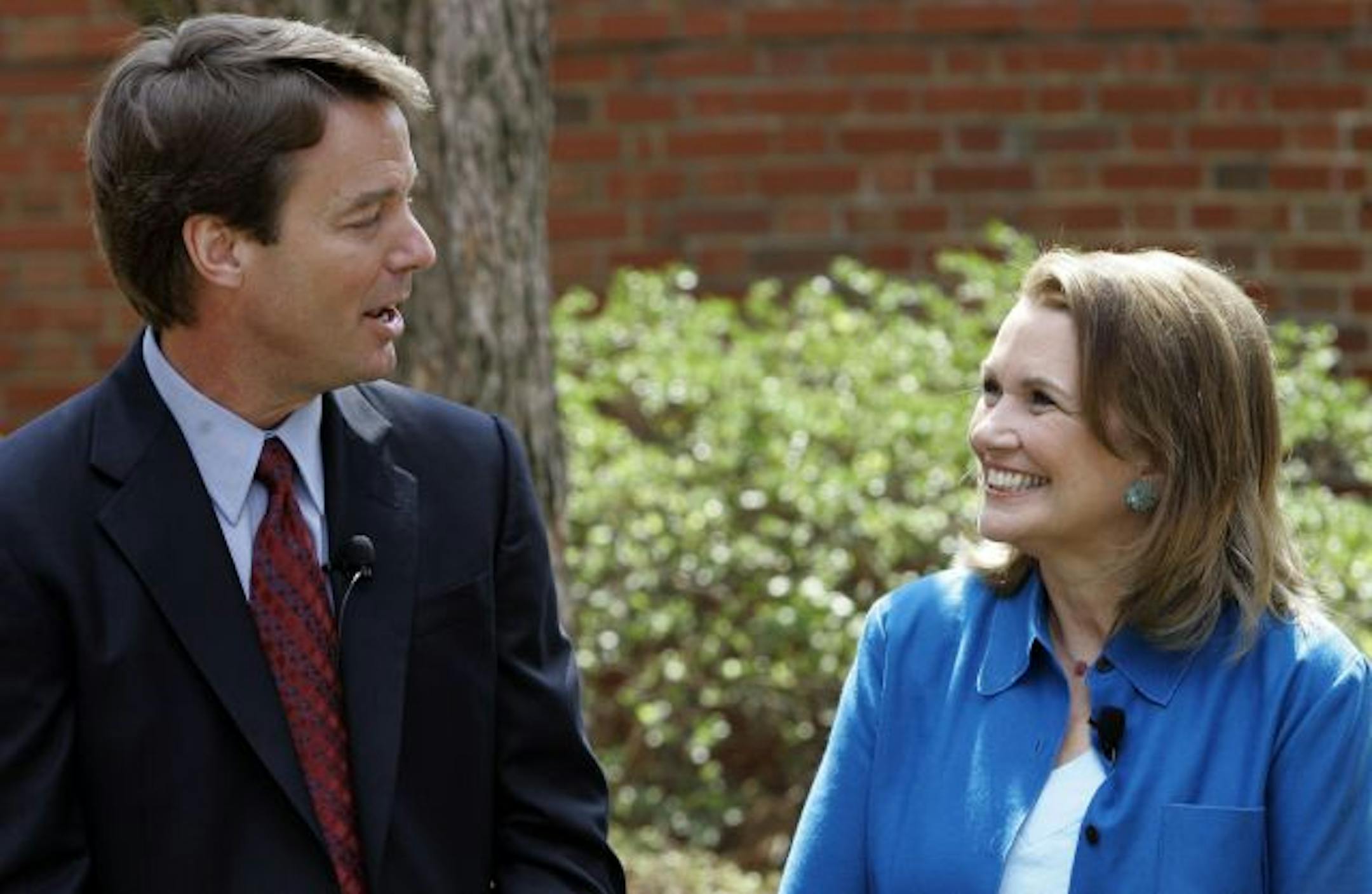
Is John Edwards a criminal or merely a sleazebag of breathtaking proportions? The jury couldn't quite make up its mind.
But various reasonable questions come to mind in the wake of the mistrial. For example: Whoa, close call, can you believe that this guy might have been president? And: Why didn't he have a shred of willpower when it comes to honesty and doing the right thing?
The spectacle reminds me of something moving about honesty I read recently, in, of all places, a scientific journal.
In a 2010 report in the prestigious Proceedings of the National Academy of Sciences, Harvard psychologists Joshua Greene and Joseph Paxton asked a great question: When people are confronted with the opportunity to lie, what differs in the brains of people who succumb to the temptation and those who don't?
For the study, each subject was placed in an MRI machine, a scanner that indicates the ongoing levels of activity in different brain regions. The volunteers had a simple task. There'd be a series of virtual coin tosses by a computer, and before each one, the subject had to predict the outcome. Guess right, and there'd be a financial reward.
But there was a twist. Subjects were told a great piece of nonsense, namely that the purpose of the study was to determine whether people had better paranormal powers at predicting the future when the predictions were made in private.
To examine this, scattered through the series of coin tosses would be the occasional instance where instead of a subject entering the prediction before the toss, he would privately make his prediction. Then, after the toss, he'd be asked: So, did you guess right? In other words, people were given the opportunity to lie.
Coin tosses being what they are, predictions could be expected to be correct roughly half the time. If the success rate skyrocketed when there was the opportunity to cheat, odds were that there was a liar in the brain scanner.


