
For Minnesotans in Hawaii, confusion, fear, then relief after missile alert

"It was maybe one of the more surreal experiences I've ever had," said Norah Shapiro, a Twin Cities film director visiting along with her husband.

January 13, 2018 at 11:42PM
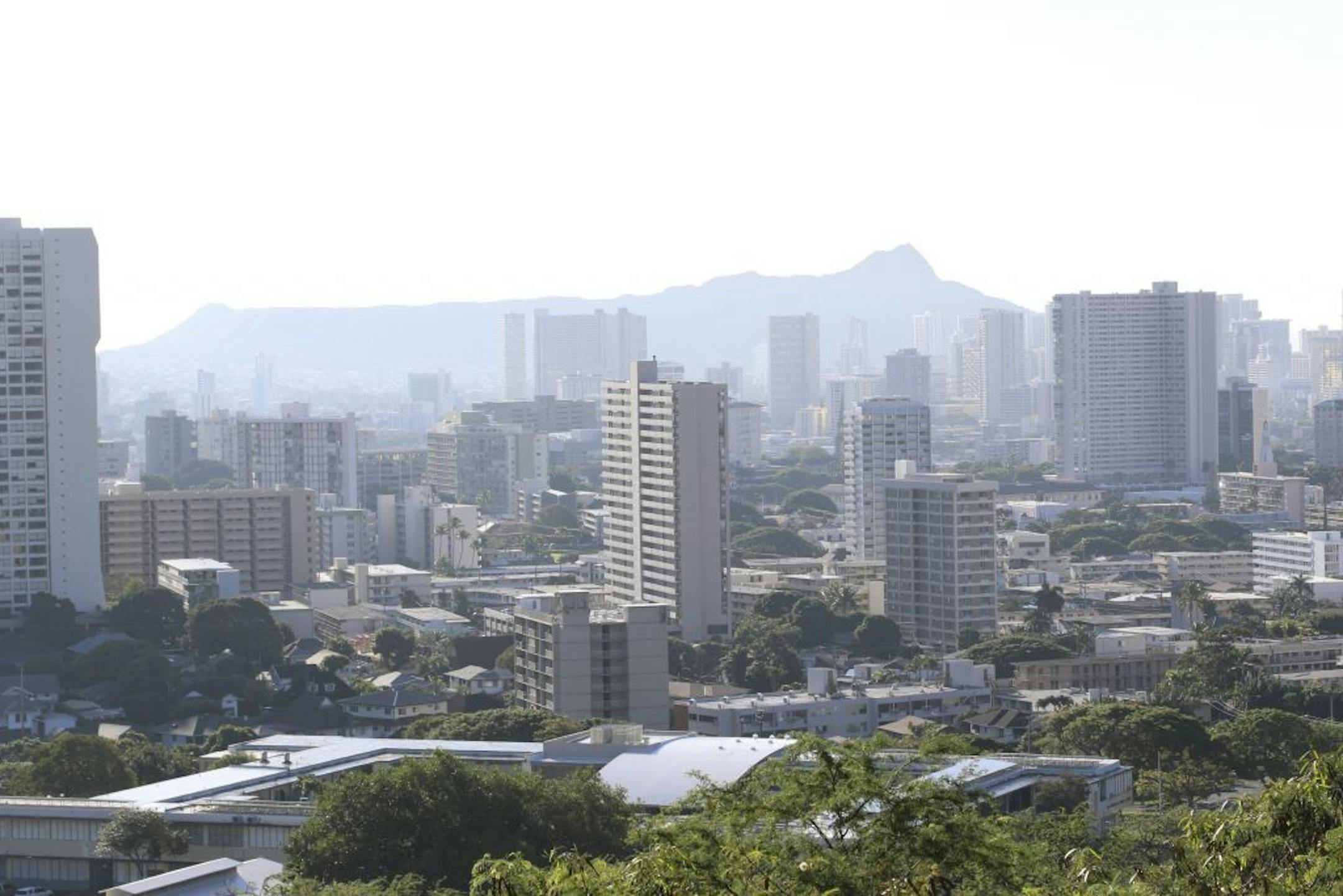
Diamond Head, an extinct volcanic crater, and high-rises are seen in Honolulu on Saturday, Jan. 13, 2018. Minnesotans visiting the sites in Hawaii on Saturday shared their stories of confusion and fear in wake of the faulty missile notice.
Diamond Head, an extinct volcanic crater, and high-rises are seen in Honolulu on Saturday, Jan. 13, 2018. Minnesotans visiting the sites in Hawaii on Saturday shared their stories of confusion and fear in wake of the faulty missile notice. (Associated Press/The Minnesota Star Tribune)

On Saturday morning, Minneapolis resident Norah Shapiro had just completed a yoga class on a picturesque beach on Maui as whales crested in the distance.

But seconds after she uttered "Namaste," chaos erupted across the resort-laden island and other parts of Hawaii when an emergency alert warning residents of a ballistic missile was issued by mistake.

"It was maybe one of the more surreal experiences I've ever had," said Shapiro, a Twin Cities film director who was visiting the islands with her husband, Andrew Harrison. "Welcome to paradise."

As Shapiro collected her belongings, someone else in the class read the alert, which had been sent to Hawaii residents, aloud.

A couple of minutes later, one of the men on staff at the Grand Wailea Resort came sprinting down the beach and yelling, "Get inside! Get inside!"

Shapiro, who had left her phone in her hotel room, immediately thought of her husband, a prominent Twin Cities eye doctor who was giving a presentation in the hotel's meeting room. She took off her flip-flops and sprinted, skipping the elevator and taking the five floors by foot instead.

Most people around the resort seemed more confused than hysterical, she said. An announcement over the hotel's loudspeaker told guests to stay in their rooms.

Meanwhile, St. Paul resident Peggy Stang was visiting her brother, former Minnesotan Jim Kelly, at his home in Honolulu — making cinnamon rolls and leisurely reading the paper — when his phone buzzed with the alert.

Hearing no sirens and seeing only basketball on TV, Stang and Kelly immediately doubted the message's veracity.

But about 10 minutes later a local TV station confirmed the erroneous report, Stang said, and they flew into action, filling up jugs of water around the house and trying not to let Kelly's 11-year-old son see their panic.

"It was scary," Kelly said. "We didn't know what to do with ourselves. We were just quietly freaking out."

A corrected advisory

About 37 minutes after the original alert, a revised message stating there was no threat was sent by officials, Stang said.

By then, Harrison's meeting had been abruptly stopped and he and Shapiro had reconvened in their hotel room, and Stang and Kelly had accumulated several large jugs of water.

"Everyone makes mistakes," Stang said, "but the fact that it went on so long, that it took so long to get the word out that it was a mistake — it's hard to imagine how that much time could elapse."

Former Minneapolis Mayor R.T. Rybak, who is in Hawaii for a conference, tweeted Saturday afternoon, "We were told a missile was headed for us and for half an hour we visualized terror."

Said Kelly when it was all over: "It's been a pretty emotional morning. Now it's just another nice day in Hawaii."

Amelia Rayno • 612-673-4115

about the writer

about the writer

Amelia Rayno

Features reporter

See Moreicon

More from No Section

See More
FILE -- A rent deposit slot at an apartment complex in Tucker, Ga., on July 21, 2020. As an eviction crisis has seemed increasingly likely this summer, everyone in the housing market has made the same plea to Washington: Send money — lots of it — that would keep renters in their homes and landlords afloat. (Melissa Golden/The New York Times) ORG XMIT: XNYT58
Melissa Golden/The New York Times

It’s too soon to tell how much the immigration crackdown is to blame.