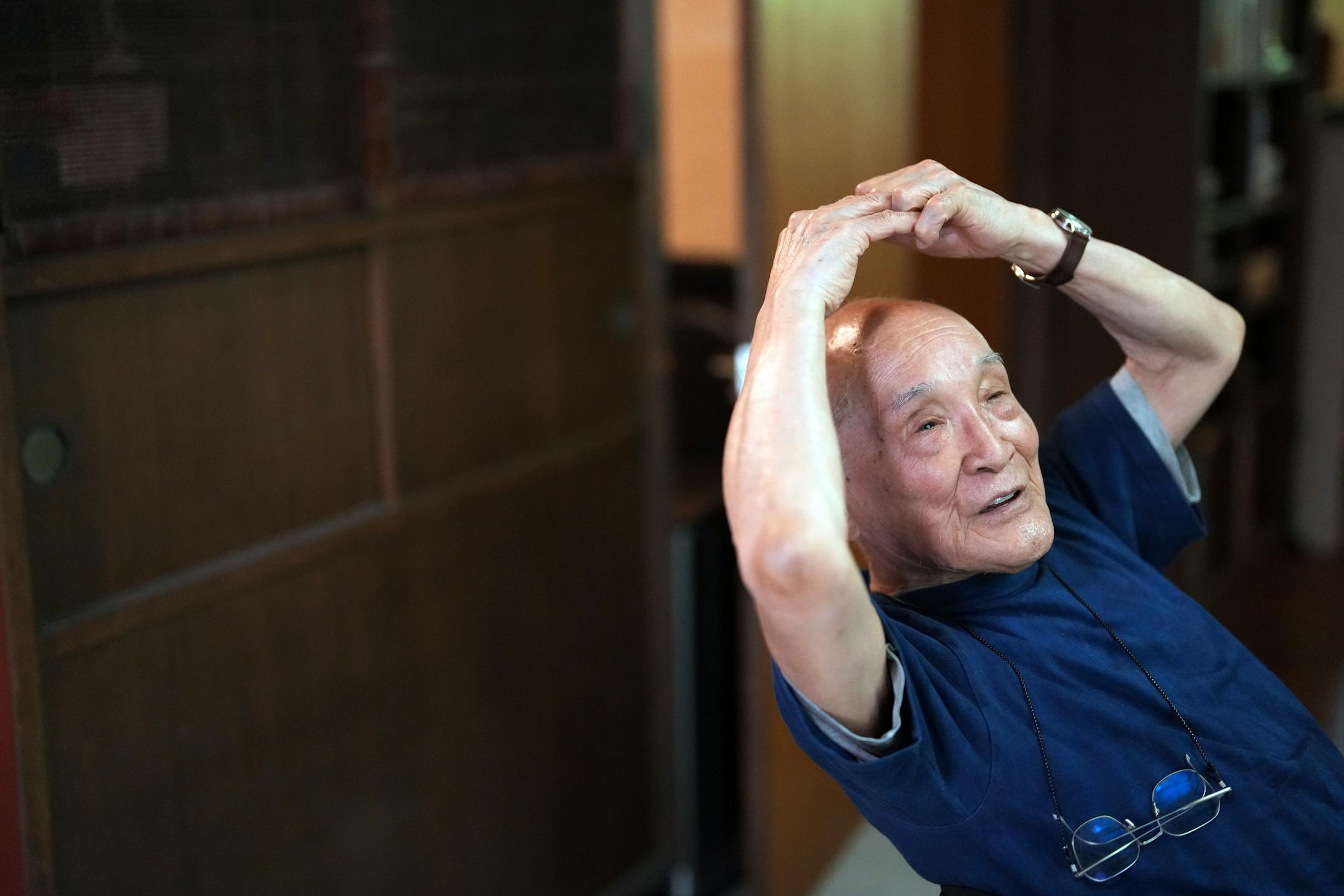
TOKYO — Shuntaro Tanikawa used to think poems descended like an inspiration from the heavens. As he grew older — he is now 90 — Tanikawa sees poems as welling up from the ground.
The poems still come to him, a word or fragments of lines, as he wakes up in the morning. What inspires the words comes from outside. The poetry comes from deep within.
"Writing poetry has become really fun these days," he said recently in his elegant home in the Tokyo suburbs.
Shelves were overflowing with books. His collection of ancient bronze animal figurines stand in neat rows in a glass box next to stacks of his favorite classical music CDs.
"In the past, there was something about its being a job, being commissioned. Now, I can write as I want," he said.
Tanikawa is among Japan's most famous modern poets, and a master of free verse on the everyday.
He has more than a hundred poetry books published. With titles like "To Live," "Listen" and "Grass," his poems are stark, rhythmical but conversational, defying elaborate traditional literary styles.
William Elliott, who has translated Tanikawa for years, compares his place in Japanese poetic history to how T. S. Eliot marked the beginning of a new era in English poetry.