

Opinion editor's note: Star Tribune Opinion publishes a mix of national and local commentaries online and in print each day. To contribute, click here.
•••
In March 2003, I was in my second year at the University of Baghdad, studying engineering. The U.S. invaded Iraq and my dormitory emptied out, as we all returned home and waited to see what would happen.
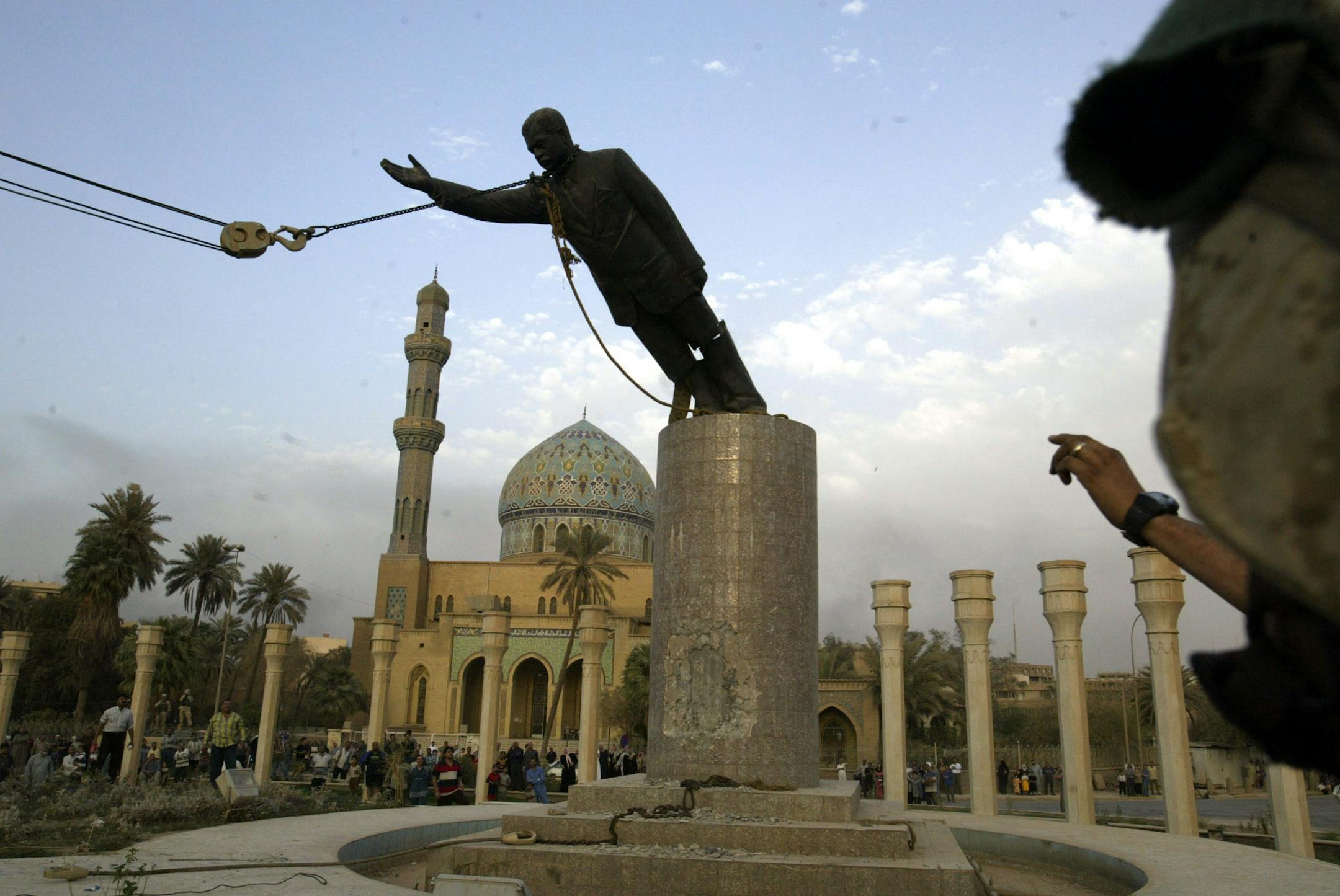
In my hometown of Basra, we watched U.S.-led coalition troops surging into the city. Yet people still couldn't believe it — that longtime dictator Saddam Hussein was gone. For it to be real, we had to wait for Baghdad to fall and only once we saw that on television did we trust this new reality. On our screens, a coalition-run TV channel called al-Hurriya, or "Freedom" in Arabic, broadcast the iconic scene of Hussein's statue in Baghdad being demolished and the bronze face covered by an American flag.
Two decades on, we have learned that spectacle was mere propaganda, and that freedom cannot be imposed by an occupying force. And all these years later, I'm still struck by this contrast: The magnitude of what Iraqis lost — and continue to lose — and how vivid our memories are of the war, as we must deal with the repercussions in our daily lives, whereas the war has become a blurry image for Americans.
On the day the statue fell, I recalled that historic scene with a widowed neighbor in his 60s. He sarcastically portrayed it this way: "This is what would happen if you dismantled a scary toy, which kids have tried desperately to dismantle by themselves for 30 years!" For him, Hussein represented the shattered toy, and the crowds who previously would have been too afraid of him were now kicking his statute fearlessly. Weeks later, the neighbor, who had been a prominent member of Hussein's Baath Party, knew that civilian militias were out for revenge. Before they got to him, he shot himself in his bathroom.
By then, the entire city had sunk into chaos. Masses of people roamed Basra barefoot, with happiness and tears, while searching for their missing relatives who had been detained by the Baath Party for decades. I too became enthusiastic and curious. There were rumors of underground prisons. People believed voices were coming out from the concrete walls of the Baath party offices, where their loved ones may have been trapped for decades, like ancient fossils.
Myths and truths shuffled simultaneously. I observed a real crowd of prisoners, their pale-yellow faces exposed to the sun after years of darkness. They broke out of the jails and chased people who avoided them due to their stinky smell. They kept roving, asking, "Where is the exit?" as though they were still inside.


