

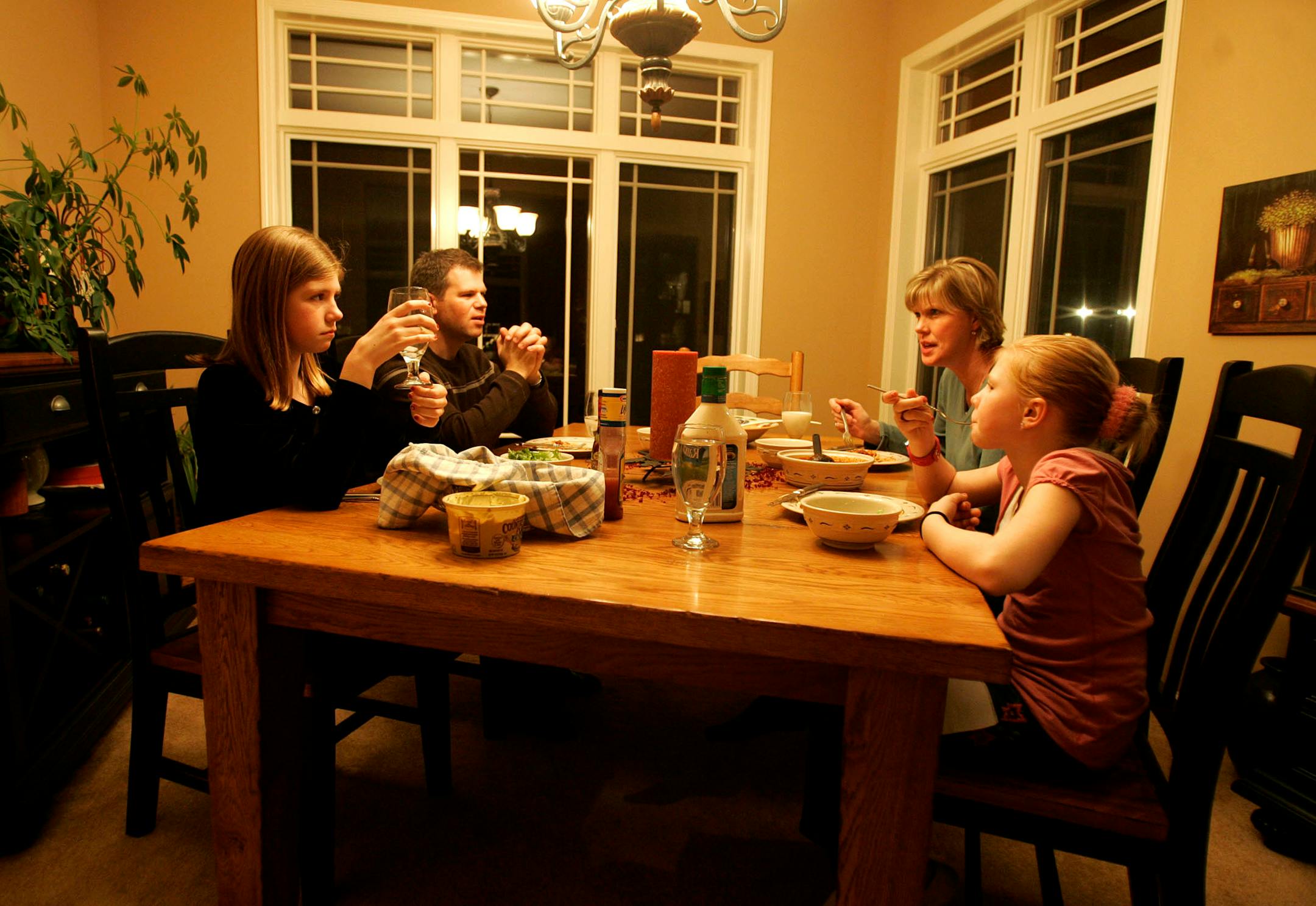
Most Thursdays, Chris Berg and his daughters, ages 11 and 8, pack up a meal and drive over to the hospital, where they eat dinner with his wife, who works the night shift.
He says it's all about quality family time. But a five-year study published Monday shows those meals may also protect his girls from developing eating disorders.
The survey of 2,000 Minnesota adolescents found that girls who have five or more meals a week with their families are one-third less likely to develop unhealthy eating habits. That could be anything from skipping meals to abusing diet pills to anorexia.
For reasons experts say are hard to explain, the same is not true of boys. The study by University of Minnesota researchers was published Monday in the Archives of Pediatrics and Adolescent Medicine.
It is the latest in a growing body of evidence showing regular family meals seem to help adolescents avoid a wide variety of health risks, including obesity, drug use, smoking and suicidal thinking. Earlier U of M research has shown that's also true for adolescents who say they don't have the best relationships with their families, but who still eat with them regularly.
The growing research has spurred a movement back to the family dinner -- or breakfast or brunch -- by some busy families, according to a 2006 national survey of adolescents by the National Center on Addiction and Substance Abuse at Columbia University.
"It's hard," said Dianne Neumark-Sztainer, professor of epidemiology at the University of Minnesota and one of the researchers. "You have to make it a priority."
Berg, of Medina, said that's the only way his family makes it work. "It's getting more and more difficult. If you don't plan for it, it won't happen."


