

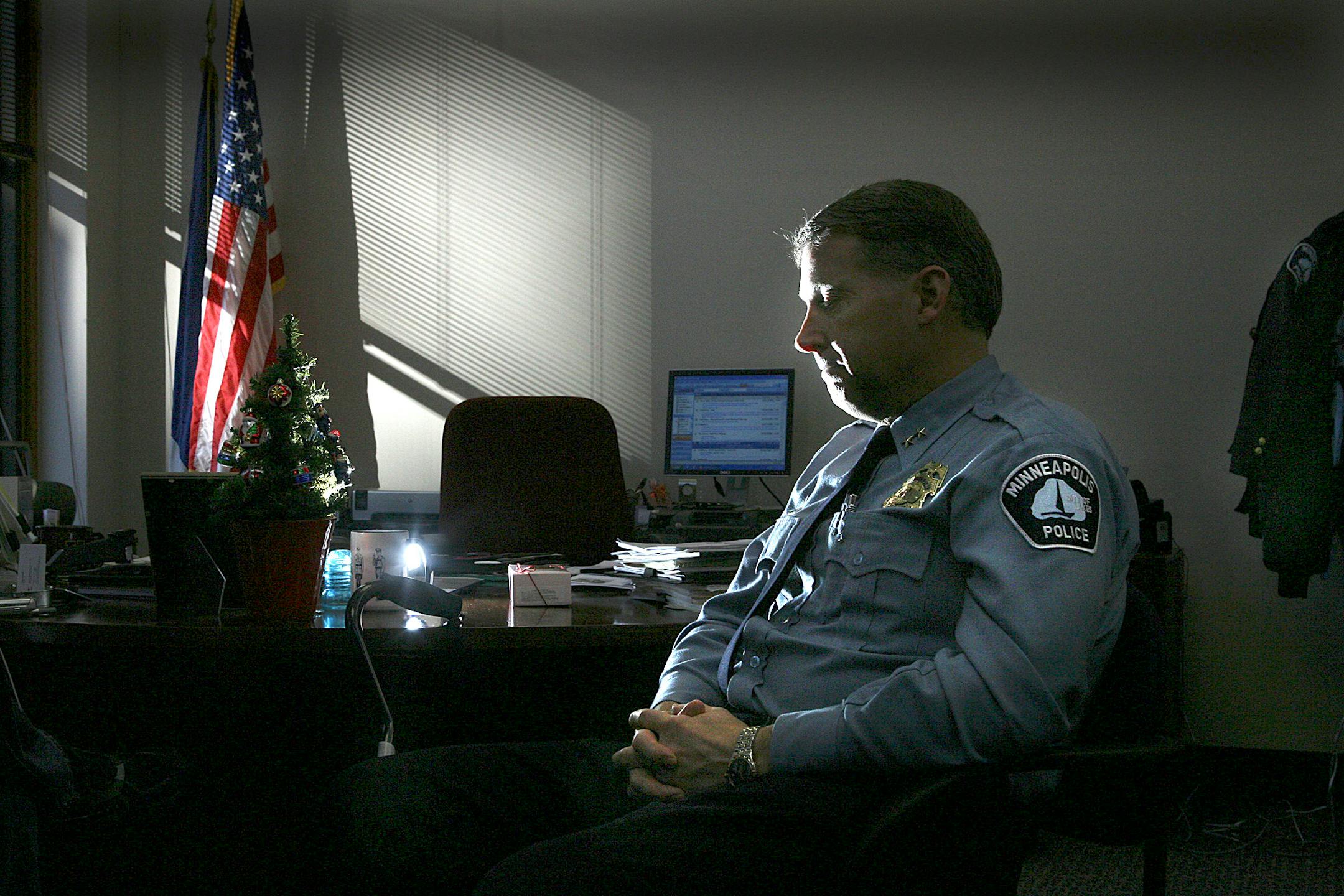
Even without recent hip surgery, Minneapolis Police Chief Tim Dolan might be walking with a limp. ¶ His department is stinging after five high-ranking black police officers filed a federal lawsuit against Dolan and the city last week, claiming a longtime pattern of racial discrimination. Dolan considers several of the officers friends, which makes the suit's personal shots at him a little harder to swallow. ¶ The suit intensifies the attention to the city's new chief and casts a shadow over the department's accomplishments as Dolan's first year in charge winds down. Violent crime is down significantly and officer diversity is at a historic high. Dolan received praise for his behind-the-scenes leadership during the Interstate 35W bridge collapse and gained national attention for innovative initiatives to fight juvenile crime. Like every chief sued before him, Dolan will be judged on how he manages the department under a new layer of scrutiny and the unpredictable ripple effect such hot-button legal action can cause. His record on diversity already was being challenged after he removed three black officers from his command staff.
"I'm now dealing with the smoke," Dolan said. "I'm not saying where there's smoke there's fire, but I don't want this suit to create a big rift."
Dolan, 52, had served as interim chief for six months when Mayor R.T. Rybak decided to forgo a national search and nominate him for chief in September 2006. Many on the council wanted an insider, something Dolan's 23 years with the department easily satisfied.
They wanted him to reduce violent crime that had increased 17 percent in 2006, mostly fueled by juvenile thugs. Supporters pointed to the excellent relationship he built with minority communities when he was inspector of the Fourth Precinct, which covers the city's North Side.
In her eight years as a council member, Lisa Goodman said Dolan was the only chief she's ever supported. Ralph Remington cast the lone "no" vote when Dolan was confirmed.
Dolan achieved each of the mayor's top priorities for 2007. As of early December violent crime has dropped 12 percent, which includes a dozen fewer homicides than last year. Eighteen percent of the department is made up of officers of color, although some community activists dispute those numbers. Dolan spent hours making hard choices for a budget that was $7 million in the red in 2006.
His first year also included the I-35W bridge disaster.
"During the collapse, some people were leaping out to be on TV," Rybak said. "Tim wasn't on the news much, instead spending a lot of time doing work and supporting those putting themselves on the line." Crime experts have taken notice of Minneapolis' 20 percent reduction in juvenile crime this year.


