

 0:37
0:37On the first springlike weekday of the year, some downtown Minneapolis workers left the skyways and headed to the food trucks that have once again begun to line Marquette Avenue.
With lines on the street getting longer by noon, it was business as usual — though some of the people inside the trucks were thinking more about the risks of their increasingly popular business.
It's still unclear what caused a food truck parked in Lakeville to explode late Friday, damaging houses and rattling residents. But there's little doubt that food-truck season is beginning as the weather warms.
There are 130 to 140 food trucks in the state, with 90 of them active at a given time, according to the Minnesota Food Truck Association.
Each one is inspected when it's initially licensed. All food trucks are inspected like restaurants for food safety issues at least once a year. Some face additional regulations that apply to commercial vehicles. But nobody is keeping a routine eye on food trucks' propane tanks.
John C. Levy, president of the Minnesota Food Truck Association, confirmed Monday that there is no federal, state or municipal agency that routinely inspects a food truck as an entire entity for problems such as propane leaks or other vapors that could spark an explosion.
"There is nobody that specifically checks for [propane] leaks," he said. "I think that can come across as rather reckless but in practice it isn't because of the rarity of that happening and the fact that if there's a leak of gas, you can smell it."
Levy said he researched the issue and found a total of five explosions, including Lakeville and one in Philadelphia last summer that killed two people.
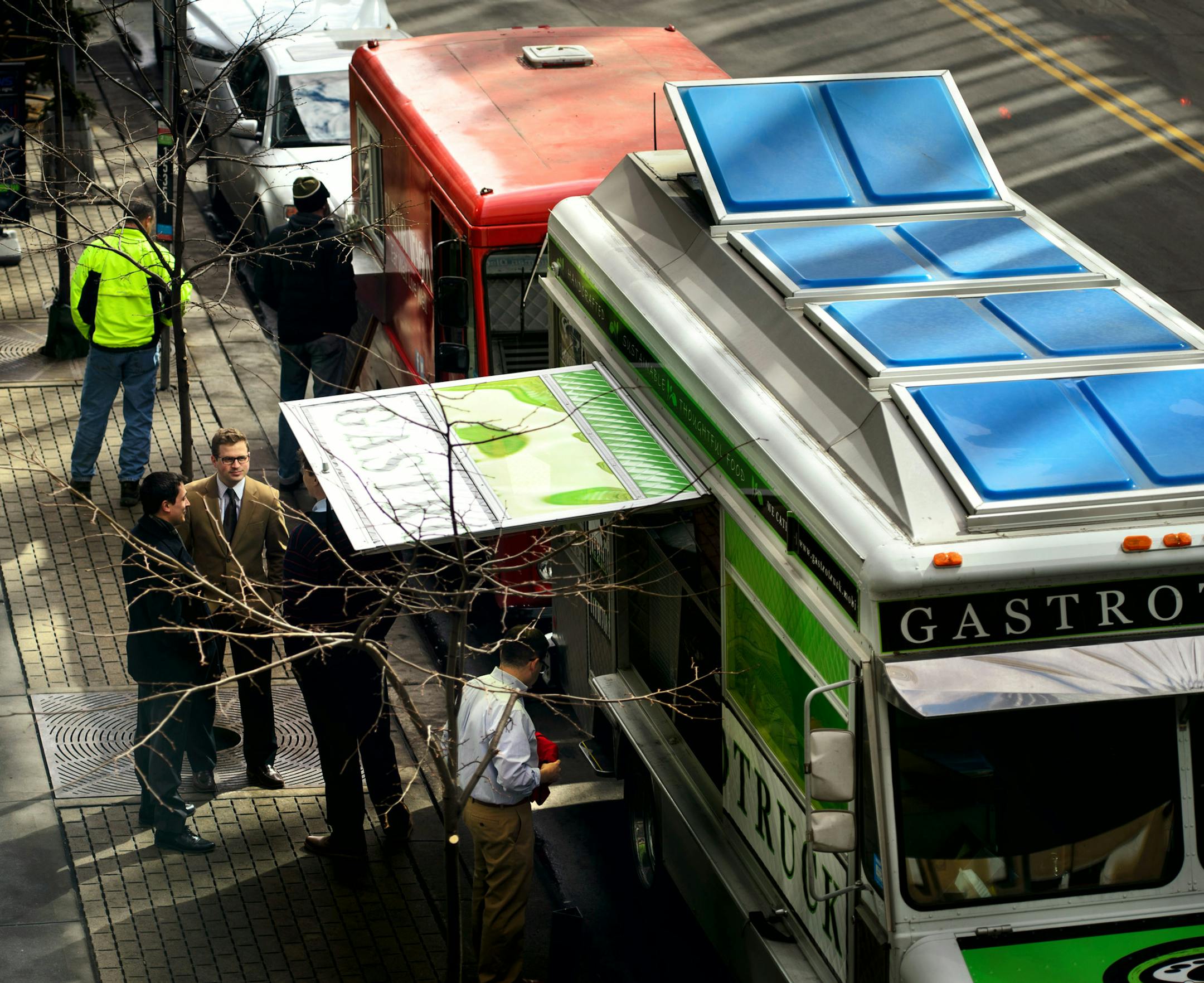
![Three food trucks parked along Marquette Ave in Minneapolis Monday to take advantage of spring-like temperatures. ] GLEN STUBBE * gstubbe@startribune.com Monday, March 9, 2015 The food truck explosion in Lakeville raises questions about the safety of the popular restaurants on wheels, especially since they line up daily in downtown Minneapolis.](https://arc.stimg.co/startribunemedia/UFD6KUOAVFMEFL6P3B7542ASOE.jpg?&w=1080)


