

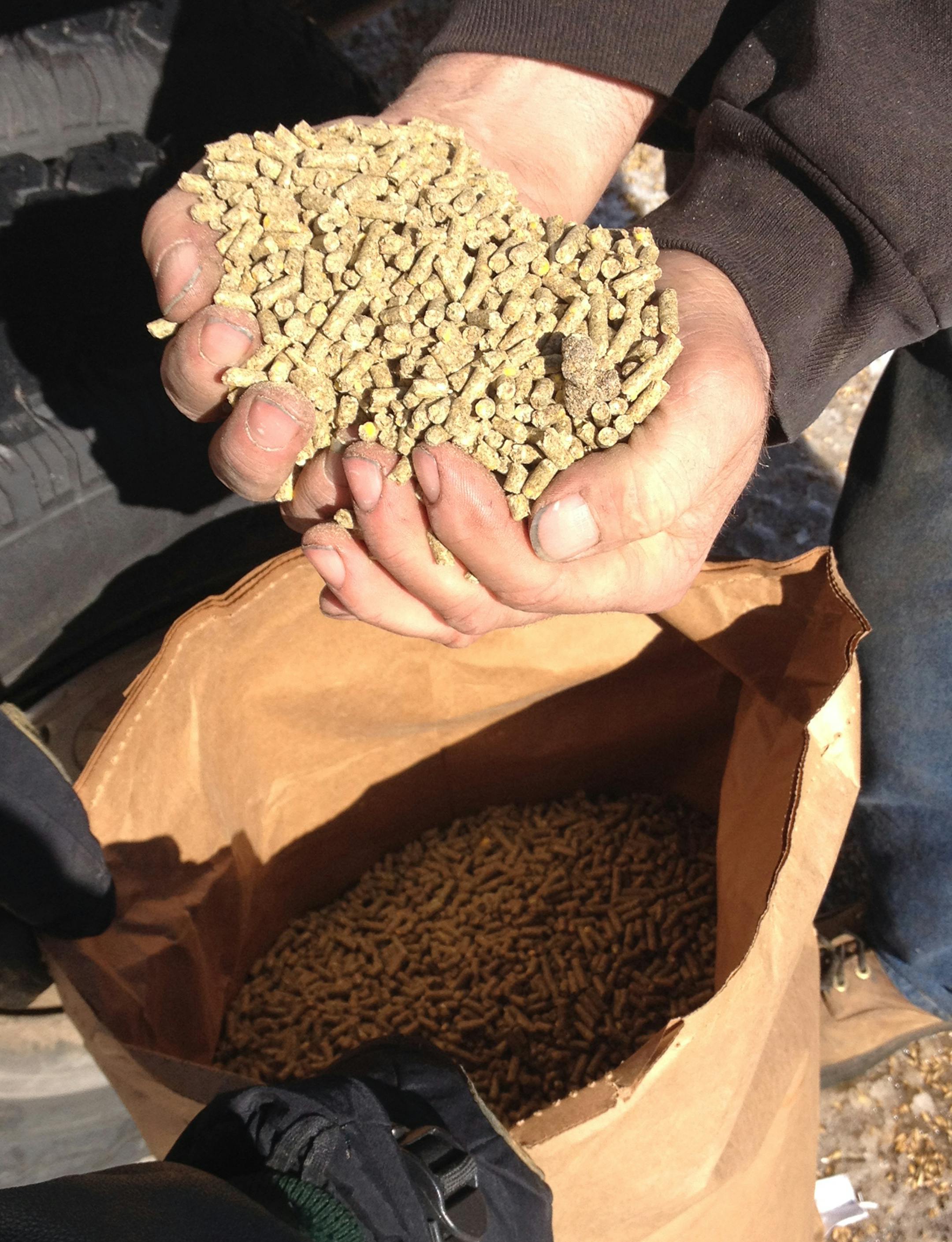
Over the past 16 years Minnesota deer hunters have contributed about $5.5 million to an account originally intended to pay for emergency deer feeding to help whitetails survive winters.
Most of that money — $4.8 million — has been spent, but none on feeding deer, until now.
This month the Department of Natural Resources has allocated $170,000 from the account — funded with 50 cents from every deer hunting license — to feed deer in 13 permit areas of northern Minnesota. The program started Thursday, and so far about 130,000 pounds of feed has been distributed, the first of up to 1 million pounds by winter's end.
It's the first state deer feeding program in 18 years.
So where has the rest of the deer hunters' contribution gone? Why hasn't the fund been used to feed deer before now? And why is so little being spent this winter to feed deer?
Several things happened since the Legislature created the deer feeding account in 1996, essentially directing the DNR to feed deer during severe winters — action the agency has opposed. For starters, a series of mild winters beginning in 1998 made deer feeding mostly a moot point. Yet money from deer licenses continued to accumulate in the fund, reaching $1.4 million in 2002.
Then chronic wasting disease (CWD) surfaced in wild deer in Wisconsin, and the DNR went to the Legislature in 2002 to change the name and purpose of the account to allow spending money on CWD surveillance, as well as deer feeding. The Minnesota Deer Hunters Association approved the change but successfully fought to retain "emergency deer feeding'' in the account name.
That fall, CWD was found in a captive deer herd in Minnesota, heightening concern that the devastating brain disease could spread to the state's wild deer herd.
![MARLIN LEVISON*mlevison@startribune.com GENERAL INFORMATION The heavy snowfall of early winter has had an effect on animals as well as people. Deer normally rely on ground cover as a daily food source. But with the current depth of snow, deer are using snow drifts to munch on tree branches that were out of reach earlier. IN THIS PHOTO: ] This deer grabbed a mouth full of twigs, endured a snow shower in the process then bedded down in a northern Ramsey County woods. Fort Snelling State Park DO NO](https://arc.stimg.co/startribunemedia/HNYIMRC264R2Z6XYOU5KDHMQIE.jpg?&w=1080)


