Minnesota is no flyover state in the summer food-festival department. The sheer bounty of festivals out there this summer is surprising -- from chokecherry to rhubarb to sauerkraut and everything in between. These foods usually have some kind of economic, cultural or historical significance to their host town. But sometimes it's just a symbol -- less about the food and more about the small-town celebration. Minnesotans also fest in honor of their cultural roots -- not just Scandinavian and German heritage, but also Greek, Middle Eastern and Irish, to name a few. These festivals may not be explicitly about food, but they often offer some of the best and most authentic of nom-noms. That's probably because the folks who put them together are often volunteers with many generations of cultural experience to draw upon. During the month of June, we festivaled our way through Minnesota to discover the spectrum of organized summer fun that can be had, from a metro Germanic fest, to a strawberry-themed celebration in the suburbs, to a wonderfully quirky small-town event in the name of sauerkraut. We've added a directory on page 25 highlighting our favorite upcoming fests for July and August. By the time summer is over, you may have found that the exotic isn't necessarily so far away -- and the familiar might be stranger than you think.
JUNE 9-10
SCHNITZEL, LEDERHOSEN AND BEER AT DEUTSCHE TAGE
Deutsche Tage is a two-day annual festival in St. Paul organized by the nonprofit Germanic-American Institute. An eclectic mix of families, hipsters and distinguished polka dancers filled the GAI's lawn on Summit Avenue for activities including a 5K run in which participants are encouraged to wear lederhosen; German model trains and lawn games for kids, live music and authentic eats and drinks.
The 5K Lederhosen Lauf kicked off the fest promptly at 8 a.m. on Saturday. Although a proud minority of laufers sported lederhosen, most did not, or they improvised more breathable versions out of suspenders and running shorts. Finishers were rewarded with a "Bavarian breakfast" of a brat with kraut and a cold German beer, while unwinding to the remarkable Alpine-folk family band, the Flemming Fold. Why aren't there more family bands these days?
This year marked the 200th anniversary of an edict passed by King Max I of Bavaria that allowed breweries to sell their product onsite, thus giving birth to the biergarten -- Germany's ultimate symbol of "Gemütlichkeit" (aka good vibes). To commemorate the occasion at Deutsche Tage, a Paulaner beer truck offered traditional Munich beer in all of its delicious malty forms, from the bright and refreshing Hefe-Weissbier to the full-bodied and amber Oktoberfest, to the complex, deep chestnut Weissbier Dunkel.
The 6 percent alcohol content of the easy-drinking Oktoberfest definitely got our Gemütlichkeit flowing, and we bumped into "Hermann the German" -- the ancient Germanic chieftain who led his tribes to victory over the Romans. He was leading a conga-polka line but was experiencing a gladiator sandal malfunction, which happened to emphasize his unbelievably muscular and well-formed calves.
Time for food! Authenticity reigned supreme in the offerings. The German potato salad was sublime: warm potatoes, onion and diced bacon encased in a zingy finish of sweet-meets-vinegar tang ($3). A legion of volunteers spent approximately six hours peeling the 500 potatoes necessary to make it, led by Helga Parnell, who moved to the United States from Germany in 1963 and literally wrote the book on German cooking (2003's "Cooking the German Way").
Schnitzel was another star -- locally sourced from Deutschland Meats in Sanborn, Minn., and tender with a crispy light crust. It was so good that Papa Kluegel finished mine while I was off refreshing our pitcher. So I sampled some of his curry condiment, an optional accompaniment to the brat and kraut. The jolt of thick-sweet curry ketchup made me recall the perception that some people have of Germans as being humorously direct.
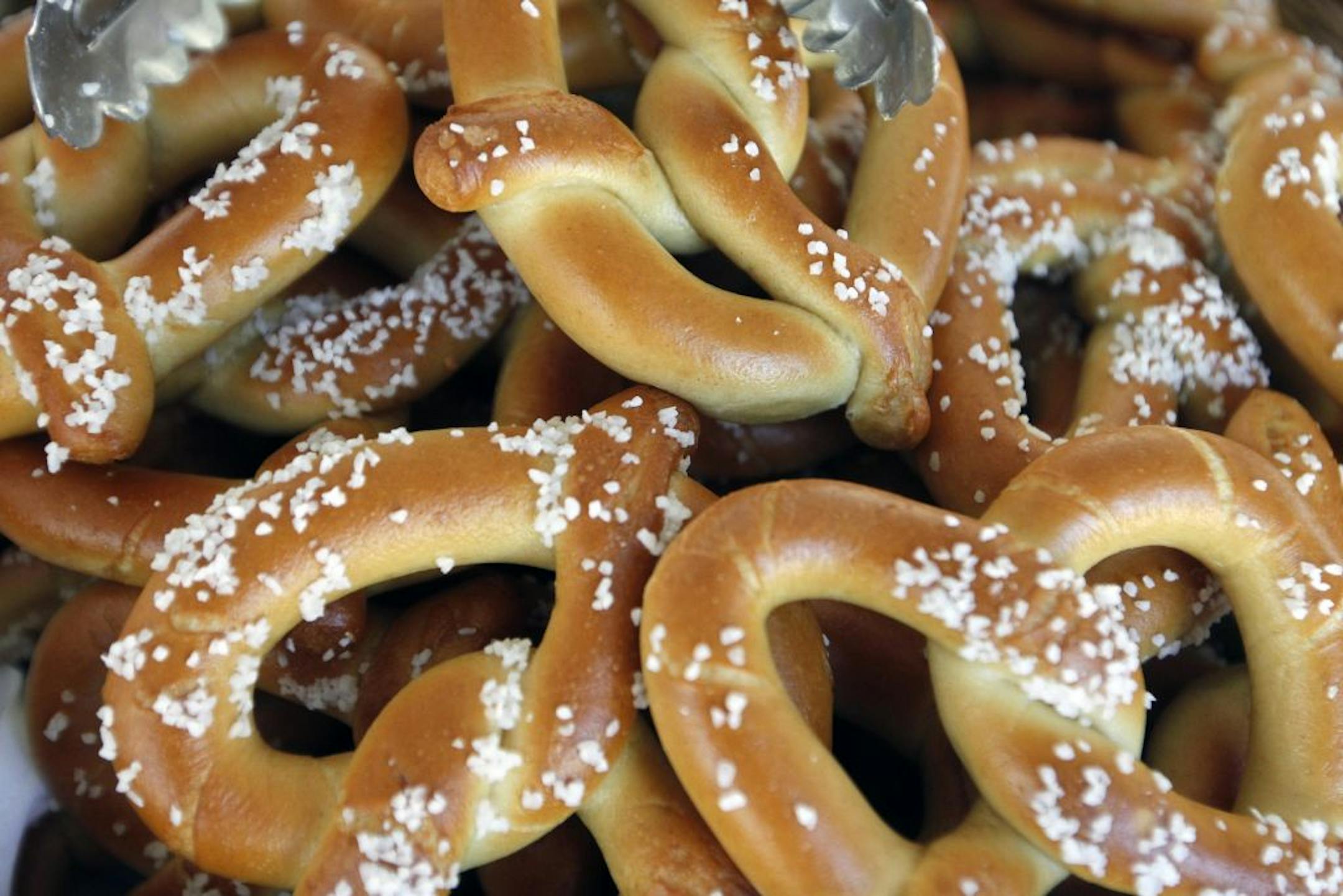
Obatzda was an exciting discovery: a bold orangey spread with Brie, cream cheese, paprika, caraway seed, and onions, served with a coarsely salted, soft and warm dark-brown pretzel for $2. And the Apfelstrüdel was just phenomenal.