

When Joni Mitchell released her "Ladies of the Canyon" album in 1970, it's likely that only a handful of her fans realized she was singing about a real place. That would be Laurel Canyon, a surprisingly rustic landscape of eucalyptus trees and wooden houses in Los Angeles, not so far from the nightclubs and recording studios on and around the Sunset Strip.
It's also the setting for a richly entertaining documentary, "Echo in the Canyon," focusing on the brief moment when Laurel Canyon was one of the epicenters of popular music, and saluting its influence on some notable musicians of today — particularly Jakob Dylan of the Wallflowers. The son of Bob Dylan, he serves as our guide on this journey.
This is not a comprehensive history of the Laurel Canyon scene of roughly 1965-67, and some music fans likely will be disappointed by that. Major figures (including Mitchell) get short shrift or are barely mentioned, and some peripheral musicians are given serious camera time.
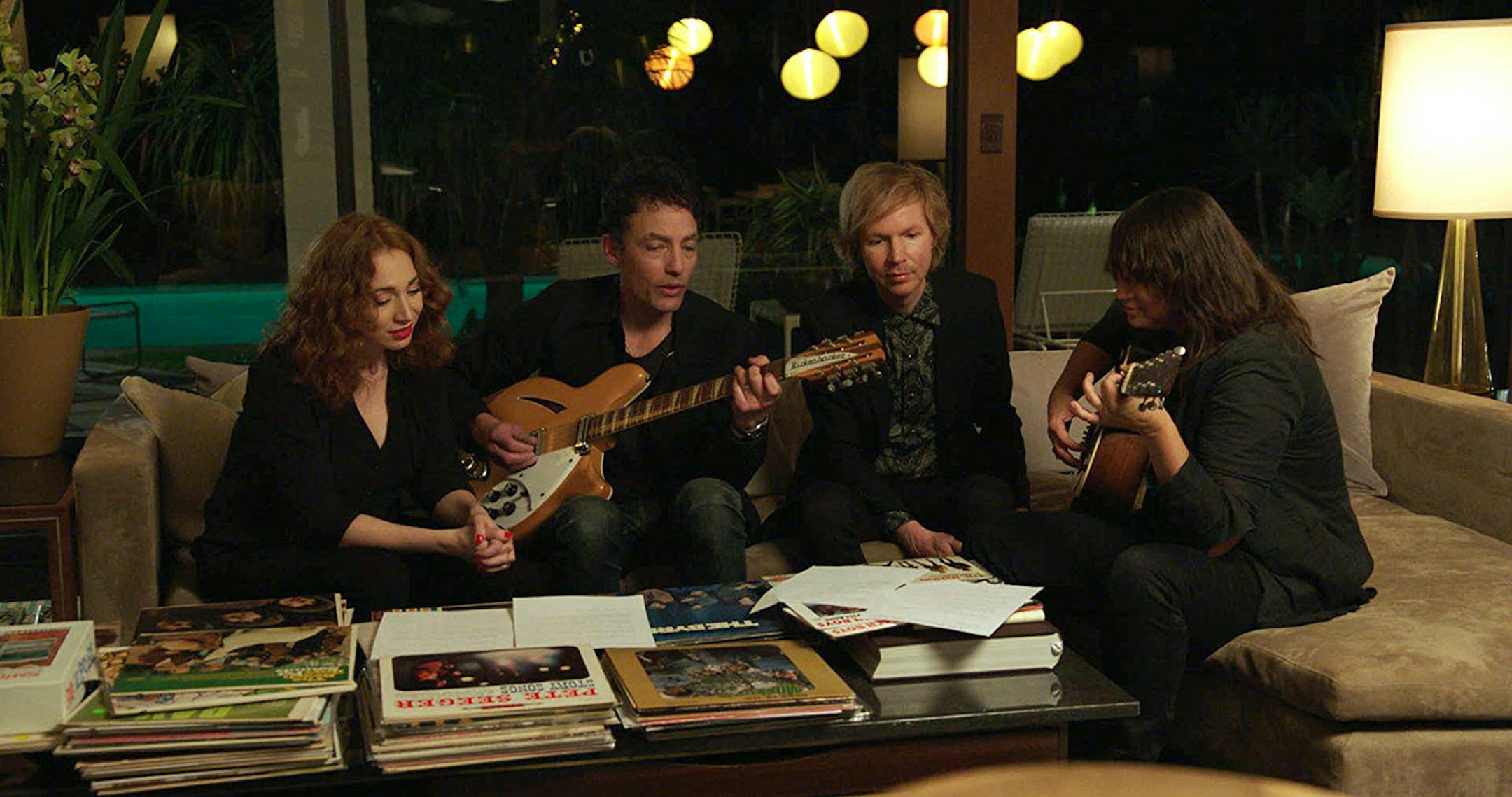
But the film isn't meant as a journalistic account. It's a combination of archival footage with lots of recently recorded "back in the day" anecdotes and performances by younger admirers of the music such as Dylan, Cat Power, Regina Spektor, Beck and Fiona Apple.
We see very enjoyable footage of a 2015 concert in Los Angeles by some of these musicians, performing songs made popular by the original Laurel Canyon heroes — Buffalo Springfield, the Byrds, the Mamas and the Papas, etc. (The concert's version of the Mamas and the Papas' "Go Where You Wanna Go" is a particular standout.)
Young Dylan and friends also spend some time sitting around and pondering the old scene but, happily, not too much.
The film's highlights are the interviews with participants and hangers-on from the glory days. An amiable David Crosby admits that he probably caused a lot of unnecessary grief by being a jerk. Michelle Phillips discusses the sexual openness of that pre-AIDS era, an anything-goes attitude that prompted her then-husband, John Phillips, to write "Go Where You Wanna Go." Roger McGuinn recalls that audiences were underwhelmed with his folk version of the Beatles' "I Want to Hold Your Hand."
Clearly, making this film required serious connections in the music business, provided by Dylan and the movie's first-time director, Andrew Slater, who is making his first movie but whose résumé includes stints as a manager and a record company executive.


