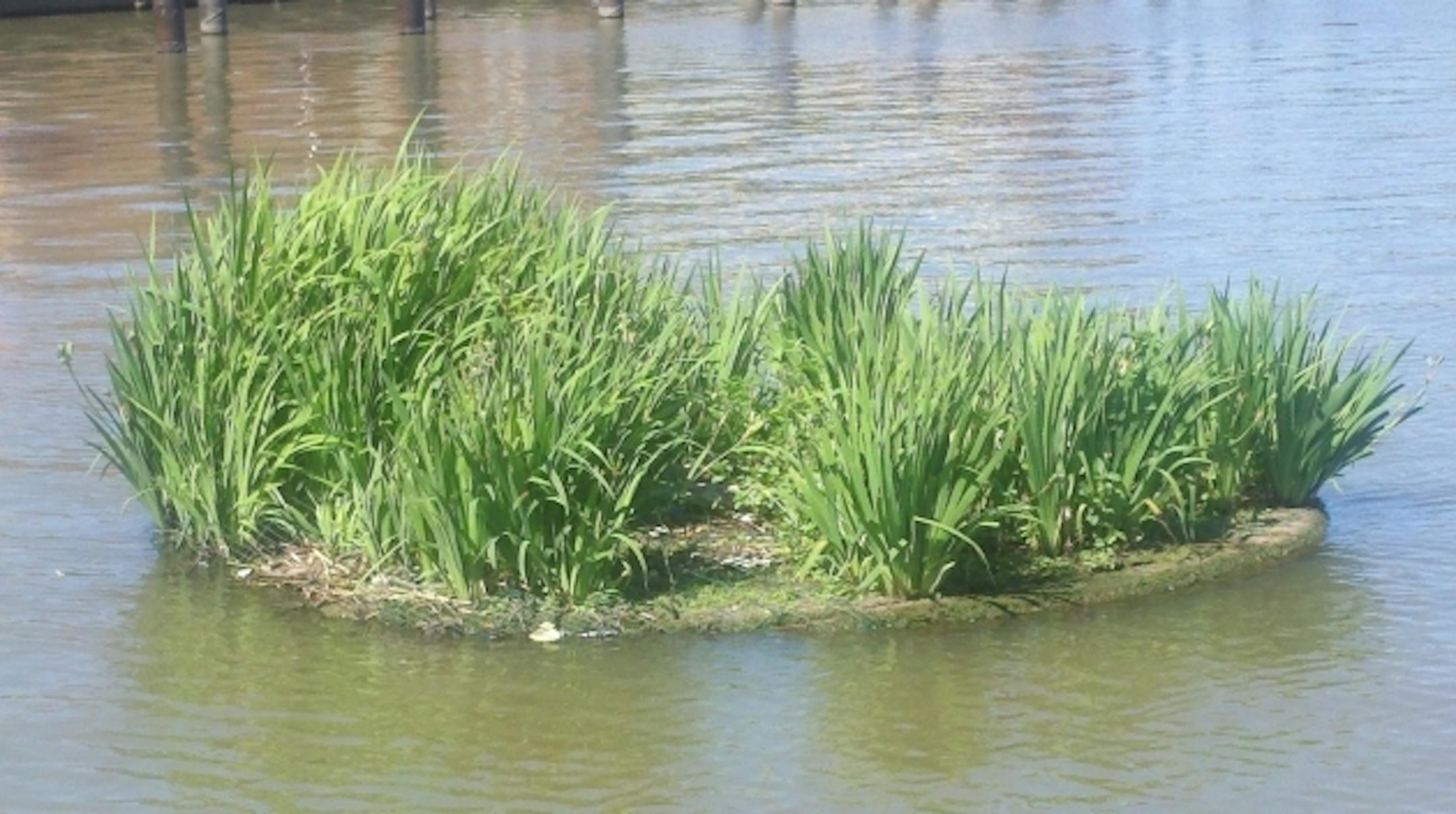
Now here's a great idea. Next week seven floating islands will be launched in Spring Lake in Minneapolis that will help clean up that little polluted body of water. They're made from recycled plastic water and soda bottles, planted with native species that clean excess nutrients and other pollutants in the water -- while attracting birds butterflies and just looking pretty.
Spring Lake is in the Lowry Hill neighborhood of Minneapolis between I-394 and Kenwood Parkway. The little lake has been part of the Minneapolis Park system since 1893. It's supposed to be a wildlife refuge, but like so many urban lakes it's become polluted with excess nutrients from runoff and its banks are choked with invasive plants.
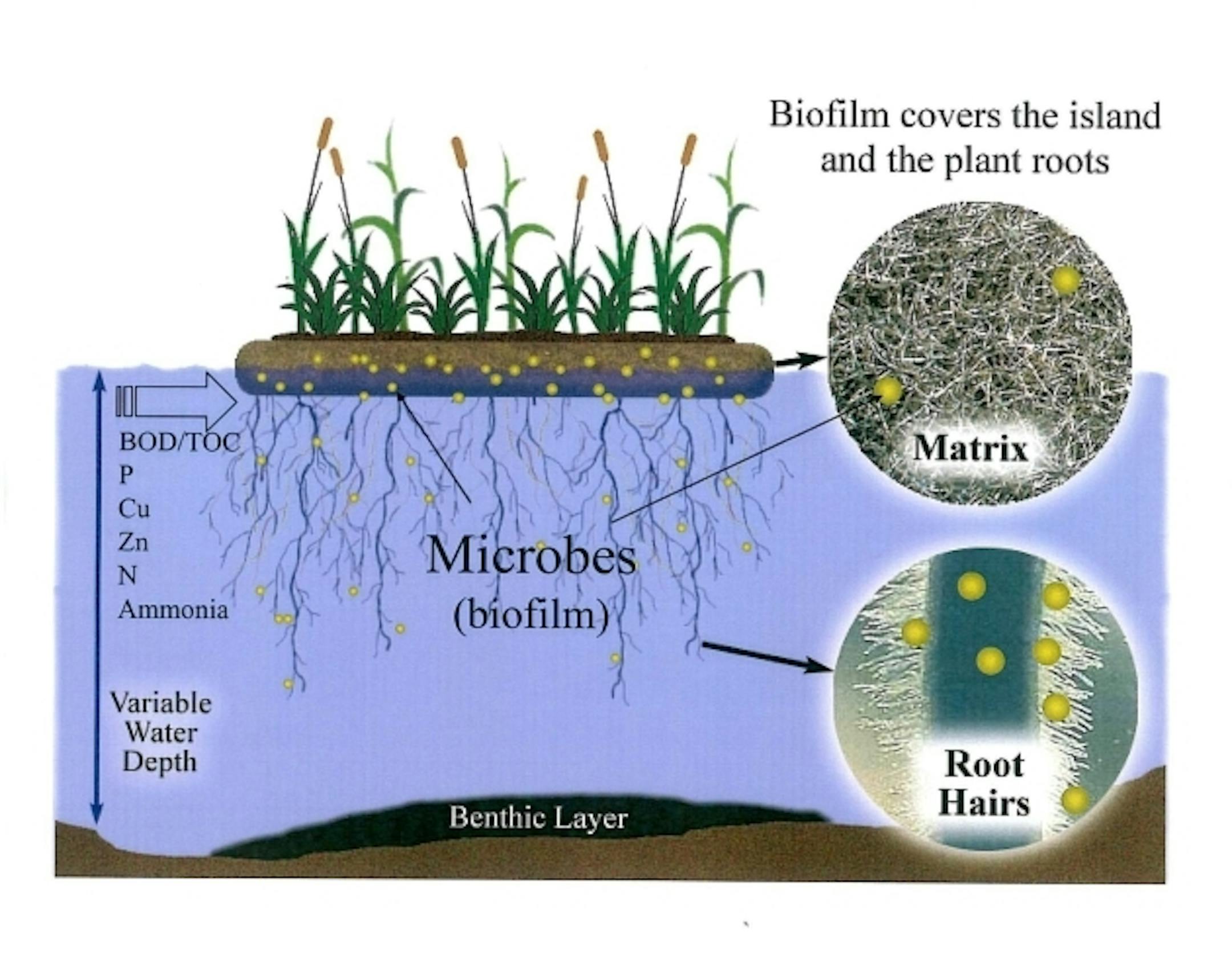
Images courtesy of Midwest Floating Islands
The plan to clean it up was hatched by a bunch of organizations that include the Lowery Hill Neighborhood Association, the Minnesota chapter of the American Society of Landscape Architects, Minneapolis Parks, Blake school and the St. Paul company that makes them, Midwest Floating Islands.
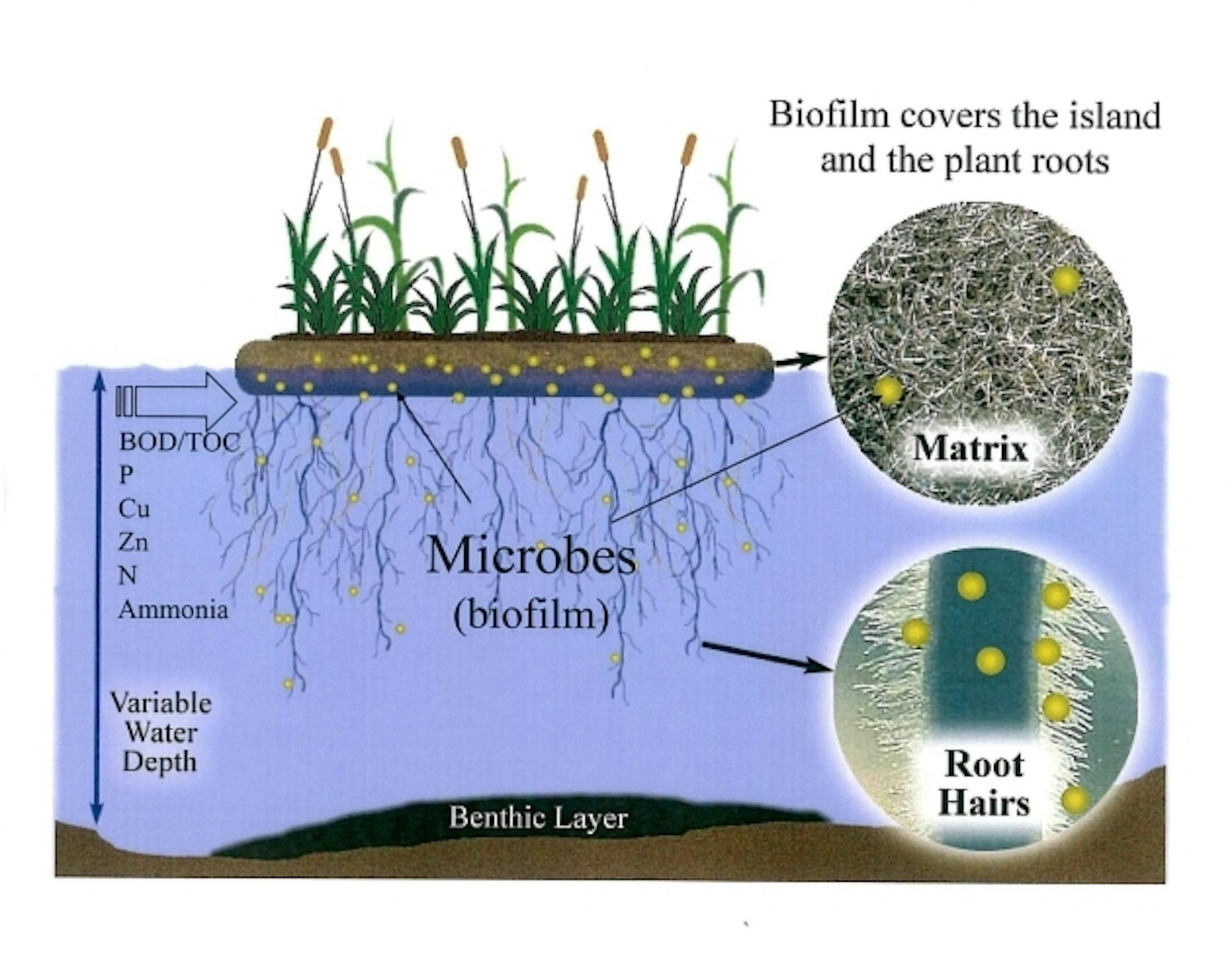
The islands look and act like miniature bogs -- dense webs of brown fiber. They mimic natural floating islands to create a concentrated wetland effect. The plants on top grow roots through the fiber into the water below. The roots help clean the water of nutrients and toxins by attracting microbes that break down pollutants.
Midwest Floating Islands is a subsidiary of a company that know something about the recycling business -- Bro-Tex. It's been recycling carpet and other fibers since 1923. The islands are a new product for Bro-Tex, which is licensed by Floating Island International in Montana to sell them in the midwest. But there are now 4,000 of them around the world, said Aryls Freeman, who works for Midwest Island. The largest is a one-acre island in Oregon that was installed by the Army Corps of Engineers as a rookery for terns.
They are also used for floating docks, walkways, gazebos and even weddings, she said. In Minnesota, the company has created loon nesting islands sites in northern lakes. The Spring Lake project is the company's largest to date.
And yes, you can buy them. They cost $32 per square foot -- without the plants. Instructions included.