

Flight of the butterflies

Monarchs head for Mexico at this time of the year, and the public can help naturalists track their migration.

September 5, 2009 at 4:47AM
Destiny Buth, a 6-year-old from St. Paul, looked for butterflies and bugs in the prairie at the Richardson Nature Center. Destiny, other members of her family and about 20 other parents and their children attended a program at the center to tag monarch butterflies to track their migration to Mexico.
Destiny Buth, a 6-year-old from St. Paul, looked for butterflies and bugs in the prairie at the Richardson Nature Center. Destiny, other members of her family and about 20 other parents and their children attended a program at the center to tag monarch butterflies to track their migration to Mexico. (Star Tribune/The Minnesota Star Tribune)

A hands-on chance to help study one of the great mysteries of nature, the yearly migration of the monarch butterfly, will be available today for nature lovers and science buffs alike at the Richardson Nature Center in Bloomington.

During a public tutorial from 2 to 4 p.m., Three Rivers Park District naturalist Valerie Quiring will enlist volunteers in catching and tagging butterflies found in the park. Quiring will describe the migration of the monarchs and then equip visitors with nets to help hunt for the butterflies. Depending on the weather, she expects to find at least a few of the colorful insects.

Holding each butterfly carefully by its wings, she will then place an adhesive tag about the circumference of a pencil eraser in the center of the underside of one of the wings.

"It doesn't alter their flight at all," she said.

The tags, which carry letters and numbers, are issued by Monarch Watch based at the University of Kansas. The group studies monarch migration to the Transvolcanic Mountains of central Mexico from Canadian provinces and U.S. states east of the Rocky Mountains.

Once placed on butterflies, the tags are listed on the Monarch Watch website along with the date and location where they were applied. Monarch Watch then offers a $5 reward for tags recovered from dead butterflies in Mexico. The tags are found by children and adults who look through piles of dead butterflies on the forest floor, said Orley R. "Chip" Taylor, director of Monarch Watch.

For each butterfly tag collected, the group posts trip times and distances on its website so volunteers who tagged monarchs can see how many miles their insects traveled.

Millions of butterflies from the central and eastern Canadian provinces and the eastern and midwestern United States make the trip each year.
"Their flight pattern is shaped like a cone as they come together and pass over the state of Texas on their way south," the Monarch Watch website says. "In massive butterfly clouds, they sweep up into the mountain ranges of central Mexico."

Monarchs migrate because they are unable to survive freezing temperatures and must escape to moderate climates to reproduce the next season.

Beginning in mid-August in the north and in September at mid-latitudes, the migration progresses at a pace of 25 to 30 miles per day. It takes each butterfly about two months to make a trip of more than 1,500 miles, Monarch Watch says.

Not every generation of the butterflies migrates. Only the third and fourth generations, the ones born latest in the season, fly off to a winter home they have never seen before. The butterflies hatching in Minnesota now will migrate to Mexico, live there from November to March, and then fly back to Texas to lay their eggs and die, Quiring said.

That new generation then will move north and eventually reach Minnesota, she said. "One of the mysteries is how do they know how to get there? What are their cues?"

Monarch numbers have been threatened by development, farming and roadside weed control that has reduced the places where milkweed and flowers grow. The butterflies lay their eggs on milkweed and need nectar for sustenance as they reproduce and migrate.

Overwintering monarchs also require shelter and water, and the numbers of wintering sites for them in Mexico are shrinking due to deforestation, Monarch Watch says.

The University of Kansas sells the tags from a website at monarchwatch.org for people who want to tag butterflies in their own yards.

Laurie Blake • 612-673-1711

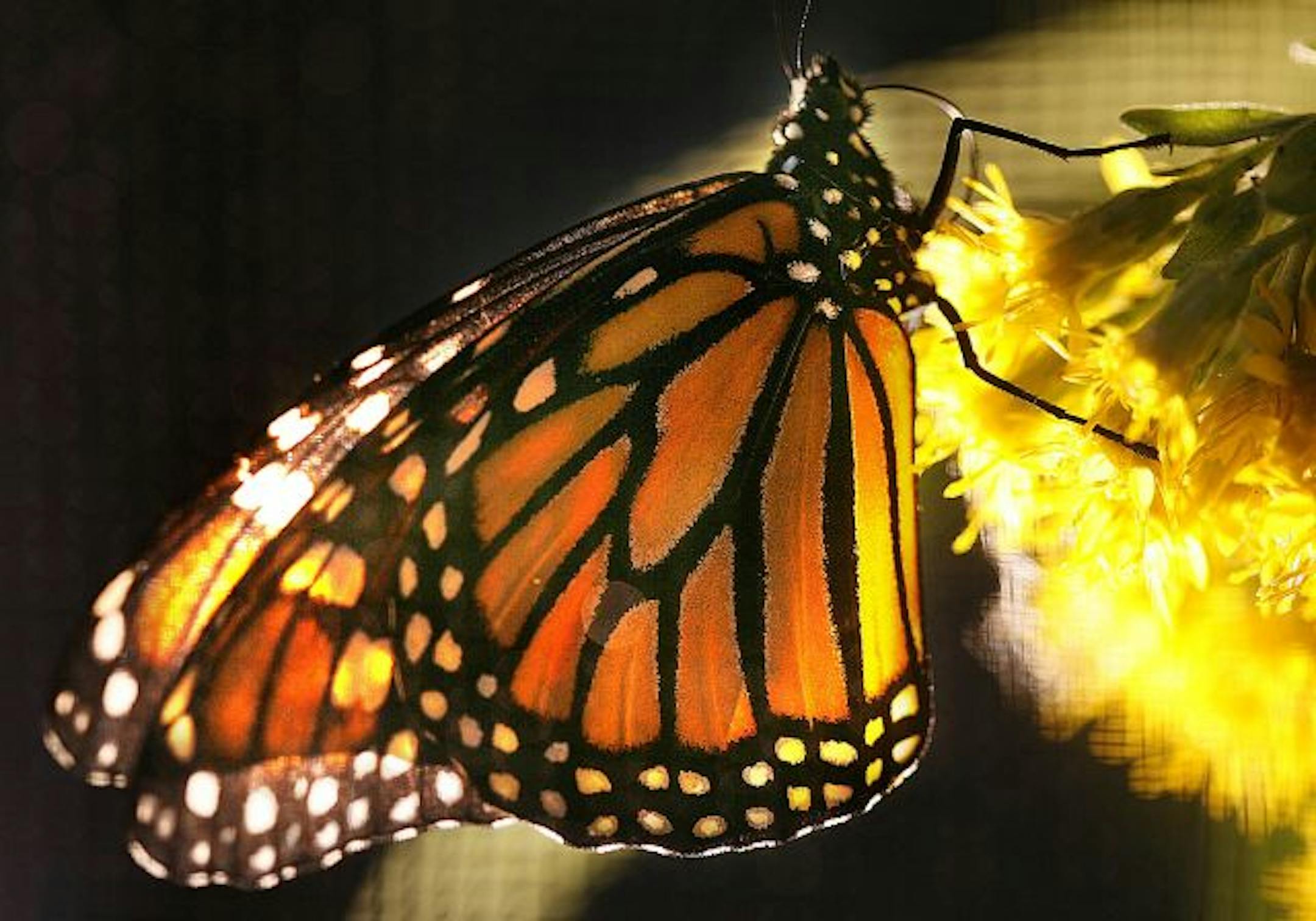
A female monarch butterfly clung to golden rod inside a cage at the Richardson Nature Center prior to being tagged and released.
A female monarch butterfly clung to golden rod inside a cage at the Richardson Nature Center prior to being tagged and released. (Star Tribune/The Minnesota Star Tribune)
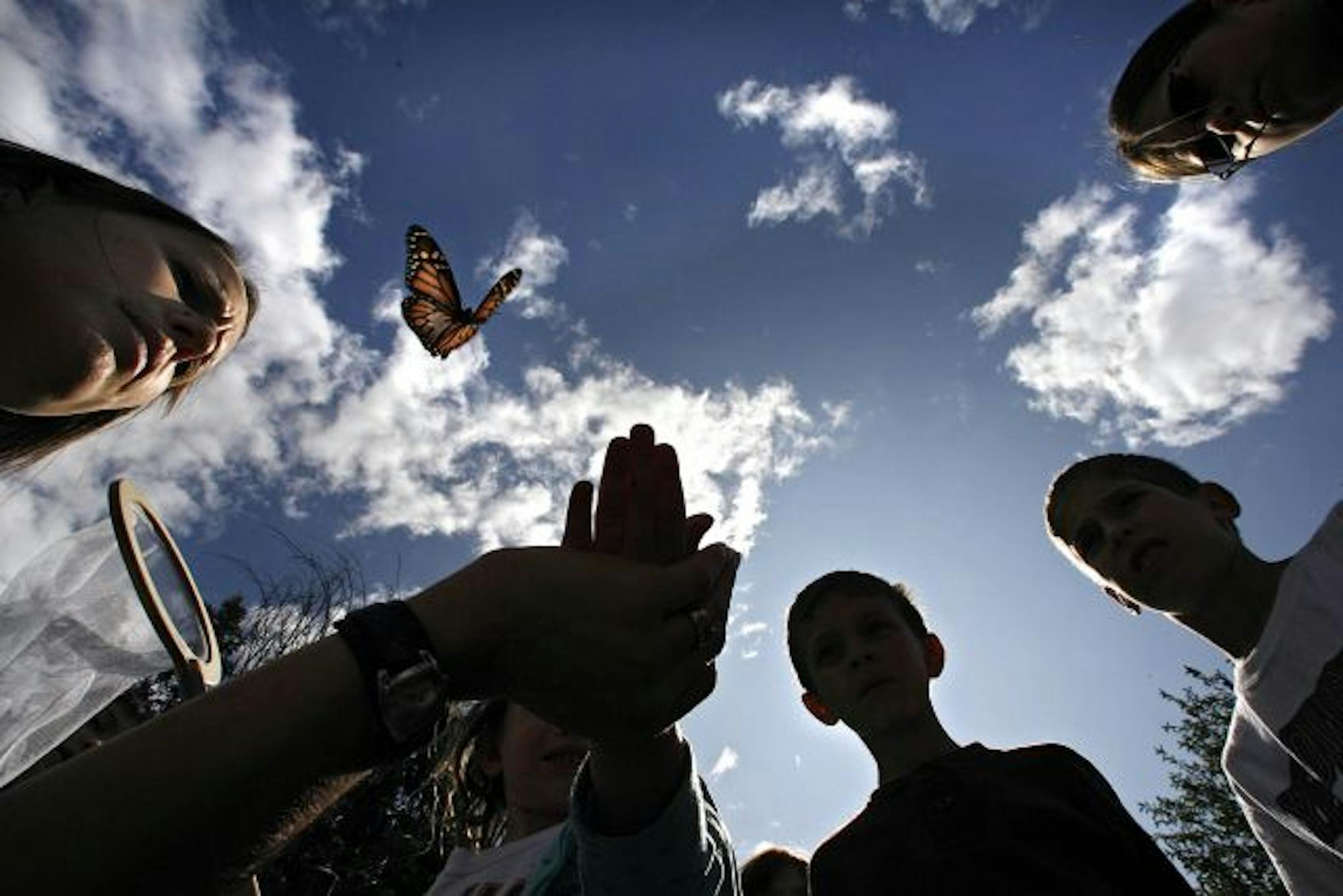
Interpretative naturalist Valerie Quiring, left, released a monarch butterfly that she had tagged to track its migration to Mexico. It will take the butterflies about two months to make the trip.
Interpretative naturalist Valerie Quiring, left, released a monarch butterfly that she had tagged to track its migration to Mexico. It will take the butterflies about two months to make the trip. (Star Tribune/The Minnesota Star Tribune)
about the writer

about the writer

LAURIE BLAKE, Star Tribune