

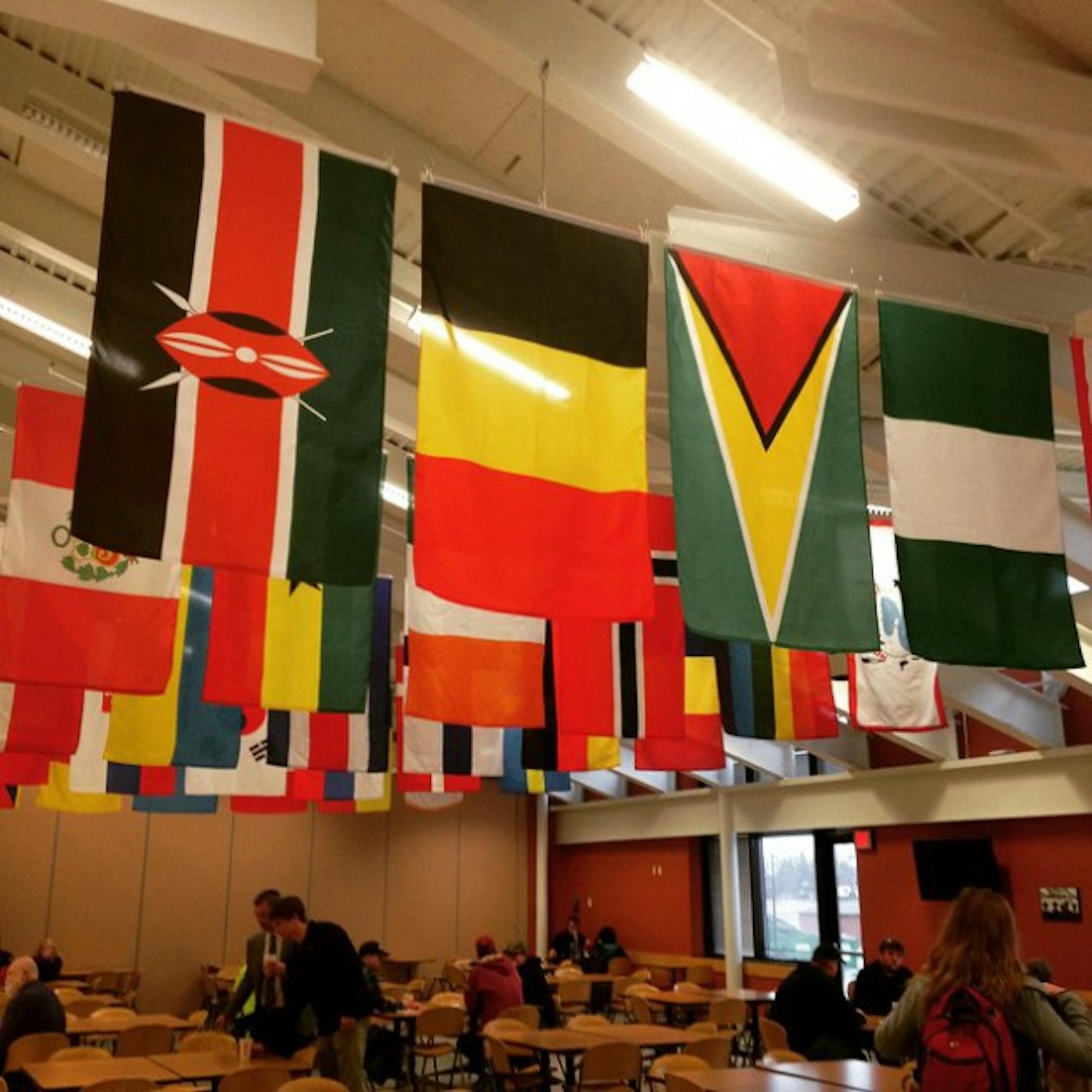
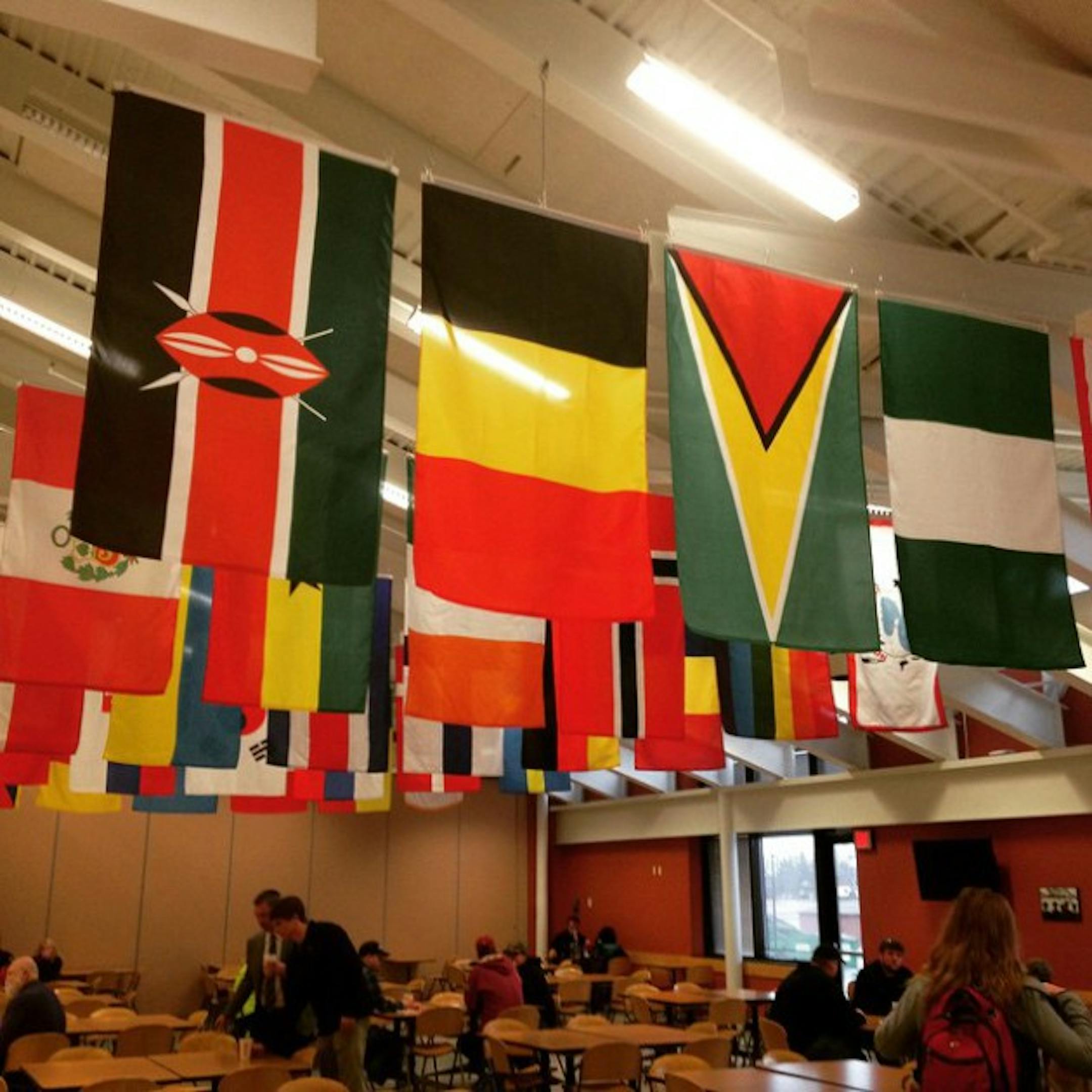
Today at 11:30 a.m., Hibbing Community College will dedicate its World Flags Project at the campus commons. Like many community and technical colleges around Minnesota, HCC has seen an influx of immigrants and first generation Americans.
HCC's diversity committee surveyed those students to determine their national origin. A flag from each nation is now displayed in the commons as a welcome to all. Come on down if you're in the neighborhood.
To call Northern Minnesota's Iron Range a land of immigrants is truth bordering on cliche. You can't talk about a major news story here without a history lesson involving an immigrant laborer posing for a stilted black-and-white photograph in between double shifts at an underground iron mine.
The immigrant story is important to the Iron Range because it was the source of the region's uniqueness, its collective "Something-American" culture. Our last names, our accent, our ethos all came from this identity. The immigrants came and quite literally sacrificed their health, happiness and very lives to provide opportunity to their children. Their children, hungry but educated, seized that opportunity with gusto.
But most of those folks are gone now. We're in the fourth generation. Or fifth. My children are sixth-generation on the Mesabi. The Iron Range's unique ability to raise up people in poverty, our distinguished hard-working reputation, our love of the arts and society -- these things have never been more endangered than they are right now.
This has been a miserable year to love the Iron Range. Our local politics today closes itself off from the outside world, divisive and ineffectual. Our towns decay. Mines brace for a long-anticipated shutdown, made tolerable only because of predictability and routine. It would be an easy year to give up on the Iron Range.
This is why I haven't.
As a teacher at Hibbing Community College I see the effects of economic and cultural stagnation on the Iron Range every day. Students face tremendous challenges related to child care, work, transportation, family and social problems. Many fail to overcome those challenges, but many others do. Everywhere you turn, little green shoots of humanity continue to grow. Love. Hope. Perseverance. And just like 100 years ago, immigrants often lead the way.


