

A bipartisan measure to support spinal cord injury research is missing from the House higher education budget, frustrating paralyzed Minnesotans and their allies.
For the fifth year, advocates for Minnesota's 10,000 citizens with spinal cord injuries (SCI) have proposed some form of the measure. They say this year's proposed $8 million allocation would be matched by the National Institutes for Health and distributed to Minnesota institutions for research into paralysis and traumatic brain injuries (TBI). While the Senate passed $1 million in grants as part of its higher education budget, SCI research advocates say the measure has failed to gain any traction despite hundreds of hours of lobbying and backing from a number of lawmakers including the bill's chief authors, Sen. John Hoffman, DFL-Champlin, and Rep. Rod Hamilton, R-Mountain Lake.
Matthew Rodreick, executive director of the Get Up Stand Up 2 Cure Paralysis Foundation, said the grant would capitalize on Minnesota's legacy as a home for medical innovation. Not only would it improve lives, he said, but it could cut back on the millions in healthcare costs for paralyzed Minnesotans. They're putting their hopes in epidural stimulation, used in part with a device created by Medtronic that would be implanted in patients. It's currently undergoing some trials at Mayo Clinic and in Louisville, Ky. If the grants were approved, they say some of Minnesota's SCI patients could have access within a year.
Rodreick, who joined the movement after his son Gabe was paralyzed a teenager, said the larger population often focuses on people with spinal cord injuries as an inspiration for their perseverance and positive attitudes, rather than the potential that research could hold.
"We call that inspiration porn," Rodreick said. "It dilutes the humanity of this community and doesn't allow us to tell the story that we come here to tell as citizens of Minnesota."
Rep. Frank Hornstein, DFL-Minneapolis, called the proposed funding an example of the much larger political battle about the Legislature's priorities.
"It's not a pie-in-the-sky thing. It's something that's here and now and can help people," he said. "When you look at a $40-plus billion budget, and the amount that's being asked for and the amount of good it can do, it becomes a question of what are our priorities,"
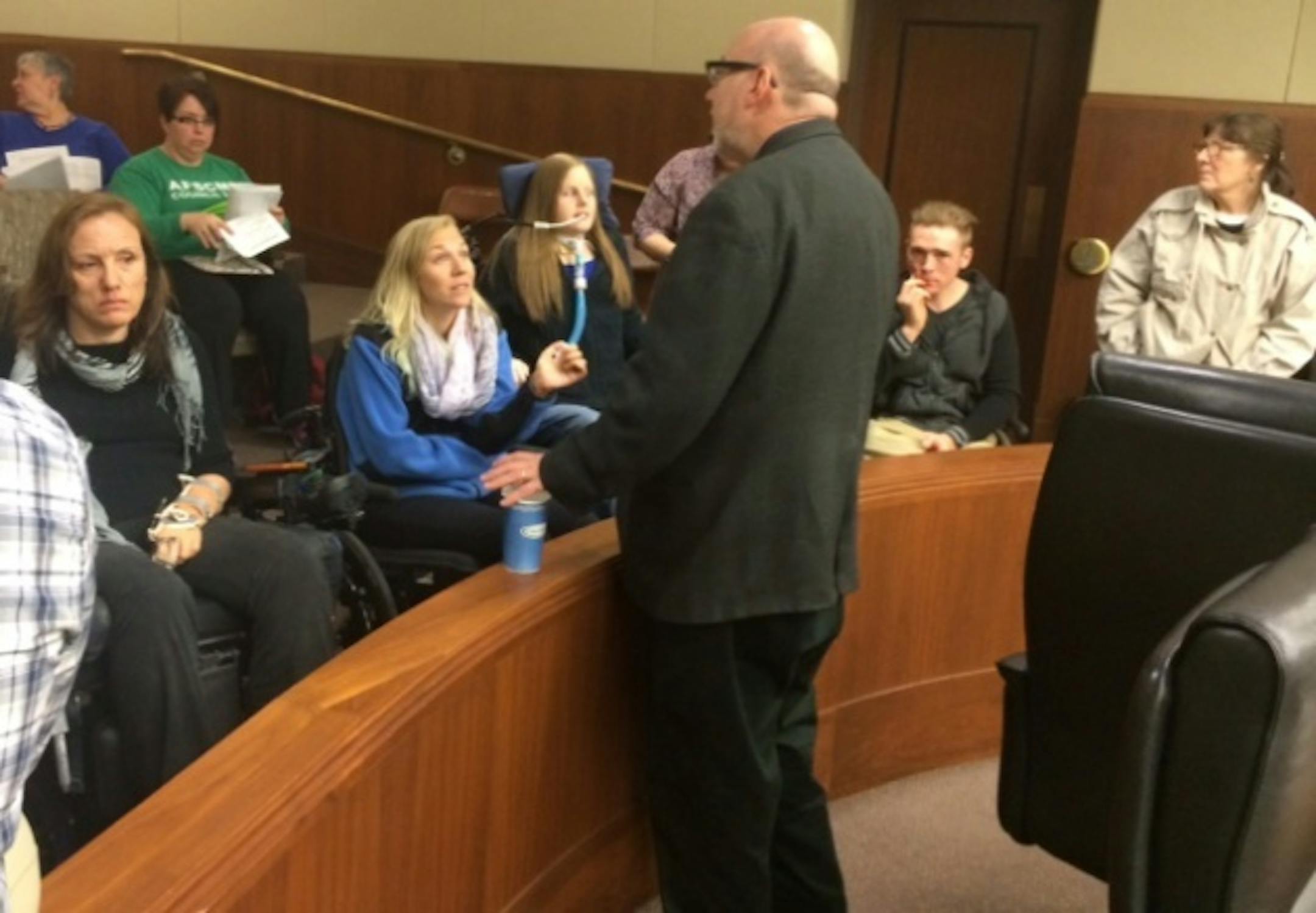
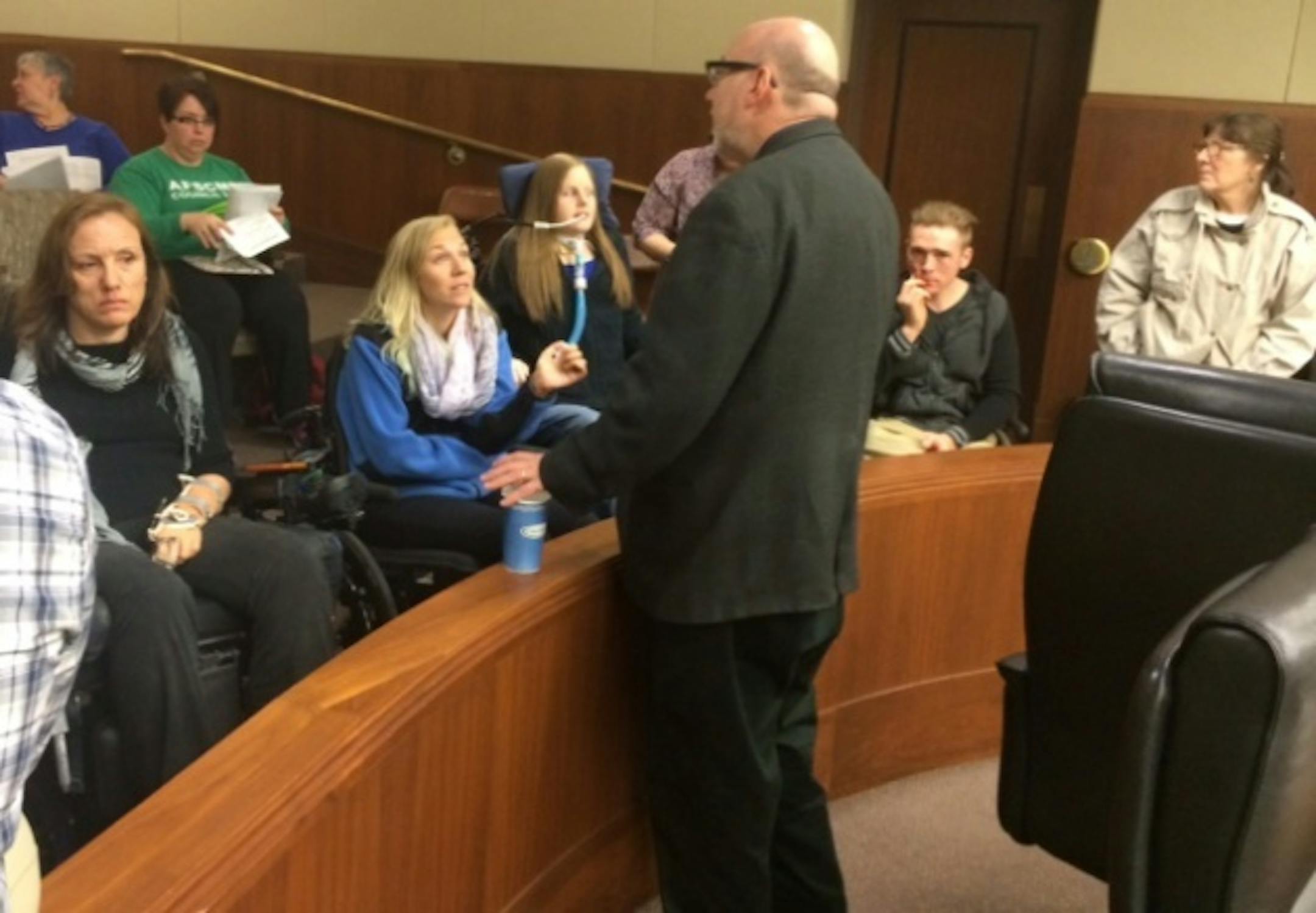
Days after they testified before the House Higher Education Committee, more than a half-dozen wheelchairs again filled a hearing room Monday to make their presence known to the House Ways and Means Committee, only for the brief hearing to be adjourned until 7 p.m. As the advocates regrouped, they shared their stories.


