

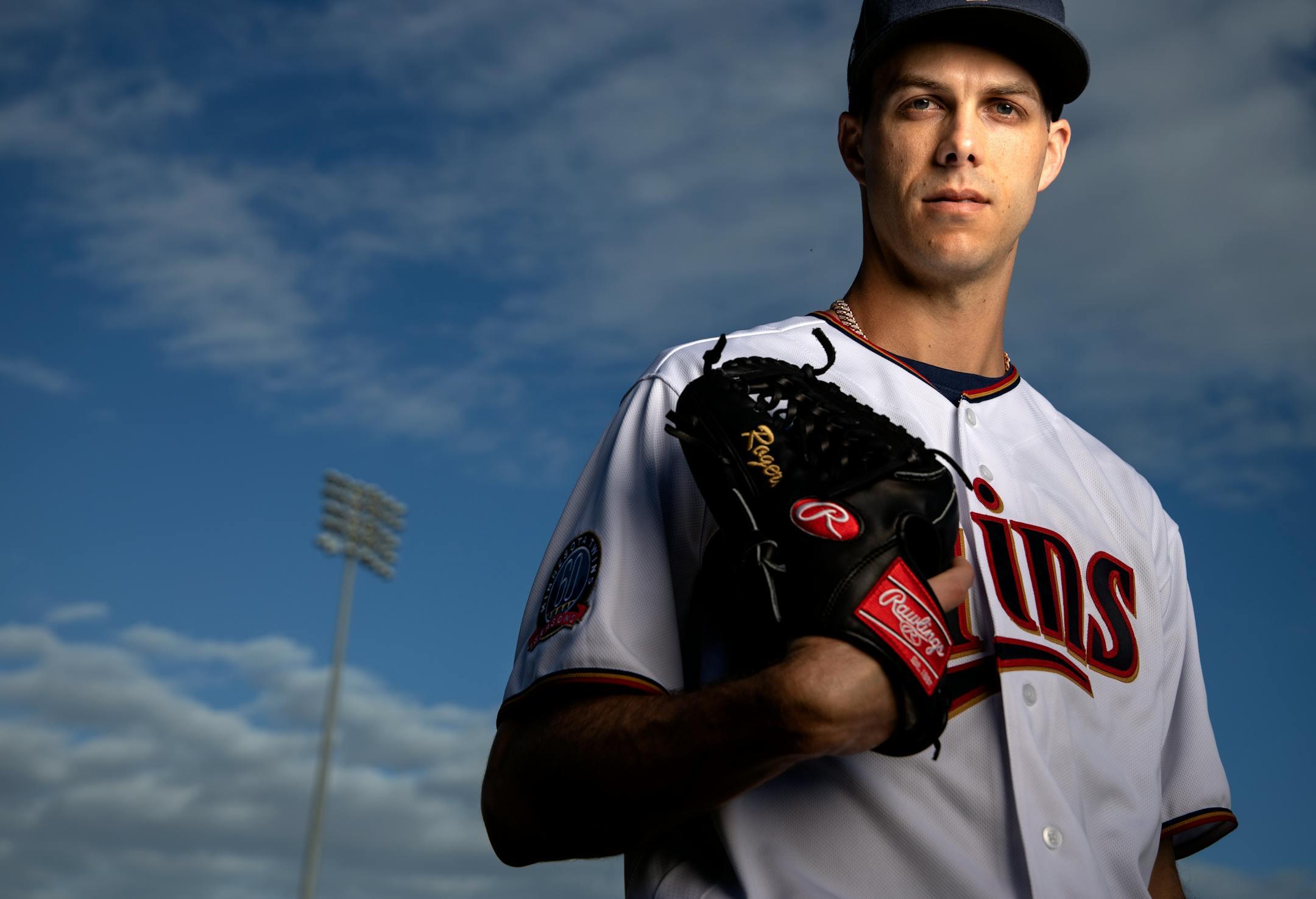
As the Twins try to zero in on whom they might acquire in next month's amateur draft, it's hard not to think about what they'll miss out on, too.
"I'm a little sad that we won't get a Taylor Rogers. We won't get a Brian Dozier. No Mitch Garver," said Deron Johnson, the former Twins scouting director who is now a senior advisor to current scouting director Sean Johnson. "There are some good big leaguers in the draft beyond the fifth round, and it's really exciting to watch them reach that potential. I feel sad for guys like that, who won't get drafted."
Major League Baseball, in an effort to slash costs during the coronavirus pandemic, informed its 30 teams last week that the annual June draft, which once had an unlimited number of rounds but has lasted 40 rounds since 2012, will be limited to only five rounds when it begins on June 10, cutting the numbers of drafted players from more than 1,200 (there were 1,217 last summer) to 161.
And only four of them will become potential Twins. The defending AL Central champions own the 27th overall pick in the first round, due to their 101-win finish in 2019, and the 59th pick in the second round. The Twins will also choose 128th and 158th in the fourth and fifth rounds. A competitive-balance pick after the second round, No. 66 overall, was sent to the Dodgers in February as part of the trade for Kenta Maeda, and the team forfeited its third pick, which would have been 99th, by signing Josh Donaldson as a free agent in January.
The Twins will be limited to spending $4.53 million on those four picks, divvied up any way they negotiate, with their first-rounder slotted for $2.57 million and their second-rounder $1.18 million. In another cost-saving move, draftees will receive 10% of their bonuses this year, and 45% each of the next two Junes.
"It's not many players, but in the upper tier of the draft, we feel it's an above-average group this year. We're still excited about the talent we'll be able to add," said Sean Johnson, who makes the final call for the Twins. He expects the draft to be unusually heavy on college players, with few high school players taken after the first round or two, "because teams will understandably feel safer taking players they have followed for two or three years," he said.
Sizing up the talent
Sean Johnson compared this year's pool of prospects to that of 2018, when the Twins took Oregon State outfielder Trevor Larnach in the first round and North Carolina-Wilmington catcher Ryan Jeffers in the second — a pair of players who could reach Target Field this year or next. "We took those guys in similar [draft] spots. We're hoping for similar type players with both picks," he said. He pointed out that Larnach probably wasn't a first-round player when 2018 began, but worked his way into it with a strong, College World Series-winning season.
"The guys who would have climbed that ladder this year, we'll just never know. It's tough for them, but we feel like there are five pretty solid rounds of guys" available, he said. "Once you get past the fifth round, the lists for all teams get kind of flat — there's not much separation between players. But we know there are a lot of players in that group who we'd love to have, and we'll pursue them. We'll want them to be Twins."


