

"Next to clean water, no single intervention has had so profound an effect on reducing mortality from childhood diseases as has the widespread introduction of vaccines," says the National Academy of Sciences. Yet outbreaks of measles and mumps in recent years reflect a rise in public hesitancy and skepticism toward immunization. Amid today's pandemic, as many eagerly await a vaccine against the novel coronavirus — SARS-CoV-2, which causes the disease COVID-19 — here are five myths about this medical innovation.
Myth No. 1: Vaccines are cash cows for the pharmaceutical industry.
The anti-vaccine community often claims that vaccines are incredibly lucrative. In 2019, anti-vaccination activist Del Bigtree released a video titled "Vaccines: Big Pharma's Cash Cow" full of ominous music that pointed out how vaccine profits increased by 1,100% in the past 20 years. Children's Health Defense, an anti-vaccination organization, recently criticized the government for "prioritizing" potential coronavirus vaccines over "existing therapeutics" that "do not offer comparable financial windfalls."
But the costs to develop a vaccine are often higher than for a therapeutic. The clinical trials to test vaccines' safety and effectiveness tend to be larger, and last longer, than trials for conventional medicines. And vaccines generally do not command high prices: When a vaccine to prevent human papillomavirus (HPV) was introduced in 2006, its $360 price tag provoked outrage around the world. Today, it costs $570. In contrast, a flu shot costs $30, a tetanus shot (along with diphtheria and pertussis protection) runs $45 and the measles-mump-rubella vaccine costs $76. Moreover, the vaccine market makes up only 2% to 3% of the worldwide pharmaceutical industry, according to the Atlantic.
For pharmaceutical companies that now routinely produce medicines with price tags of tens or hundreds of thousands of dollars, comparatively low-priced, low-margin vaccines often don't seem worth the effort. Our studies at Washington University in St. Louis revealed that by 2000, the Food and Drug Administration had approved vaccines to shield Americans from 26 different pathogens (two target the same virus and one was withdrawn). Two decades later, we can protect against just one additional pathogen: HPV.
Myth No. 2: Vaccines are full of toxic heavy metals.
The most prominent proponent of this theory, Robert F. Kennedy Jr., claimed in a notorious article copublished by Rolling Stone and Salon in 2005 that vaccines with thimerosal (a preservative containing trace amounts of mercury) could be linked to "the epidemic of childhood neurological disorders."In 2015, anti-vaccine activist Jenny McCarthy called aluminum the "other devil," asserting that vaccines contained even higher levels of that metal.
The purported link between vaccines, thimerosal and autism has been repeatedly debunked — and according to the FDA, only a few, rarely used influenza vaccines still contain the preservative. Aluminum, meanwhile, is abundant throughout our environment but is not heavily present in vaccines; it is not generally considered a heavy metal. According to the Children's Hospital of Philadelphia, the amount of aluminum in the vaccines babies get in their first six months is just over half as much as the amount ingested during six months of breast-feeding and a 10th of what is imbibed by formula-fed babies. The FDA has repeatedly verified that aluminum adjuvants (which help create a stronger immune response) are safe and effective.
Myth No. 3: A COVID-19 vaccine will arrive in 12 to 18 months.
"Potential coronavirus vaccine being tested in Germany could 'supply millions' by end of year," a CNN headline proclaimed this past week. "If you mean one [vaccine] that can be used in a mass vaccination campaign, allowing us all to get on with our lives, then 12 to 18 months is probably right," Marian Wentworth, president and chief executive of Management Sciences for Health, told the Guardian.
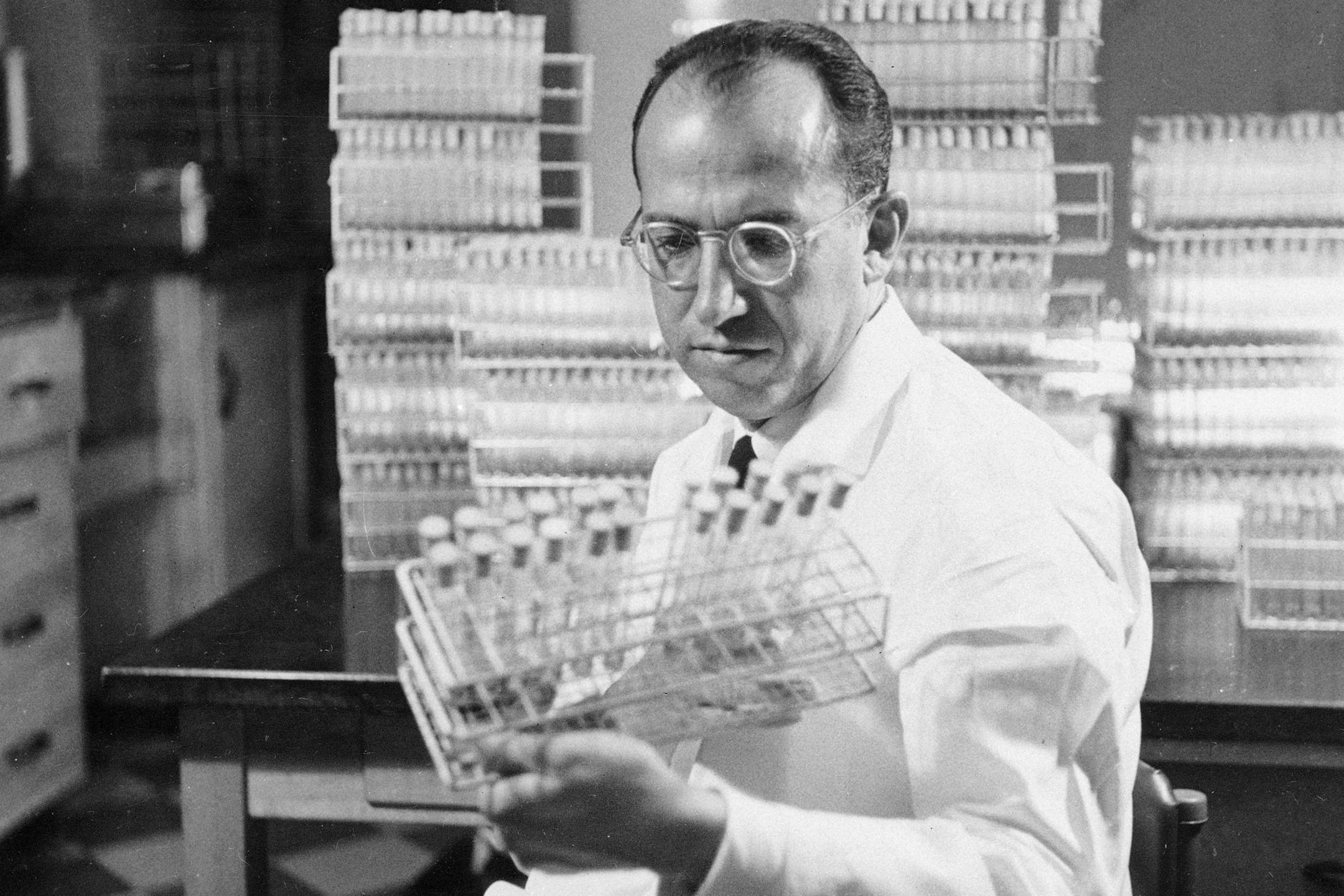
But history reveals that even with comparable public visibility and impatience, developing a vaccine almost always takes far longer. Jonas Salk, was working on the polio vaccine when he received a grant from the March of Dimes in 1951 and announced positive results in 1953. Large-scale trials began in 1954 — a rushed process that culminated in the vaccine's approval for use in 1955. "Vaccine development is a long, complex process, often lasting 10-15 years and involving a combination of public and private involvement," according to the College of Physicians of Philadelphia.


