

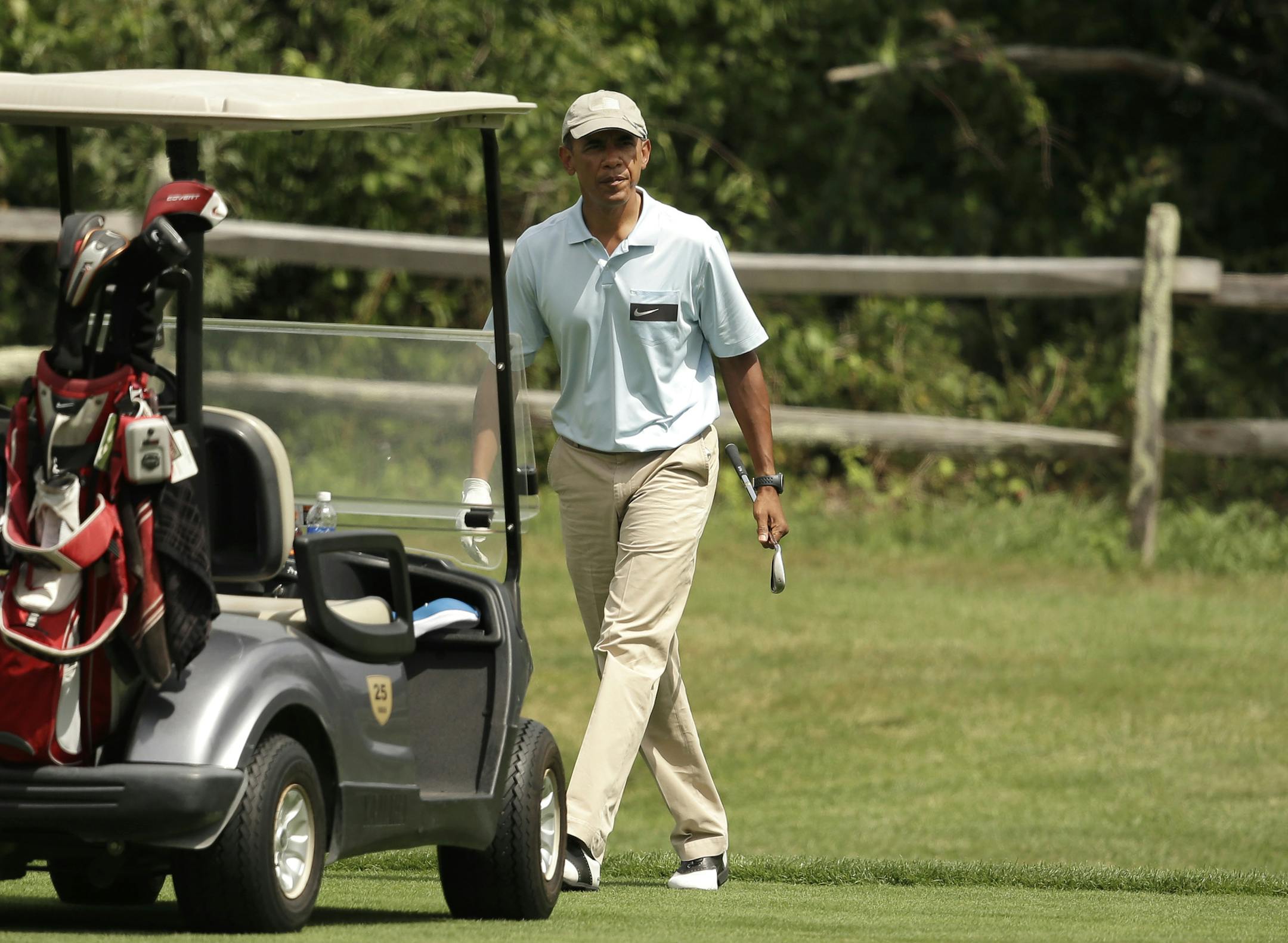
1) Presidents get vacations.
"Presidents don't get vacations — they just get a change of scenery," Nancy Reagan once said in defense of her husband's frequent trips to his ranch in Santa Barbara, Calif.
In the nuclear age, presidents may have only minutes to make a decision that could affect the entire world. They don't so much leave the White House as they take a miniature version of it with them wherever they go. Some 200 people accompany a president on vacation — including White House aides, Secret Service agents, military advisers, and experts in communications and transportation — to ensure that, while on vacation, the president can do nearly everything he could accomplish in Washington.
He continues to receive daily intelligence and national security briefings while on vacation. Presidents also continue to tape weekly radio broadcasts, hold news conferences, attend political fundraisers and occasionally, as Presidents Franklin Roosevelt and Ronald Reagan did, entertain British royalty.
Vacations don't stop presidents from making major decisions. For example, Reagan was enjoying a quiet weekend at Camp David, Md., when he decided to fire striking air-traffic controllers in 1981.
2) Presidential vacations harm the national agenda.
Recently, Washington Post columnist Dana Milbank accused Obama of "tone deafness" for going forward with his vacation while the world was in crisis. But when is the world not in crisis?
A vacation can provide a president with that most precious and rare of commodities in the Oval Office: time to relax and think — including time to think about how to deal with a crisis.
Shortly after his re-election to a third term in 1940, Roosevelt was similarly criticized for taking a 10-day fishing trip in the Caribbean while Britain was under assault by Nazi Germany. But FDR used that rare opportunity for reflection to devise his ingenious Lend-Lease program, which would provide vital aid to Britain to stave off the Nazi attack.
Presidents often feel the need to assure Americans that they're using their vacations productively. Karl Rove, adviser to President George W. Bush, always alerted the media to the scholarly books the president intended to read while on vacation.


