

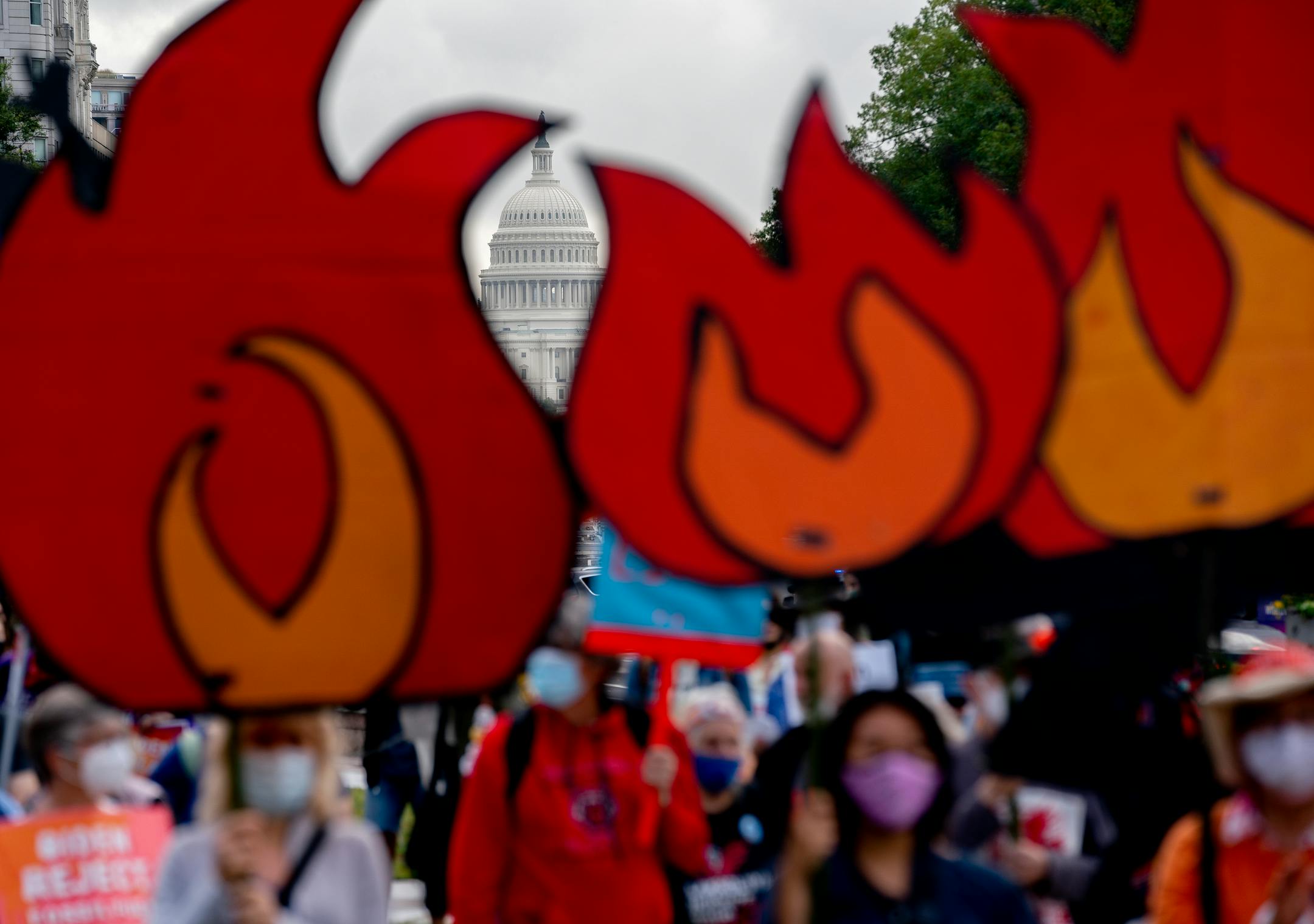
WASHINGTON – In 1969, President Richard Nixon's adviser Daniel Patrick Moynihan wrote a memo describing a startling future. The increase of carbon dioxide in the atmosphere caused by burning oil, gas and coal, Moynihan wrote, would dangerously heat the planet, melt the glaciers and cause the seas to rise. "Goodbye New York," Moynihan wrote. "Goodbye Washington, for that matter."
Fifty-three years later, Congress is on the cusp of finally responding to what Moynihan termed "the carbon dioxide problem."
On Sunday, Senate Democrats muscled through a $370 billion bill designed to move the country away from fossil fuels and toward solar, wind and other renewable energy. If the House passes the legislation later this week as expected, it will be the nation's first major climate law, coming as scientists warn that nations have only a few remaining years to make deep enough cuts in carbon dioxide to avoid planetary catastrophe.
Once enacted, the new law is projected to help cut the nation's greenhouse pollution by roughly 40% below 2005 levels by the end of this decade. That's not enough to avert the worst effects of a warming planet, but it would be a sizable down payment and the largest climate action ever taken by the United States.
"Finally, now we have crossed a major threshold," said former Vice President Al Gore, who as a lawmaker held the first congressional hearings on the subject in 1982 and shared the 2007 Nobel Peace Prize with climate scientists for their joint efforts to spread awareness about climate change. "I did not for a moment imagine it would take this long."
In interviews, Gore and other veterans of the nation's failed attempts at climate legislation pointed to several reasons that a climate bill is about to become law at last — passing the Senate by a razor-thin majority of 51-50, with the tiebreaking vote of Vice President Kamala Harris.
All said that the incontrovertible evidence that climate change has already arrived — in the form of frighteningly extreme wildfires, drought, storms and floods afflicting every corner of the United States — has helped build political support. Increasingly, the sheer volume of real-time data has overwhelmed the well-financed, multidecade strategy of oil, gas and coal companies to sow doubt about the severity of climate change.
But they also pointed to a shift in strategy, which set aside what experts consider the most efficient way to cut carbon dioxide emissions, a tax on pollution, for the less-effective but more politically palatable approach of monetary incentives to industries and consumers to switch to clean energy. Essentially, lawmakers replaced the sticks with carrots.


