

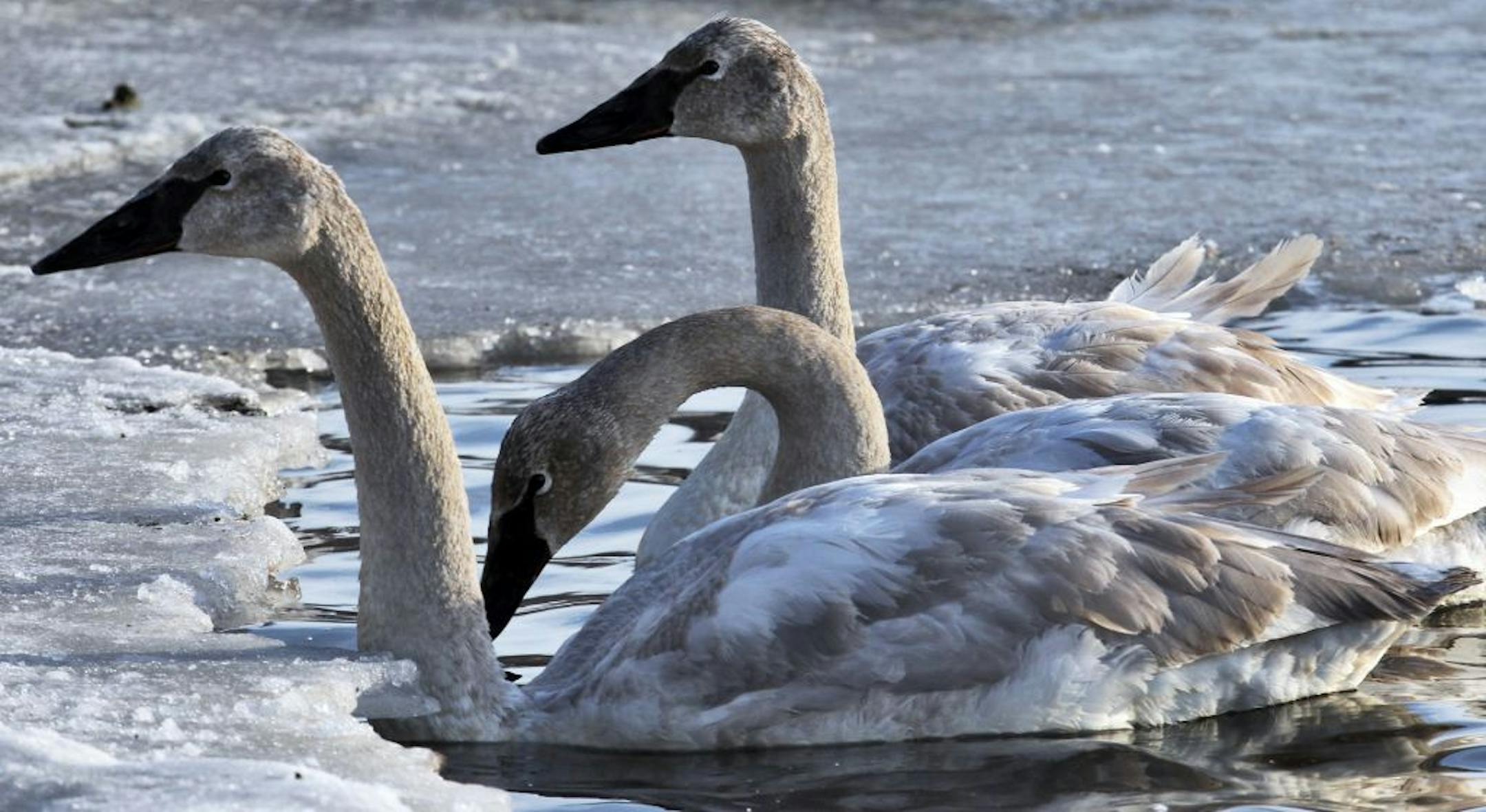
A growing number of trumpeter swans, nearly extinct 50 years ago, are falling sick from lead poisoning on the St. Croix River.
The majestic birds, largest of all waterfowl, have been plucking lead fishing sinkers from open water near Hudson, Wis. While the lead problem isn't considered extensive enough to threaten the swans' revival, consumption of lead often results in death, and it's also causing sickness elsewhere in the food chain.
"I think it's a serious issue for the swan population," said Phil Jenni, executive director of the Wildlife Rehabilitation Center of Minnesota. "Anybody who really cares about other living things ought to be concerned."
Several swans have been found dead along the St. Croix this winter. Dozens of others are under the care of Jenni and his staff, who try to reverse the blood-tainting illness that weakens them.
"It's a terrible thing seeing an animal suffering from lead poisoning," Jenni said.
The accumulation of lead in the St. Croix isn't anything new, but swans find it quicker in drought years when river levels fall. Swans foraging for aquatic plants and crustaceans consume lead sinkers and lead shot when they swallow gravel to aid in digestion.
"That bottom has to be virtually covered with lead," said Barry Wallace, a Hudson resident who has been a volunteer swan monitor for the Wisconsin Department of Natural Resources for 23 years. Swans tend to congregate in winter at the mouth of the Willow River, which feeds into the St. Croix just north of Hudson. "This is one of the most popular fishing spots on the whole river. We've all fished it, all of our lives."
Wallace said he's found swans wrapped in fish line and stuck with hooks, but he said the real hazard is lead, which never goes away. Lead shot from hunting 100 years ago still can be found in shallow marshes nearby, he said.


