

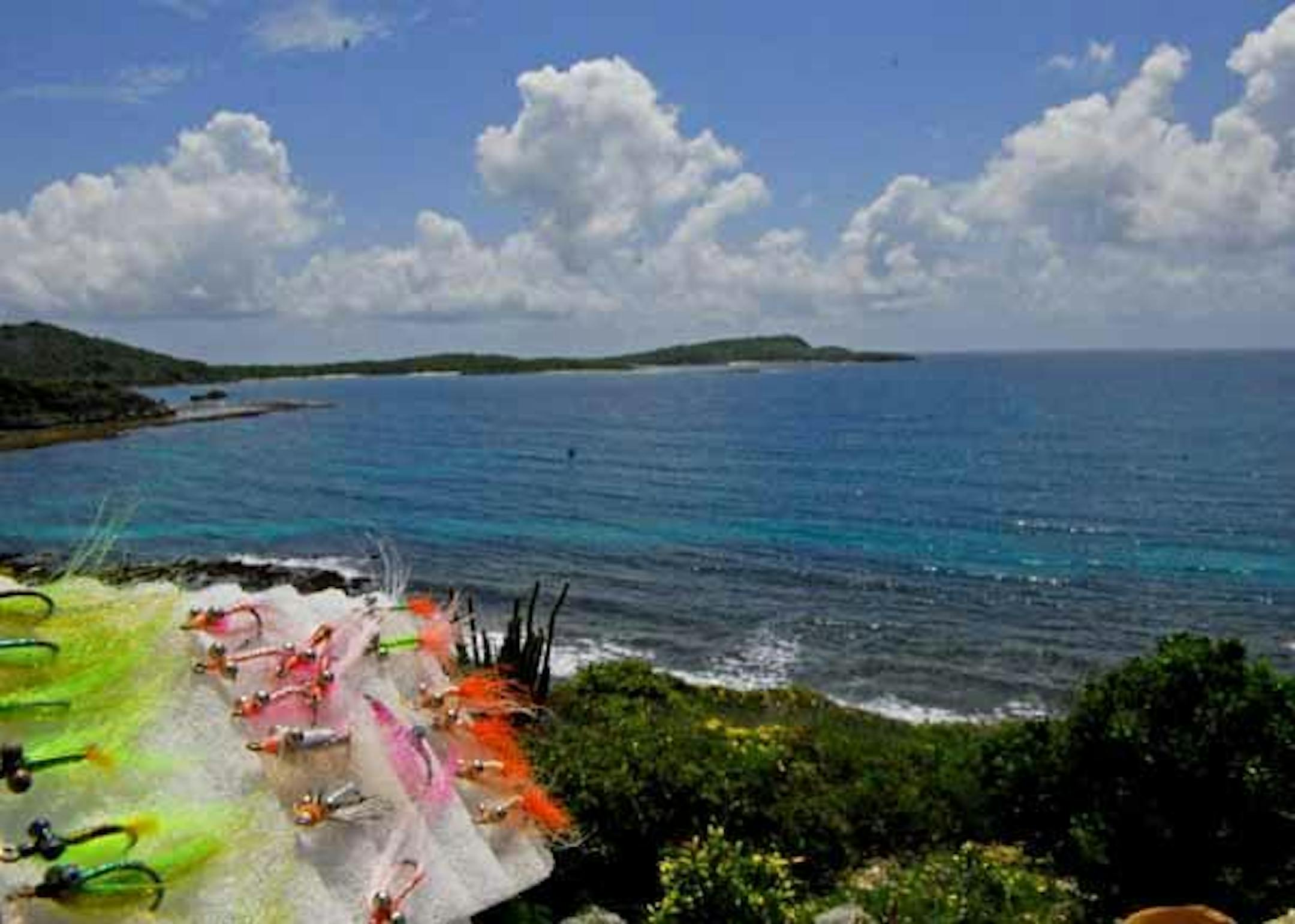
ANTIGUA, WEST INDIES — Saturday in lateafternoon as I unpacked my suitcase and a duffle full of fishing reels andflies and leaders the tide was full and the cove below was filled completelywith aquamarine-colored water.
The incoming tide had immersed coral reefs that nonethelessremained visible through the clear water and blanketed the thin crescent ofsand that in low tide is a beach.
It's a two-hop flight to Antigua; the TwinCities to Atlanta and Atlanta to Antigua. The first plane leaves just after 5in the morning and when you step onto the airport tarmac on Antigua heat risesup to meet up you and you look at your watch and the time is about 3 p.m.
A friend whom I actually have never met face-to-face has ahome on Antigua and catches some fish here with a fly rod in shallow water andalso while trolling farther out for yellow fin tuna and mahi-mahi.
"I'm not using the place now, go down andfish,'' my friend said. He lives in southern California and in 1987 I sold hima dog and subsequently have sold him four or so more. Our relationship isformed around those dogs and around long-distance reports concerning quailshooting in Baha California, duck hunting in the Central Valley of California,and about dogs running on beaches behaving as dogs do.
"Bring Jan,'' my friend said.
Jan is my wife.
The flats surrounding Antigua aren't asextensive as those along the archipelago of islands that drifts southward fromGrand Bahama. On shallow sand outliers surrounding the Bahamas the rising tidebrings with it bonefish and permit, among other fish, also nurse sharks andoccasionally bull sharks. Bonefish and permit arrive with the tides and dine onvarious crustaceans. You can fish them from a flats skiff, standing on thefront deck, fly rod in hand, line coiled around your feet. Or you can wade forthem, watching for the dorsal fins of bonefish. When you spot these you make tight-loopedcasts, keeping your profile low so as not to spook the fish as they rout in thesand looking for dinner.


