

PORTLAND, Maine — What happens when a fisherman tosses a fish back overboard?
It's not a frivolous question. The government bases catch quotas and other rules in part on the mortality of tossed fish, and there isn't always accurate data available about how many fish survive the fling. Now, a group of New England scientists says it's finding that a surprisingly high percentage of the lucky fish might live to swim another day.
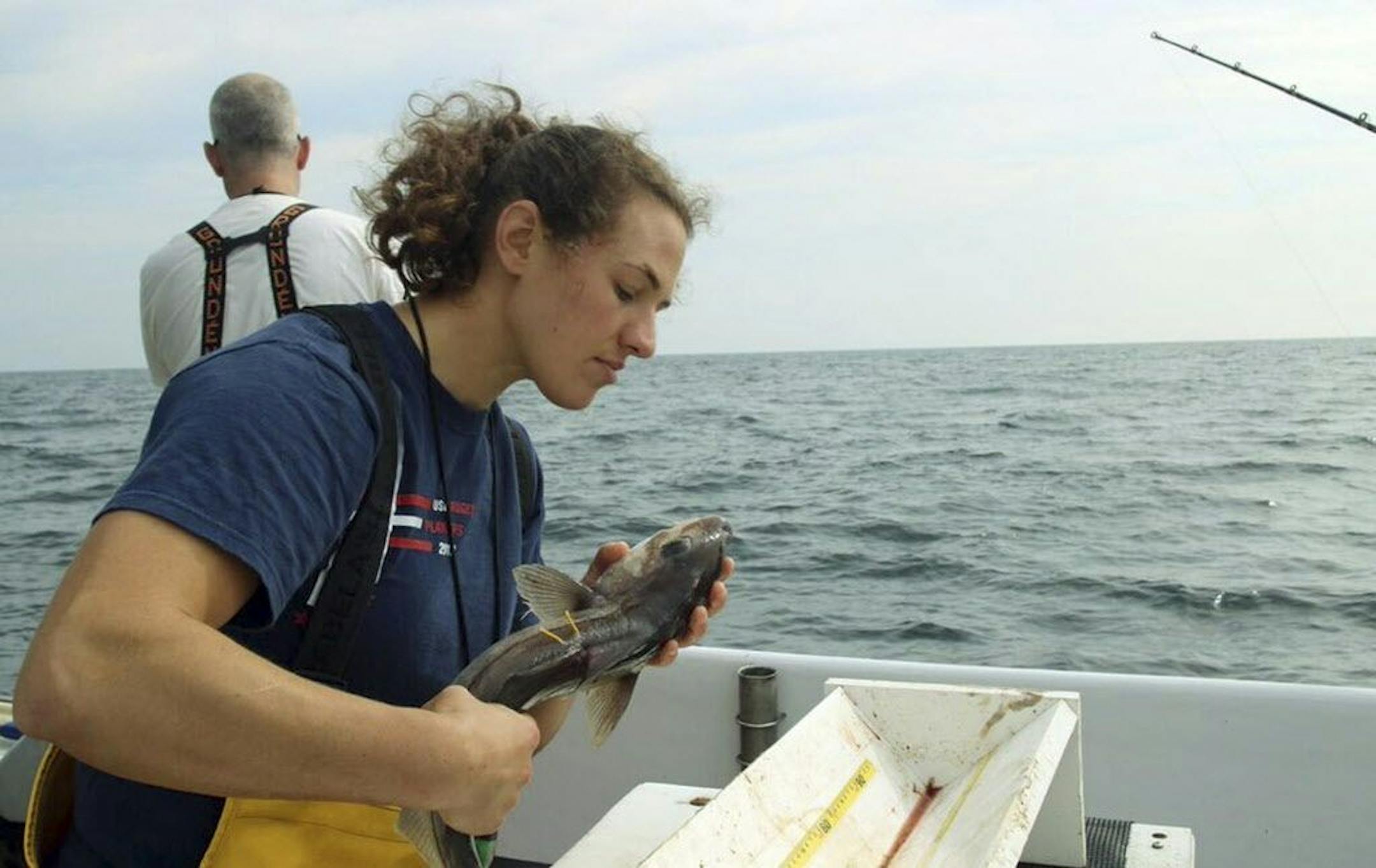
Scientists with the New England Aquarium and other institutions want to help the fishing managers get a better handle on what happens when cod, haddock and cusk get thrown from a fisherman's line back into the sea. The first round of their research, on the imperiled Gulf of Maine cod, found that 9 to 21 percent of the fish died, better than the 30 percent estimate regulators had been using.
That data could help change quotas for recreational fishermen, who like their commercial counterparts must abide by strict limits on some species.
"We found that mortality rates are pretty low," Dr. John Mandelman, the New England Aquarium's director of research and a co-leader of the study. "Generally, in the past, they've used really conservative estimates."
The Massachusetts Division of Fisheries, University of Massachusetts Dartmouth and University of New England and the Boston aquarium provided the researchers. The scientists are partnering with recreational fishing fleets in Seabrook, New Hampshire, and Gloucester, Massachusetts, on the study.
The researchers are using acoustic tags to track the movement of the animals after they are released to determine if they are alive or dead. The work on cod is finished, data on haddock is being analyzed and the work on cusk will continue until 2017, Mandelman said.
Mark Grant, a recreational fishing coordinator for the National Oceanic and Atmospheric Association's fisheries service, said the group's work has already been useful to the agency.


