
First-ever Minnesota deer management plan is 'delicate balancing act'

The 10-year plan is designed to provide more transparency, balance interests.

July 25, 2018 at 12:15PM
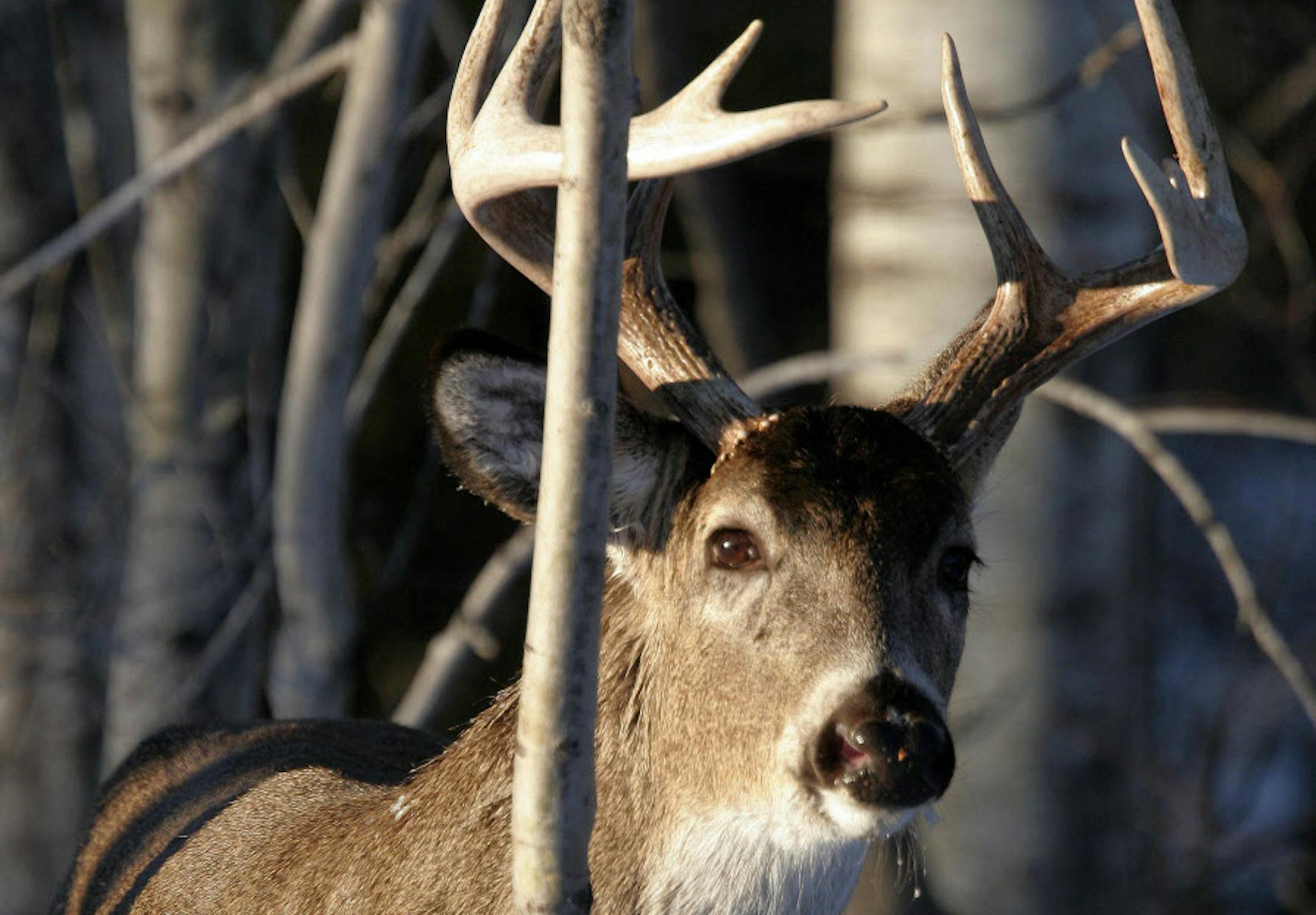
Duluth, MN BRIAN PETERSON Ô bpeterson@startribune.com A whitetail buck keeps a close eye on the photographer as he approaches through the woods near Duluth. ORG XMIT: MIN2013110113162728 ORG XMIT: MIN1311011320035743 ORG XMIT: MIN1501160005103420
A whitetail buck kept a close eye on the photographer as he approached through the woods near Duluth. (The Minnesota Star Tribune)

A first-ever state plan to manage Minnesota's whitetail deer population lays out priorities to keep the state's herd healthy, make hunters happy and reduce run-ins between deer and urban dwellers.

"It's about balancing all these concerns," Leslie McInenly, acting manager for the wildlife population program at the Minnesota Department of Natural Resources (DNR) said Tuesday. The DNR released the 10-year plan after two years of public meetings.

The 50-page plan doesn't provide specific details on how the deer population will be managed but rather a framework of the DNR's priorities, such as aggressively fighting chronic wasting disease.

The DNR will track its progress in meeting those priorities with measures such as a statewide harvest target of 200,000.

That number is sort of a "sweet spot" to keep deer numbers and hunters happy, McInenly said, noting that annual harvest numbers could fluctuate depending on the rise and fall of the deer population.

The impetus for this first statewide strategic plan rose, in part, because of hunter discontent. "They weren't seeing as many deer as they had been and they were harvesting fewer," she said.

This followed a time in the mid-2000s when the deer population had been booming, leading to more deer colliding with cars and feeding on people's hostas, McInenly said. So the DNR took steps to reduce the deer population, she explained.

"We met those goals, and then a couple of severe winters decimated the [deer] population," McInenly said. "Hunters were frustrated. There was a lack of trust in the work we do."

The DNR's statewide strategic plan is meant to change that, helping to make it clear what they are doing to manage the population and why.

"It's a road map of how we make some of our decisions," McInenly said. "It's a framework to relate to us and engage with us. … It's to make deer management a little more relevant to people."

For years, DNR officials held open houses and meetings to talk about their plans to manage the deer population and gather comments. But fewer people attended those meetings. "Our old ways of engaging with people weren't working," McInenly said.

The plan's eight broad goals include topics ranging from research to keeping Minnesota's deer populations healthy.

For example, it plans to fight chronic wasting disease to eliminate it in wild deer and minimize the risk of new cases — a key concern raised by the advisory committee and the public during the plan review.

Gary Botzek, one of the original members of the 19-member citizen advisory committee, credits the plan with bringing together diverse interests that span the state — from the forested areas in northern Minnesota to the bluff land of the southeast.

"It's not a perfect plan," he said. "It's a good plan — a living document that can be changed."

After the draft plan was released in April, the DNR collected about 1,100 comments that prompted officials to tweak and clarify the final plan.

In April when the draft plan was released, Minnesota Deer Hunters Association Executive Director Craig Engwall told the Star Tribune that the plan meets three areas of his concern: more deer, more input from citizens and protecting the health of wild deer.

about the writer

about the writer

Mary Lynn Smith

Reporter

Mary Lynn Smith is a general assignment reporter for the Star Tribune. She previously covered St. Paul City Hall and Ramsey County. Before that, she worked in Duluth where she covered local and state government and business. She frequently has written about the outdoors.

See Moreicon

More from No Section

See More
FILE -- A rent deposit slot at an apartment complex in Tucker, Ga., on July 21, 2020. As an eviction crisis has seemed increasingly likely this summer, everyone in the housing market has made the same plea to Washington: Send money — lots of it — that would keep renters in their homes and landlords afloat. (Melissa Golden/The New York Times) ORG XMIT: XNYT58
Melissa Golden/The New York Times

It’s too soon to tell how much the immigration crackdown is to blame.