

There are parties that can't be missed because of the company and conversation.
Then there are parties you attend simply to taste the food and admire the decor.
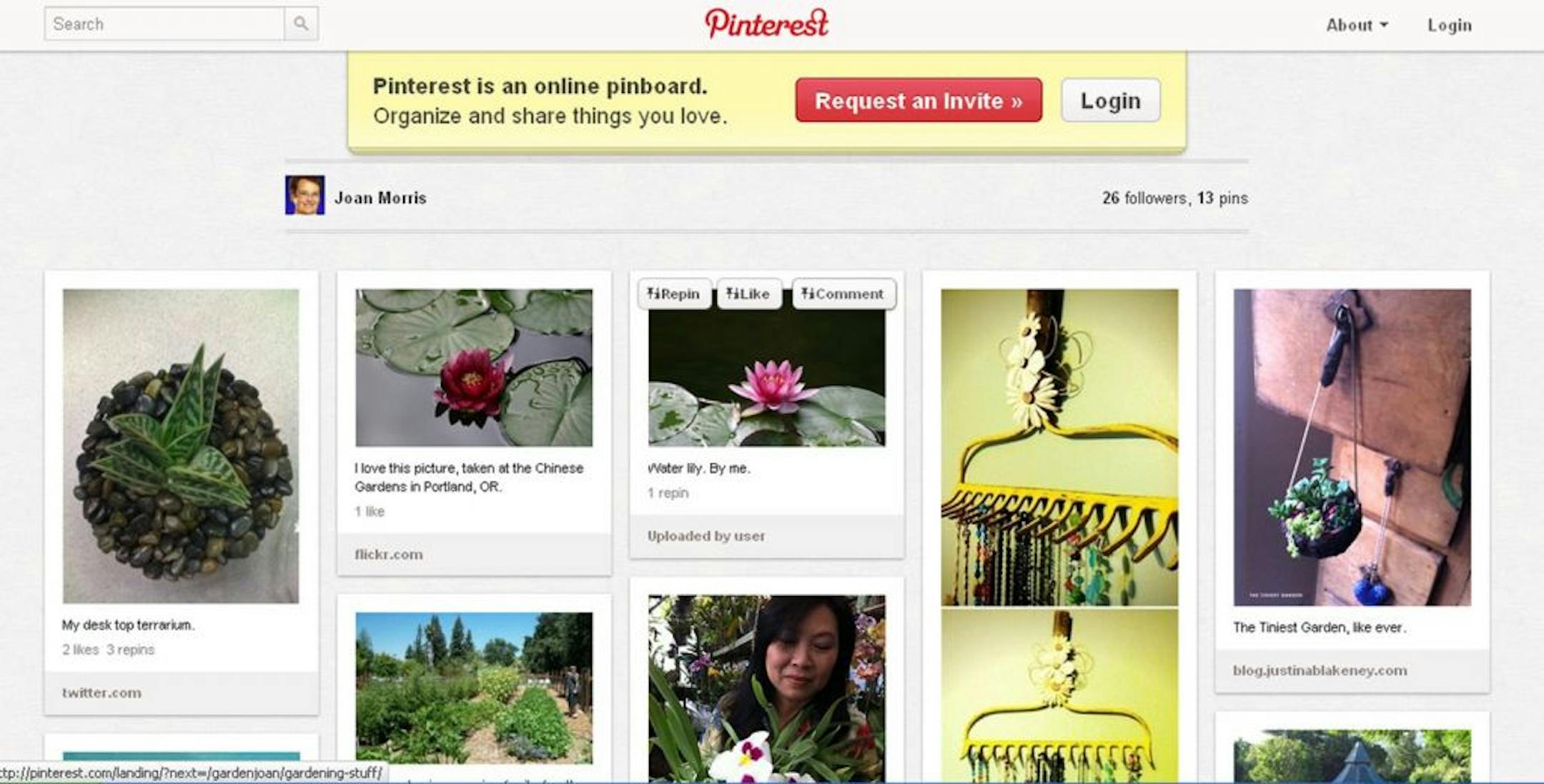
If the first party is Twitter, all chatter and debate, the second is Pinterest, a place to gawk and gaze.
"Pinterest is a social network where the focus is not socializing," said Loren Terveen, a University of Minnesota professor. "The focus is content."
The computer science professor recently co-authored what is believed to be the first academic study of Pinterest.
Perhaps these findings are obvious, given the way Pinterest works: Users "pin" images from across the Internet on virtual pinboards that others can "follow." Being friends doesn't necessarily mean people share the same tastes, be it shabby-chic interior design or vegetarian cuisine.
That's one possible explanation, Terveen said, for one of the more curious findings of the research: Men, a numerical minority on Pinterest, have a higher average number of followers than women. Yet at the same time, men see their pins get re-pinned less often.
"Re-pinning and following may be pretty separate activities," said Terveen, who worked on the study with Georgia Institute of Technology Prof. Eric Gilbert and two doctoral students.


