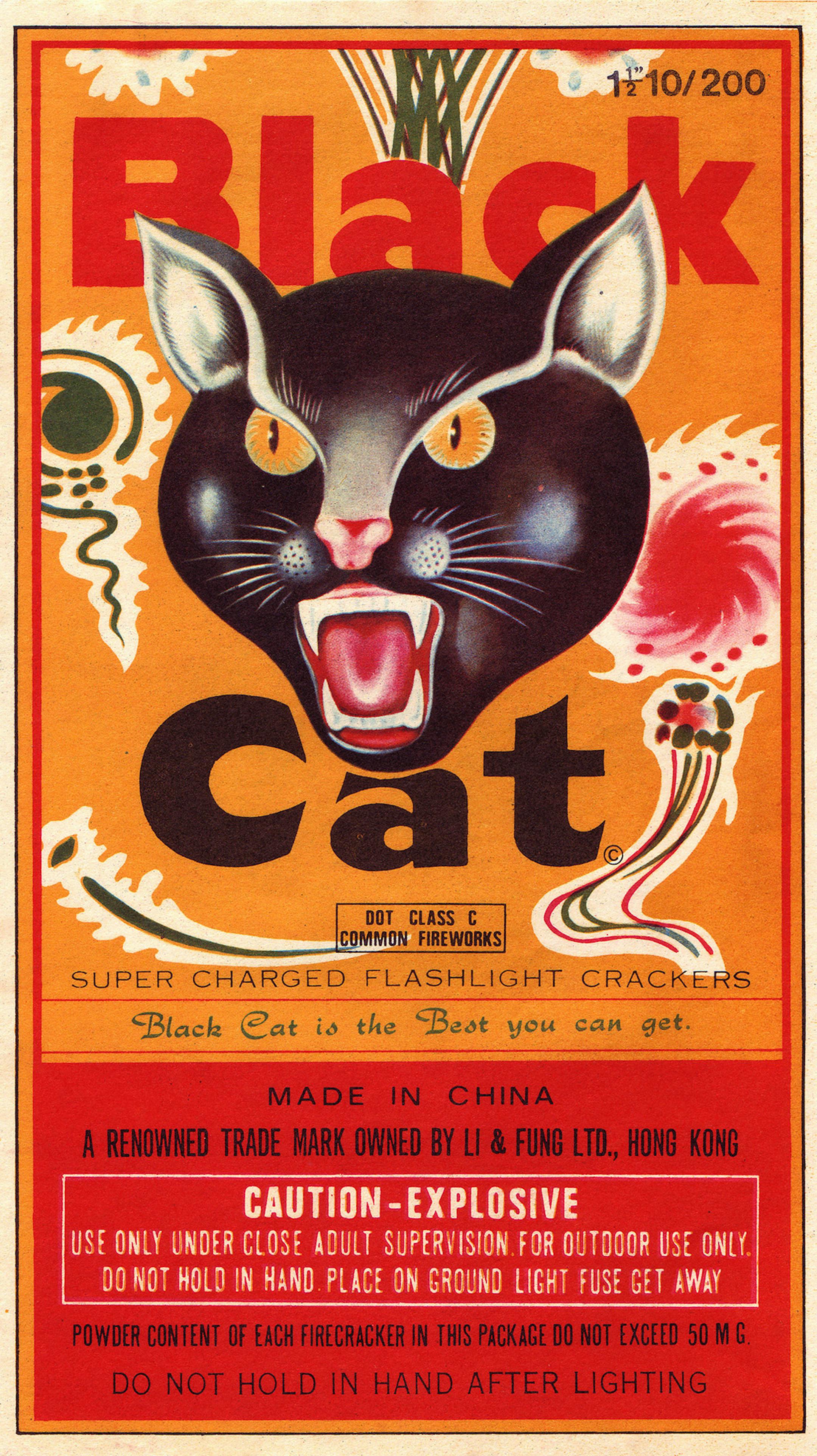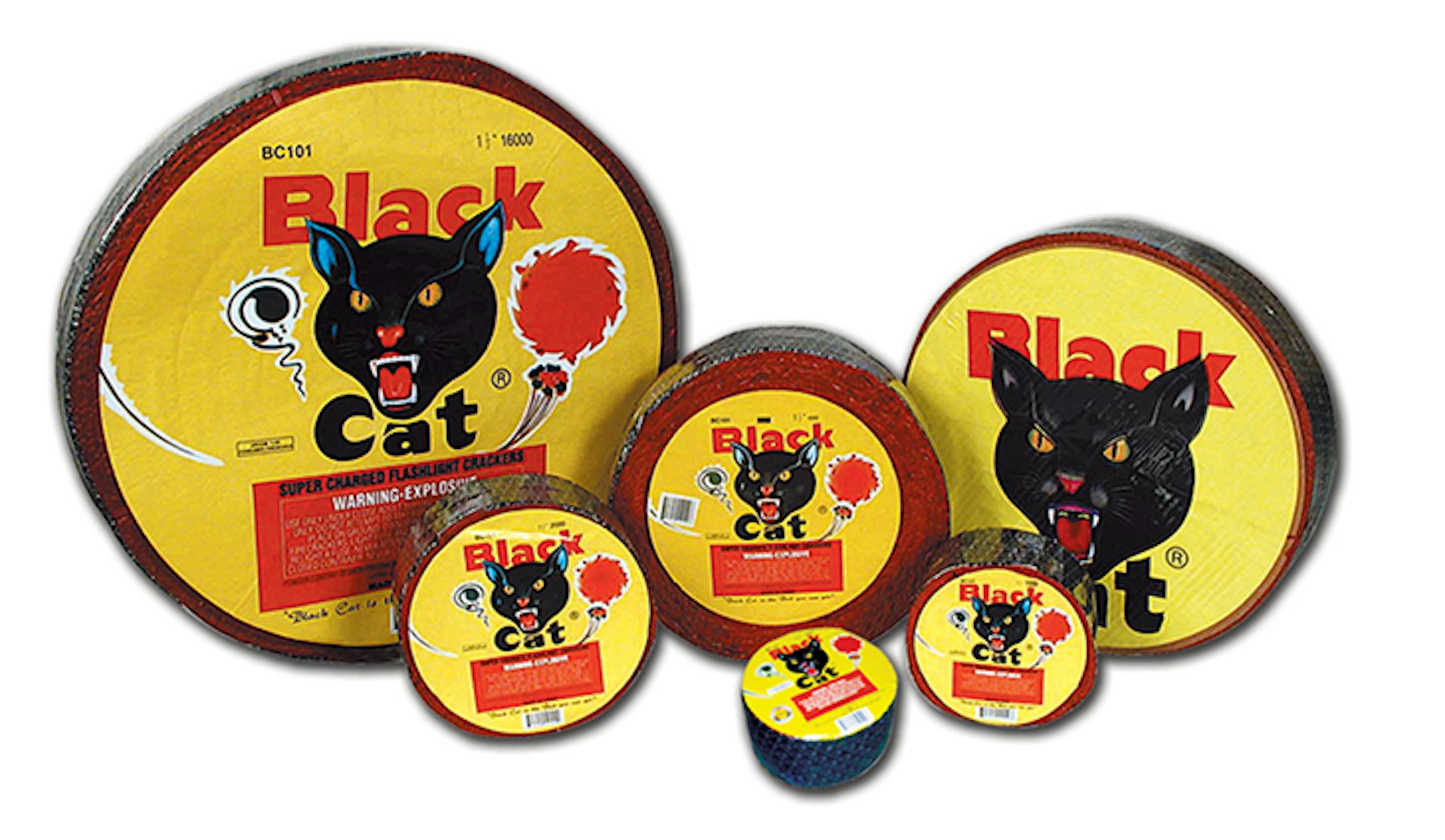
Any kid could have told you: Black Cat firecrackers were the best back when I was growing up. Loud and not a dud in the pack. They put a smile on your face and a ringing in your ear. Lucky was the kid with a brick of Cats on the 4th. But were they really better? Or did we just love the label?
It's truly iconic. The wide-eyed, fang-baring feline looks threatening, which adds to the allure. "Go ahead! Light me! Run! See how far you'll get! Hahahahaha!" If ever there's an odd name for an exploding amusement, it's Black Cat, a symbol of bad luck.
In the West, that is. The Black Cat is a symbol of good luck in Chinese culture, and if nothing else its creation was propitious for its owner, Li & Fung. The company — a small export concern that runs a global supply-chain management company today — introduced the Black Cat to America in the 1940s, and ever since then the picture of an angry screaming house pet has said "It's the Fourth of July." (Or, "I've been to Wisconsin.")
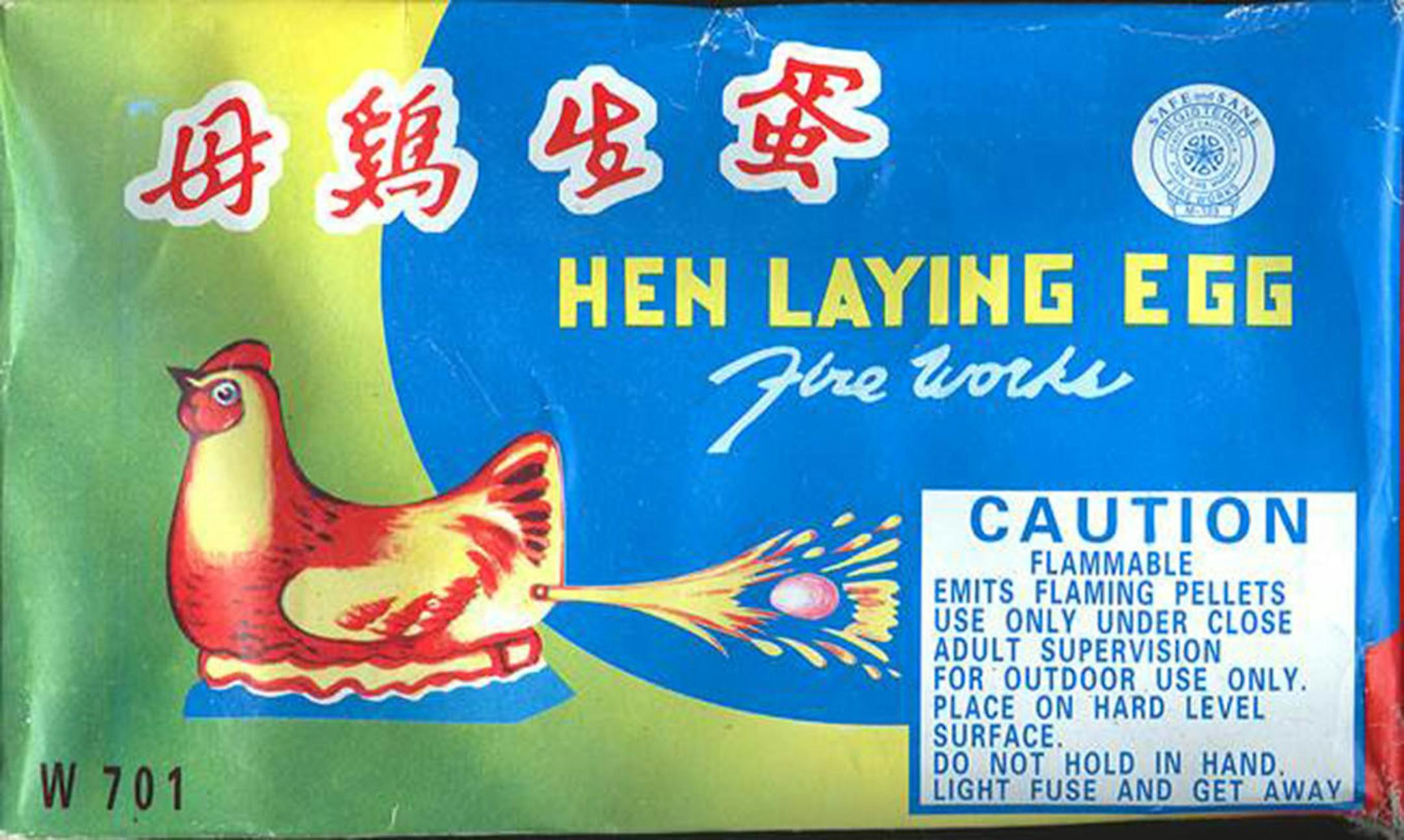
The famous label, however, was just one of hundreds we've seen stacked in fireworks shacks and stands. Few have had the Cat's impact, but they all shared the same style: Early Underpaid Chinese Illustrator.
Fireworks used to be sold in wooden boxes with elegant labels. The fun stuff was wrapped in paper — red, of course, just like today. Then some lithograph-machine salesman realized China might be a good customer, and when the machines arrived in the early days of the 20th century, manufacturers began to stick labels on the little bricks. Cheaper than a wood box, but also a new opportunity to distinguish your product from the other guy. Since firecrackers are the same no matter who makes them — they go bang — a canny capitalist could brand his product with a unique picture that set it apart. And thus: Black Cat.
And others. The labels stood out for their peculiar graphics. Everything about the art was slightly off, at least when compared with the slick production of American goods. The drawings were often crude; the mythological references were lost on Yanks; the lettering looked as if someone was painting a word without knowing what it meant. If a label depicted a rocket, it was a strange thing from a Warsaw Pact comic book.
Things got even weirder when the factories of Macau started reacting to the early days of TV, with its cowboy shows and rerun Western movies: Now the firecrackers had yee-haw motifs. So you had Chinese illustrators drawing pictures of Texas Rangers for fireworks blown up by kids in, well, Texas. True global culture, in a way.
Fireworks label design seemed forever stuck in 1959. If you grew up in the '60s, the graphics on your brick of ladyfingers or bottle rockets had the old Communist-flavored bygone style.